

If you have ever stood in the dairy aisle staring at a plastic shaker of "parmesan" dust and wondered why your home-cooked carbonara doesn't taste like the one you had in a Roman trattoria, we need to have a serious talk. In the world of premium culinary ingredients, there is a hierarchy, and sitting comfortably on the throne, bedecked in a crown of salt crystals, is Parmigiano Reggiano.
At Onatru Foods, we deal in the "real deal." We know that for professional chefs and serious home cooks alike, the difference between an imitation and a specialty import isn't just a matter of price; it’s a matter of soul. Parmigiano Reggiano isn't just cheese; it’s a time-capsule of Italian history, a marvel of biochemistry, and arguably the most versatile tool in a chef's arsenal.
So, grab a glass of Lambrusco and a wedge of the good stuff. We’re doing a deep dive into everything you need to know about "The King of Cheeses."
What is Parmigiano Reggiano, Anyway?
Before we get into the tasting notes, let’s clear up the naming rights. In the European Union, the word "Parmesan" is legally protected, but in North America, that term is often treated like a generic label for any hard, salty cheese.
True Parmigiano Reggiano is a PDO (Protected Designation of Origin) product. This means it can only be produced in a specific, tiny corner of Northern Italy: the provinces of Parma, Reggio Emilia, Modena, and parts of Mantua and Bologna. If it’s made five miles outside that zone, it can’t wear the name.
The production is governed by the Consorzio del Formaggio Parmigiano Reggiano, a group of sticklers who ensure that the cheese is made today exactly as it was by Cistercian monks 800 years ago. The recipe is deceptively simple: unpasteurized cow’s milk, salt, and rennet. That’s it. No additives, no preservatives, and certainly no cellulose (the wood pulp often found in pre-shredded bags).
Three Ingredients, Infinite Complexity
While the ingredient list is short, the process is a masterpiece of slow-food engineering. The milk comes from cows fed on a specific diet of local forage. Every morning, the cream from the previous evening's milking is skimmed and mixed with the whole milk of the morning.
Once the curds are formed and cooked in massive copper vats, they are gathered in linen cloths and placed into circular molds. After a few days, the wheels are submerged in a brine of Mediterranean sea salt for about 20 to 25 days. This is the only "seasoning" the cheese receives, and it begins the long journey of dehydration and flavor concentration.
The Age Factor: Decoding the Labels
When you're shopping for specialty imports on Onatru.com, you’ll notice that age is everything. Much like a fine whiskey or a dry-aged steak, Parmigiano Reggiano evolves dramatically over time.
12–18 Months (Nuovo)
At this stage, the cheese is still relatively soft and creamy. You’ll notice notes of fresh milk, yogurt, and maybe a hint of green grass. It’s excellent for shaving over a fresh arugula salad or enjoying as an aperitivo with a crisp white wine.
22–24 Months (Vecchio)
This is the "sweet spot" for most culinary applications. The texture becomes grainier and more friable. The flavors shift toward melted butter, pineapple, and toasted nuts. This is what you want for your pasta, risottos, and soups.
30–36+ Months (Stravecchio)
This is the territory of the connoisseur. The cheese is dry, intensely crumbly, and "spicy" in a way that tickles the back of the throat. It is packed with tyrosine crystals: those little white crunchy bits that people often mistake for salt. They aren’t salt; they’re clusters of amino acids that signal a perfectly aged cheese. Pair this with a few drops of aged balsamic vinegar and nothing else.

The Anatomy of the Wheel: Don’t Throw Away the Rind!
If there is one thing that separates a kitchen amateur from a seasoned pro, it’s how they handle the rind. The rind of Parmigiano Reggiano is 100% natural; it’s simply the outer layer of cheese that hardened during the brining and aging process.
Pro-Tip: Once you’ve grated your wedge down to the nub, toss that rind into a freezer bag. When you’re making a Minestrone, a Bolognese, or even a simple tomato sauce, drop the rind into the pot while it simmers. It won't melt entirely, but it will release an incredible depth of umami and a silky texture that no bullion cube can replicate. It is the ultimate "secret ingredient."
Professional Kitchen Techniques: How to Use It
While most people think of Parmigiano as a finishing touch, it is a structural ingredient in professional kitchens.
- The Emulsion: When making Cacio e Pepe or Carbonara, the cheese isn't just a topping; it’s the base of the sauce. By whisking finely grated Parmigiano with a bit of starchy pasta water, you create a creamy emulsion without ever touching a drop of heavy cream.
- The "Tuile": Want to impress at your next dinner party? Grate a small pile of Parmigiano onto a silicone baking mat and bake at 350°F for about 5 minutes. Let it cool, and you have a lacy, crispy "cracker" that adds height and saltiness to any dish.
- The Shave vs. The Grate: Don't just reach for the Microplane every time. Using a vegetable peeler to create wide ribbons (shaves) of cheese provides a different sensory experience: perfect for topping beef carpaccio or roasted asparagus.
Perfect Pairings
To truly master the King of Cheeses, you have to know its friends. In the Emilia-Romagna region, Parmigiano Reggiano is rarely eaten alone.
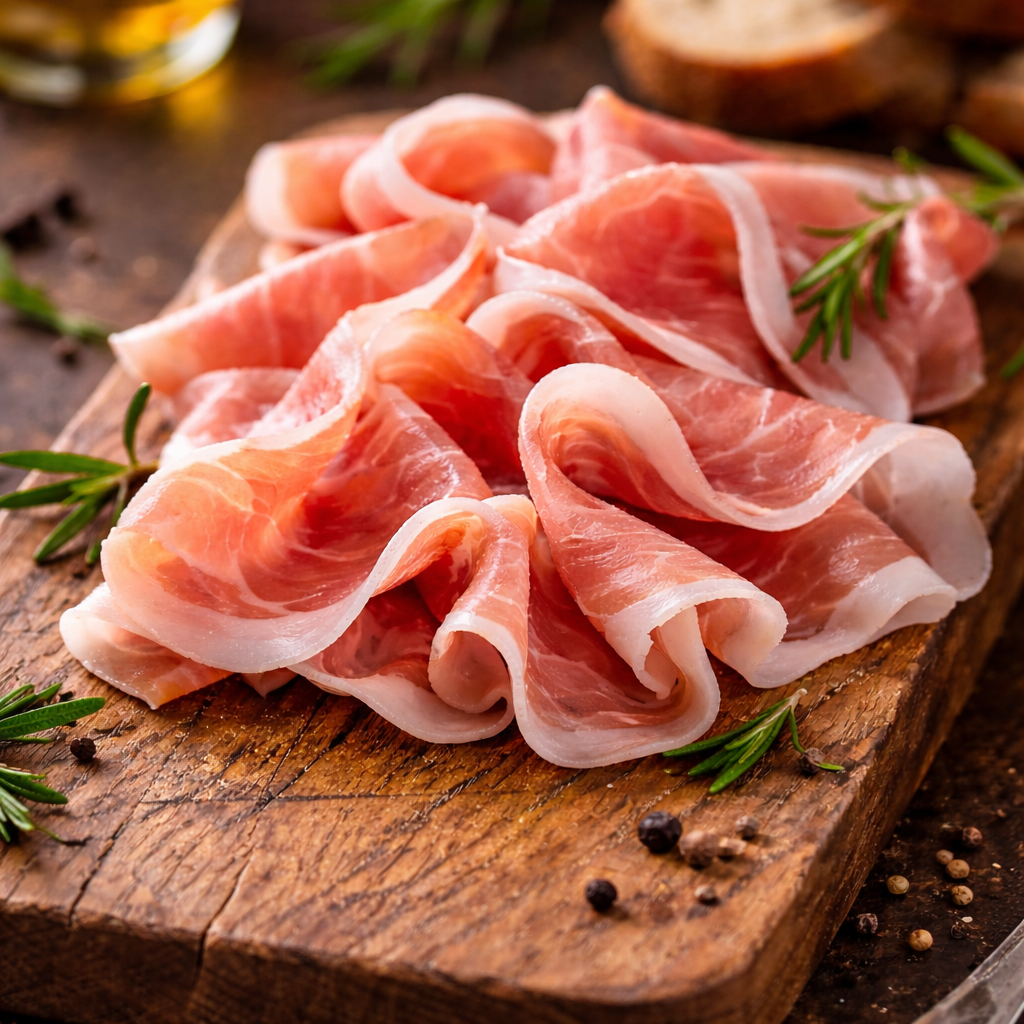
- Prosciutto di Parma: The saltiness of the ham and the nuttiness of the cheese are a match made in culinary heaven.
- Fruit: Pears, figs, and grapes provide a sweet contrast to the cheese’s savory profile.
- Honey and Balsamic: A drizzle of chestnut honey or a high-quality balsamic vinegar glaze transforms a hunk of 36-month cheese into a world-class dessert.
How to Buy and Store Like a Pro
When you are looking to buy premium culinary ingredients, authenticity is your north star. Look for the "pin-dot" branding on the rind. Every authentic wheel of Parmigiano Reggiano is embossed with its name in tiny dots. If you don't see those dots, you’re looking at an imposter.
Storage 101
Never, ever wrap your cheese in plastic wrap for long-term storage. Cheese is a living thing; it needs to breathe. Wrap your wedge in parchment paper or wax paper, then place it in a loosely closed zip-top bag in the vegetable crisper of your fridge. This prevents the cheese from absorbing other fridge odors while keeping it from drying out.
Why Source from Onatru Foods?
We get it: you’re busy running a kitchen or planning a high-end dinner party. You don’t have time to vet every importer. That’s where the Onatru Kitchen comes in. We curate restaurant-quality products: from our premium frozen seafood that's preserved at peak freshness to our meticulously selected specialty imports: and deliver them straight to your door.
Whether you're looking for the perfect cheese to anchor a charcuterie board or the best olive oil for cooking to accompany your pasta, we've done the legwork so you don't have to. Our logistics are built for the serious cook: we offer nationwide delivery with insulated, ice-packed packaging to ensure your perishables arrive in pristine condition.

Current Promotions
To help you stock your pantry with the best, we have two standing offers:
- Take $25 off any order of $175 or more.
- Free 2nd Day Air Shipping on all perishable orders over $350.
In the world of high-end imports, those savings go a long way toward adding an extra wheel of cheese or a case of authentic Italian tomatoes to your cart.
The Final Word
Mastering Parmigiano Reggiano is a rite of passage for any foodie. It’s an ingredient that demands respect, rewards patience, and elevates everything it touches. From the crunchy tyrosine crystals to the flavor-packed rinds, every gram of this cheese is a testament to the power of tradition.
Stop settling for the "parmesan" of the masses. Head over to Onatru.com and explore our collection of premium ingredients. Your pasta: and your guests: will thank you.
We’re working behind the scenes and cooking up something great : we’ll see you soon.
The Onatru Team


