

If there were a royal court for dairy, one cheese would sit undisputed on the throne, wearing a crown made of salt crystals and lactic acid. We’re talking about Parmigiano Reggiano. In the culinary world, it is simply "The King."
But here’s the thing: in American grocery aisles, the word "Parmesan" has been dragged through the mud. It’s been used to describe everything from decent domestic imitations to that shelf-stable dust in a green shaker can that’s more cellulose (wood pulp) than actual food.
At Onatru Foods, we don’t do "dust." We do legacy. We do restaurant-quality ingredients that make a home cook feel like a Michelin-starred executive chef. If you want to elevate your pasta, your risottos, or even your midnight snacks, you need to understand what makes authentic Parmigiano Reggiano the single most important ingredient in your refrigerator.
What Is Parmigiano Reggiano? (And Why It Isn't Just "Parmesan")
To understand this cheese, you have to understand the DOP (Denominazione di Origine Protetta), or Protected Designation of Origin. This isn't just Italian bureaucracy; it’s a legal guarantee of quality and geography.
Authentic Parmigiano Reggiano can only be produced in a very specific corner of Northern Italy: the provinces of Parma, Reggio Emilia, Modena, and parts of Mantua and Bologna. If it’s made five miles outside that zone, it can’t wear the name.
Why does the dirt matter? Because the cows, specifically the Vacca Rossa (Red Cow) or the Frisona, must be fed on locally grown forage. No fermented feeds (silage), no animal flour, and absolutely no GMOs. The local bacteria in the air and the specific grasses the cows eat create the unique flavor profile that simply cannot be replicated in Wisconsin or Argentina.
The Holy Trinity of Ingredients
Most modern processed foods have ingredient lists longer than a CVS receipt. Parmigiano Reggiano is the ultimate minimalist. It contains exactly three things:
- Raw Cow’s Milk: Delivered twice daily to the dairy.
- Salt: Taken from the Mediterranean.
- Rennet: A natural enzyme used to curdle the milk.
That’s it. No preservatives, no colorings, and no "anti-caking agents." It is a living, breathing product of nature and patience.

The Art of the Wheel: How It’s Made
Every single wheel of Parmigiano Reggiano starts its life in a giant copper cauldron. It takes a staggering 550 liters (about 145 gallons) of milk to produce just one wheel. The master cheesemaker, or casaro, uses a traditional tool called a spino to break the curd into tiny granules before cooking them at a precise 55°C.
Once the curd settles, it’s lifted out in a linen cloth, divided in two, and placed into molds. This is where the cheese gets its "birth certificate." A plastic marking belt is wrapped around the fresh cheese, imprinting the dotted "Parmigiano Reggiano" name, the dairy's ID number, and the month and year of production directly into the rind.
After a 20–25 day salt bath (brining), the wheels move to the aging rooms. They sit on massive wooden shelves, being flipped and brushed every week by robots or humans, waiting for the magic of time to happen.
Decoding the Ages: Which One Do You Need?
The flavor of the King changes as it matures. When you buy specialty cheese online, you’ll usually see a few different age categories. Here is how to choose the right one for your kitchen:
- 12–18 Months (Nuovo): This is the "young" stuff. It’s harmonious, slightly acidic, and tastes of milk and fresh fruit. It’s excellent for snacking or shaving over a fresh arugula salad.
- 24 Months (Vecchio): This is the gold standard. At two years, the cheese develops those signature "crunchy bits" (tyrosine crystals). It tastes of melted butter and dried fruit. This is the ultimate all-arounder for pasta and risotto.
- 36+ Months (Stravecchio): This is for the serious aficionados. The flavor is intense, spicy, and nutty. It’s drier and more crumbly. Serve this on a charcuterie board with a few drops of traditional balsamic vinegar or a drizzle of high-quality honey.
Speaking of charcuterie, nothing pairs better with a 24-month wedge than premium cured meats.
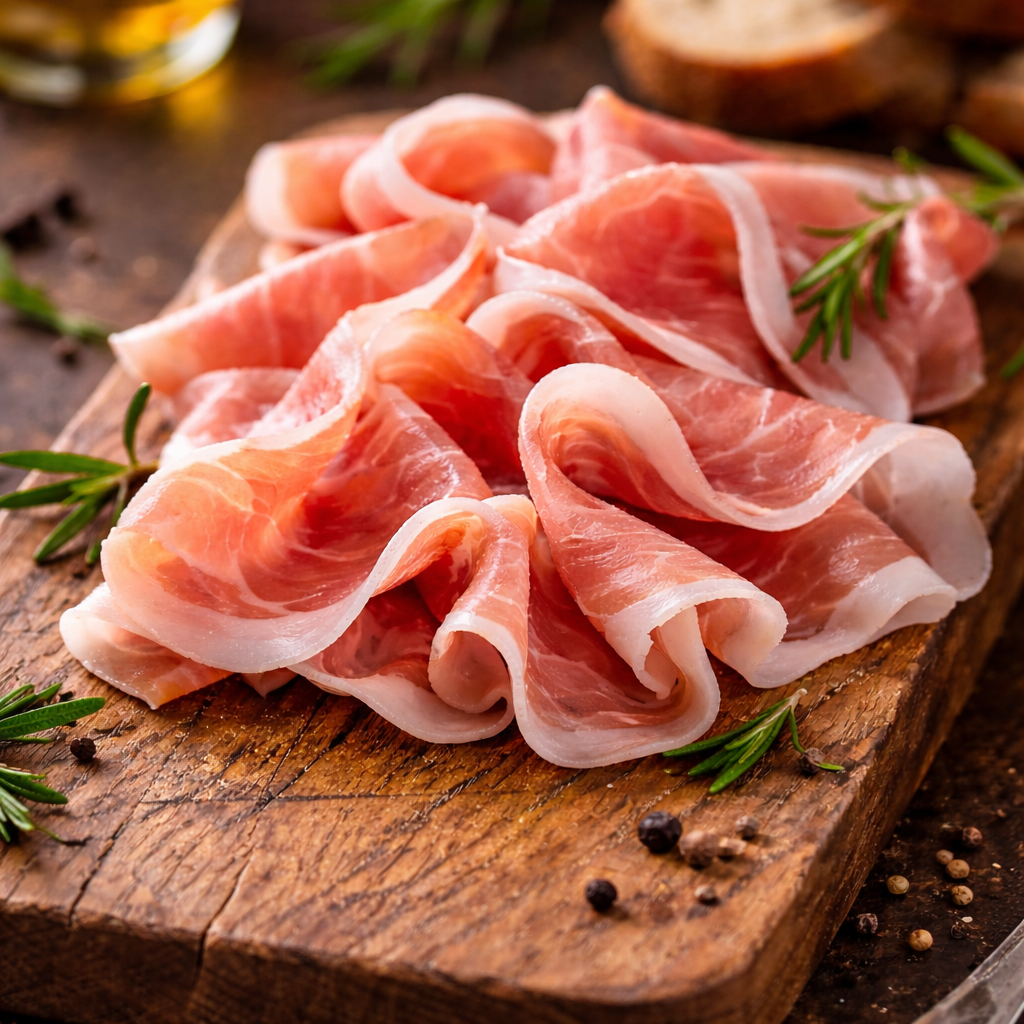
The "Crunchy Bits" and the Rind: Expert Secrets
If you’ve ever bitten into a piece of aged Parmigiano Reggiano and felt a little "crunch," don't worry, it’s not salt. Those are Tyrosine crystals. They are amino acids that form as the proteins in the cheese break down during the aging process. In the cheese world, those crystals are a badge of honor. They signify a well-aged, high-quality product.
And please, for the love of all things culinary, do not throw away the rind.
The rind is simply the exterior of the cheese that has hardened. It is 100% edible (though very tough). Professional chefs treat these rinds like gold. Toss a leftover rind into your next Minestrone, tomato sauce, or beef stew. It acts like a "flavor bomb," releasing umami and depth that no spice rack can replicate.

How to Spot the Real Deal (And Avoid the Fakes)
When you’re looking to buy the real deal, your eyes are your best tool. Authentic Parmigiano Reggiano will always have:
- The Pin-Dot Writing: Look at the side of the wedge. You should see the name "Parmigiano Reggiano" impressed in a series of dots.
- The DOP Seal: Look for the yellow and red "sun" logo. This is the legal certification of authenticity.
- The Texture: Real Parmigiano should look slightly "grainy" and crumbly, never smooth or rubbery.
At Onatru Foods, we source our ingredients with the same scrutiny a head chef uses for their nightly specials. We know that when you're looking for premium culinary ingredients, you expect the real deal, delivered with care.
Why Buying Premium Ingredients Online Makes Sense
In the past, getting a true wedge of export-quality Parmigiano meant a trip to an expensive boutique creamery. Today, you can get restaurant-quality portions delivered straight to your door.
One of the biggest concerns with ordering perishables is, "Will it arrive in good shape?" At Onatru, we’ve mastered the logistics of the "Cold Chain." We treat our specialty imports: from our cheeses to our premium frozen seafood: with extreme care.
Our products are shipped insulated and ice-packed in leak-resistant packaging. For our most delicate perishables, we utilize 2nd Day Air shipping to ensure that from our warehouse to your kitchen, the temperature stays exactly where it needs to be. We handle the logistics so you can focus on the lasagna.

Culinary Techniques: How to Use Your King
Once you have that beautiful wedge in your hand, here is how to treat it with respect:
- Grate as You Go: Never buy pre-grated cheese. The second Parmigiano is grated, it begins to oxidize and lose its aroma. Grate it fresh over your plate for maximum impact.
- The Microplane Factor: For a light, fluffy "snow" effect on pasta, use a Microplane. For a bolder flavor in a salad, use a vegetable peeler to create large, thin shards.
- The "Hollowed Out" Pasta: If you really want to show off at a dinner party (and you have a massive budget), you can buy a half-wheel, hollow it out, and toss hot pasta directly inside it. It’s the ultimate tableside flourish.
Shop the Ingredients from Onatru
Ready to upgrade your pantry? Stop settling for the imitation stuff. Whether you're a home chef looking to perfect your Carbonara or a restaurant buyer sourcing the best for your menu, Onatru Foods is your partner in the kitchen.
We make it easy to stock up on the best. Take advantage of our current promotions to fill your fridge with the world's finest ingredients:
- $25 OFF all orders of $175 or more.
- FREE 2nd Day Air Shipping on all perishable orders over $350.
We offer nationwide delivery, from coast to coast, bringing the flavors of Italy and beyond directly to your doorstep. Our commitment is to reliability, quality, and the belief that everyone deserves access to professional-grade ingredients.
Explore our full range of specialty products and see why the best kitchens in the country trust Onatru.
We’re working behind the scenes and cooking up something great ( we’ll see you soon!)


