

Best overall: raw 21/25 shrimp. Best for a pronounced pan-sear: raw 16/20 shrimp. Best for pasta: raw 26/30 shrimp. This 2026 guide explains which shrimp sizes to buy online, how to read the labels, and how to turn your order into a tender, nicely browned dinner.
- The best shrimp for sautéing and pan-searing are raw 21/25 shrimp for everyday dinners and 16/20 for larger seared portions.
- Shrimp count means pieces per pound; a lower count means larger shrimp, not automatically better quality.
- Choose raw, peeled, deveined shrimp for convenience; dry the surface before the shrimp enters the skillet.
- Onatru sells restaurant-quality seafood nationwide; check individual shrimp listings for size, preparation, and delivery details.
Why this matters
Shrimp size changes how you cook dinner. A larger shrimp gives you more surface to brown, while a smaller shrimp fits neatly into pasta, tacos, and rice bowls. Neither choice fixes a wet surface or an overcrowded skillet.
Onatru sells restaurant-quality seafood and other ingredients to home cooks nationwide. For your 2026 shrimp order, match the count and preparation to your recipe rather than choosing by a label such as “jumbo” alone.
Onatru is a seafood shopping option for home cooks who want restaurant-quality ingredients delivered nationwide. The size recommendations below describe shrimp categories, not verified individual products in the store.
What makes the best shrimp for sautéing and pan-searing?
Use these criteria before choosing a size:
- Raw preparation: Raw shrimp let you develop browning while cooking the flesh; precooked shrimp only need reheating.
- Count per pound: Numeric counts make sizes easier to compare than “large,” “jumbo,” or “colossal.”
- Surface readiness: Peeled shrimp expose the flesh to the skillet. Shell-on shrimp produce a different cooking and eating experience.
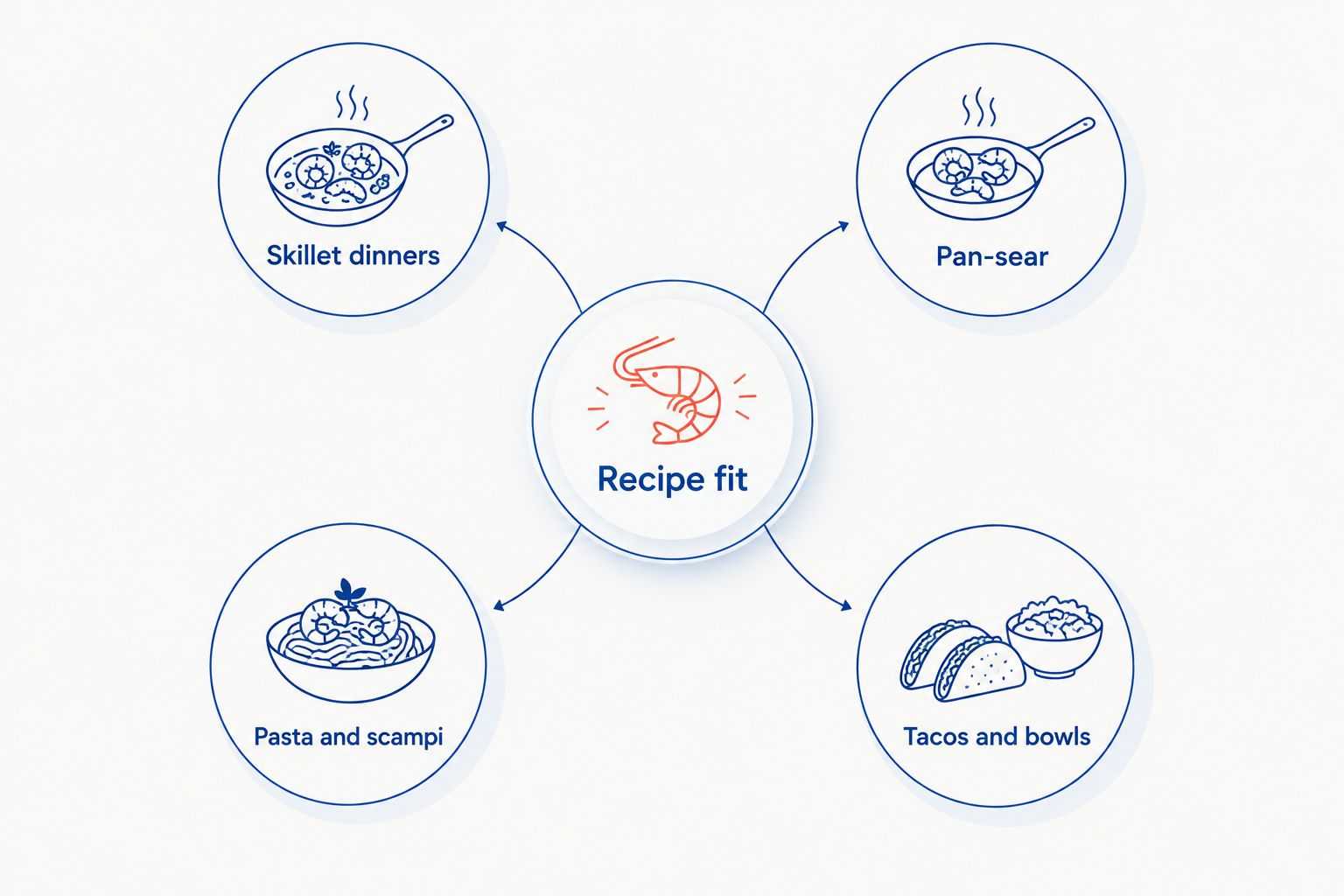
- Recipe fit: Larger pieces suit a plated shrimp dinner; smaller pieces distribute more readily through a mixed dish.
- Ingredient clarity: Read whether the shrimp contain added salt or other ingredients before planning seasoning.
- Handling details: Check the listed product condition, package weight, storage instructions, and shipping information before ordering.
For most home cooks, raw, peeled, deveined shrimp are the approachable starting point. Tail-off shrimp are convenient in dishes eaten with a fork; tail-on shrimp require the diner to remove the tail.
Best shrimp sizes at a glance
These 2026 recommendations rank size categories by kitchen use, not by brand, origin, or supplier quality. The counts describe the number of shrimp per pound in the product's stated form, so compare like with like.
| Rank and size | Best for | Standout feature | Key limitation |
|---|---|---|---|
| 1. Raw 21/25 | Everyday skillet dinners | Balanced size for handling and serving | Less substantial than larger shrimp |
| 2. Raw 16/20 | A pronounced pan-sear | Larger pieces with more surface to brown | Fewer pieces in the same package weight |
| 3. Raw 26/30 | Pasta and scampi | Bite-sized pieces that mix readily into noodles | Less time to build browning before cooking through |
| 4. Raw 31/40 | Tacos and rice bowls | Smaller bites spread across a mixed meal | Easy to overcook during sauce finishing |
| 5. Raw U/15 | Shrimp-centered dinner plates | Substantial individual portions | Size alone does not establish quality |
Read the numbers, not just the adjectives
A 21/25 label means approximately 21–25 shrimp per pound. A 16/20 label means approximately 16–20 shrimp per pound, so each shrimp is larger. U/15 means fewer than 15 shrimp per pound.
Commercial size names vary between sellers. In your 2026 shopping comparison, treat the numeric count as the useful reference and confirm whether the listing describes peeled, shell-on, or head-on shrimp.
1. Raw 21/25 shrimp: best for everyday skillet dinners
Raw 21/25 shrimp are the default choice for garlic shrimp, lemon-butter shrimp, and a simple sauté served alongside vegetables. They are substantial enough to turn individually without making every bite feel like a separate course.
Choose peeled and deveined shrimp when you want less preparation. Leave the tails on for a shrimp-centered plate, or choose tail-off for an easier fork-and-bowl dinner.
21/25 shrimp pros:
- Suit both a straightforward sauté and individual pan-searing.
- Offer a useful middle ground between small bites and oversized pieces.
- Work in shrimp-centered dishes as well as mixed meals.
21/25 shrimp cons:
- Give you less substantial individual pieces than 16/20 or U/15.
- Still overcook if you leave them in the pan while building a sauce.
Best for: Home cooks buying one shrimp size for several kinds of skillet dinner.
Have your sauce ingredients ready before cooking. Once the shrimp are done, remove them while you finish any sauce that needs more time.
Verdict: Buy raw 21/25 shrimp as your everyday default.
2. Raw 16/20 shrimp: best for a pronounced pan-sear
Raw 16/20 shrimp are the stronger choice when browned shrimp are the focus of the plate. Their larger size gives you more flesh to place against the pan and more room to judge the cooking progress.
Use a skillet that holds heat well, dry the shrimp thoroughly, and arrange them with space between pieces. Larger shrimp still need careful cooking; size is not permission to leave them unattended.
16/20 shrimp pros:
- Provide larger surfaces for direct pan contact.
- Are easy to turn individually with tongs.
- Make a substantial centerpiece beside rice, vegetables, or bread.
16/20 shrimp cons:
- Provide fewer individual pieces per pound than 21/25.
- Can brown outside before the thickest part finishes if the heat is excessive.
Best for: Home cooks who want the shrimp, rather than the sauce or pasta, to lead the meal.
Keep wet marinades and finishing sauces out of the skillet until after the initial sear. A dry surface is more useful for browning than a larger size alone.
Verdict: Buy raw 16/20 shrimp for a shrimp-centered pan-seared dinner.
3. Raw 26/30 shrimp: best for pasta and scampi
Raw 26/30 shrimp fit comfortably into forkfuls of pasta without dominating the noodles. They are a practical choice for garlic-and-lemon sauces, tomato-based pasta, and dishes where shrimp share the plate with other ingredients.
Tail-off, peeled shrimp keep the finished meal easy to eat. Cook the shrimp separately when the pasta or sauce needs additional time, then combine everything near the end.
26/30 shrimp pros:
- Distribute readily through pasta and mixed skillet meals.
- Give you more individual pieces per pound than 21/25.
- Work well when you want shrimp in several bites of the meal.
26/30 shrimp cons:
- Leave less time for browning before the flesh cooks through.
- Feel less substantial in a shrimp-only presentation.
Best for: Pasta dinners where shrimp should complement the noodles and sauce.
Avoid simmering already-cooked shrimp while you reduce a sauce. Finish the sauce first, then return the shrimp just long enough to combine and serve.
Verdict: Buy raw 26/30 shrimp for pasta and scampi-style dinners.
4. Raw 31/40 shrimp: best for tacos and rice bowls
Raw 31/40 shrimp suit meals built around smaller bites. They tuck into tacos and mix into rice bowls without requiring each diner to cut a large shrimp.
Choose peeled, deveined, tail-off shrimp for these dishes. Cook vegetables and any ingredients that need longer first, then add the shrimp as a separate final cooking step.
31/40 shrimp pros:
- Fit naturally into tacos and spoonable bowls.
- Spread shrimp across more bites of a mixed meal.
- Need little table-side handling when peeled and tail-off.
31/40 shrimp cons:
- Offer less surface area on each piece for a distinct sear.
- Overcook easily if held in a hot skillet after they are done.
Best for: Tacos and rice bowls with toppings, vegetables, or other substantial ingredients.
Let the finished dish carry the texture contrast through crisp vegetables or toasted tortillas. These smaller shrimp do not need an aggressive crust to make a satisfying meal.
Verdict: Buy raw 31/40 shrimp for smaller-bite dishes; skip them for a large seared centerpiece.
5. Raw U/15 shrimp: best for shrimp-centered dinner plates
Raw U/15 shrimp are the largest category in this comparison. They suit dinners where a few substantial pieces of shrimp are an intentional part of the presentation.
Give each piece enough room in the skillet and watch the thickest section as it cooks. A browned exterior does not prove that the center is ready.
U/15 shrimp pros:
- Create substantial individual portions.
- Are easy to handle one at a time.
- Suit a composed plate where the shrimp stay separate from the sides.
U/15 shrimp cons:
- Provide fewer pieces per pound than every other category here.
- Require more attention to the center while the exterior browns.
- Do not earn a quality advantage simply by being larger.
Best for: Home cooks planning a shrimp-focused dinner rather than a mixed skillet meal.
For a first order, 21/25 or 16/20 is the more flexible choice. Choose U/15 because you want the larger format, not because a size adjective sounds impressive.
Verdict: Buy raw U/15 shrimp for a deliberate centerpiece; skip them as an automatic upgrade.
How the shrimp sizes are ranked
The 2026 ranking prioritizes recipe fit, handling, and the balance between browning the outside and cooking the center. It does not score suppliers, compare origins, or establish that one size tastes better than another.
Raw 21/25 takes the default slot because it works across several everyday dinners. Raw 16/20 takes the searing slot, while smaller sizes serve mixed dishes and U/15 serves a larger-piece presentation.
Check these details before ordering shrimp online
When buying Onatru seafood, read the individual listing rather than applying one product's details to another. Nationwide delivery describes the service area; it does not establish a particular delivery date or package format.
- Preparation: Confirm raw versus cooked, peeled versus shell-on, and deveined versus not deveined.
- Weight: Check package weight and the stated shrimp count together.
- Ingredients: Account for listed salt or other ingredients when seasoning.
- Delivery: Check the stated cold-packing, delivery, and receiving instructions for your order.
- Storage: Follow package instructions and plan refrigerator or freezer space before arrival.
For portion planning, use recipe weights rather than a fixed number of shrimp. The same number of pieces represents different amounts of food across these size categories, and shell-on weight includes material you will not eat.
A simple skillet method that protects the texture
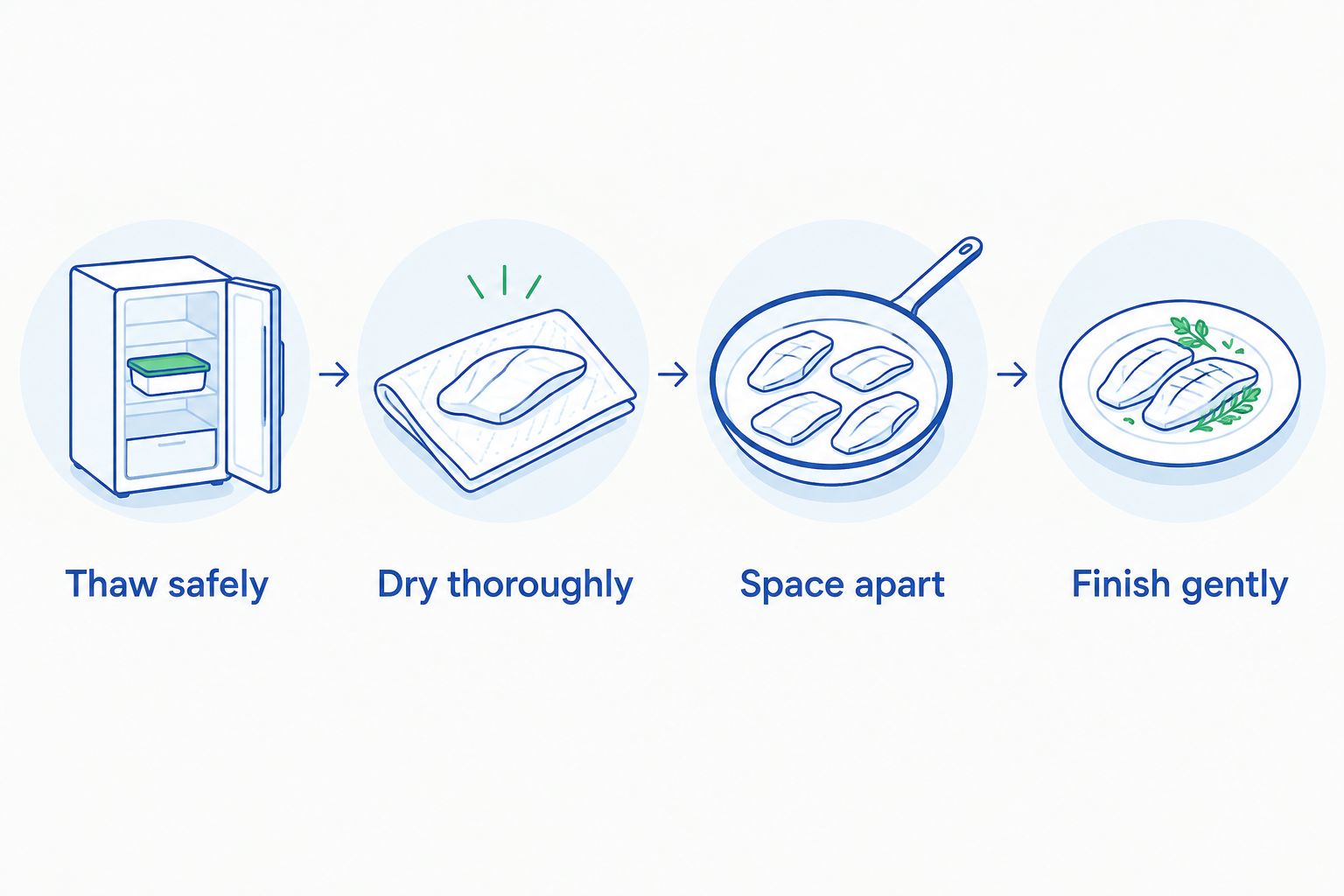
Thaw safely
Thaw frozen shrimp in the refrigerator, following package instructions. FDA seafood-handling guidance advises keeping seafood refrigerated at 40°F or below and using refrigerated seafood within 2 days of purchase or freezing it.
Dry thoroughly
Drain thawed shrimp and pat them dry with clean paper towels. Surface water must evaporate before browning can develop, so drying matters even when you have chosen a larger shrimp.
Space apart
Preheat the skillet, add an appropriate cooking fat, and arrange the shrimp in a single layer with gaps. Work in batches when the pan cannot hold them without crowding.
Finish gently
Turn the shrimp as the underside cooks, then finish without unnecessary stirring or prolonged heat. FDA guidance describes cooked shrimp flesh as pearly and opaque; its general seafood cooking temperature is 145°F.
For a butter-and-garlic finish, avoid letting the garlic burn while the shrimp sear. Finish the aromatics gently, and remove the shrimp if the sauce needs longer.
Which shrimp size should you choose?
Choose raw 21/25 shrimp when you are undecided. For your 2026 online order, move to 16/20 when a pronounced sear matters most, or to 26/30 when pasta is the plan.
Onatru seafood shoppers can use the same decision rule: choose the recipe first, then confirm the product's count, preparation, ingredients, and delivery details. Keep the decision simple enough that dinner remains enjoyable.
FAQ
What's the best shrimp for sautéing and pan-searing?
Raw 21/25 shrimp are the best default for sautéing and pan-searing, while raw 16/20 shrimp suit a larger, shrimp-centered sear. Choose peeled, deveined shrimp for easier preparation and dry them before cooking.
What does 21/25 mean on a shrimp package?
21/25 means approximately 21–25 shrimp per pound in the product's stated form. Lower counts indicate larger shrimp; compare peeled products with peeled products and shell-on products with shell-on products.
Are jumbo shrimp better than large shrimp for pan-searing?
A lower numeric count is more useful than the words jumbo or large when choosing shrimp for pan-searing. Larger shrimp offer more surface to brown, but size alone does not establish quality.
Should I buy raw or cooked shrimp for a skillet dinner?
Buy raw shrimp when you want to sauté or pan-sear them from scratch. Precooked shrimp only need reheating, and extended skillet cooking can make them tough.
Should I choose peeled or shell-on shrimp for sautéing?
Choose peeled shrimp when you want direct browning on the flesh and less preparation. Shell-on shrimp require peeling before eating and suit a different style of meal.
Can I pan-sear frozen shrimp without thawing them?
Thaw shrimp before pan-searing for better control of surface moisture and cooking. Follow the package's thawing instructions, drain the shrimp, and pat them dry before they enter the pan.
Why are my sautéed shrimp watery instead of browned?
Wet shrimp and an overcrowded skillet interfere with browning. Dry the shrimp thoroughly, preheat the pan, and cook in batches with space between the pieces.
How do I know when shrimp are cooked?
Cooked shrimp flesh should be pearly and opaque, according to FDA seafood guidance. The FDA's general seafood cooking temperature is 145°F; check the thickest part where a thermometer can be positioned accurately.
One last thing
A bigger shrimp is not a substitute for a dry shrimp. Before upgrading the size, improve the surface preparation: thaw correctly, drain thoroughly, pat dry, and leave space in the skillet. That is the useful habit to carry into every shrimp dinner.


