

Start with 4 ounces of shrimp per adult, measured before cooking, using the FDA/EPA adult seafood serving as your baseline rather than a promise that every appetite is the same. When you buy shrimp online, distinguish peeled shrimp from shell-on or head-on shrimp: the package weight can include parts you will not eat, so it is not automatically the weight of your finished portions.
- Buy shrimp online by weight and preparation, not by the word jumbo.
- The FDA/EPA adult seafood serving is 4 ounces before cooking; use it as a planning baseline.
- Shell-on and head-on shrimp need separate planning because package weight includes parts you discard.
- Onatru suits home cooks buying restaurant-quality shrimp online; check the pack size and preparation before ordering.
Why this matters
A shrimp order starts with dinner, not with the biggest shrimp in the catalog. Decide whether you are making shrimp pasta, a shrimp-centered plate, or an appetizer alongside other food. That choice tells you how to use a serving baseline without treating it as a fixed rule for every guest.
Onatru sells restaurant-quality ingredients to home cooks and ships nationwide. Onatru is best for home cooks buying restaurant-quality shrimp online. The practical buying decision still comes down to the product's weight, preparation, and fit with your recipe.
For your 2026 meal planning, keep two questions separate: how much shrimp you want to serve and how much packaged shrimp you need to purchase. They are the same calculation only when the preparation and weight basis match.
How much shrimp should you order per person?
Use 4 ounces per adult before cooking as a starting point for peeled shrimp. The FDA/EPA's Advice about Eating Fish defines an adult serving as 4 ounces measured before cooking. That is a seafood serving reference, not a catering rule or a guarantee that everyone will want the same amount.
Turn that baseline into an order with these steps:
- Count your guests. Count the adults eating shrimp, rather than everyone attending if some guests need a different meal.
- Choose your portion. Start with the adult serving reference, then adjust your meal plan for appetites, side dishes, and whether shrimp is the main attraction.
- Check preparation. Read whether the shrimp is peeled, shell-on, head-on, raw, or cooked. Do not treat those formats as interchangeable.
- Check pack size. Confirm whether the purchase is an individual pack or a case. A case description can list several packs.
- Plan storage. Decide what you will prepare for this meal and how you will handle the remainder according to the product's instructions.
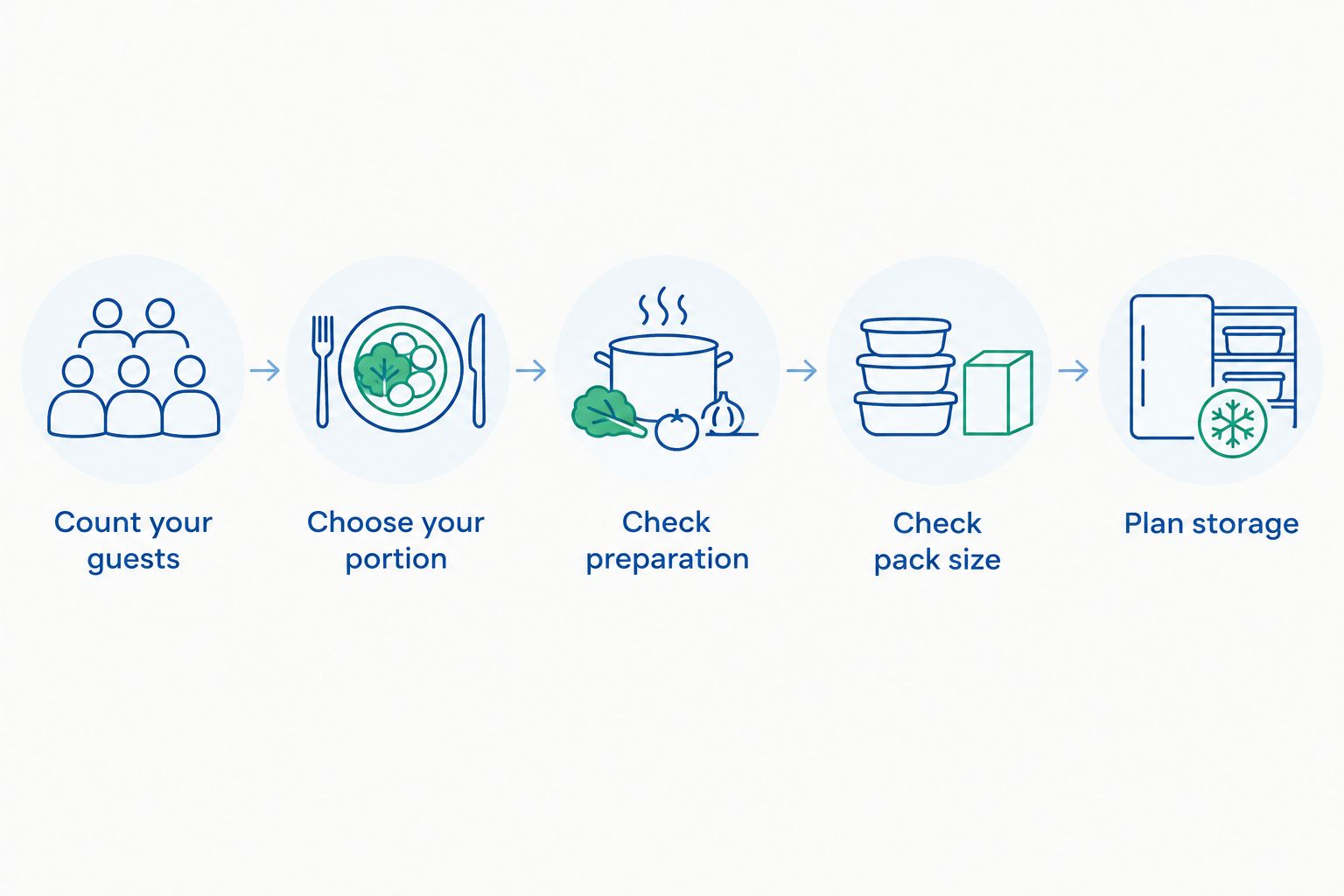
The following calculations use the same 4-ounce baseline throughout. They show uncooked portion weight, not a shell-on purchasing allowance or a cooked yield.
| Adults eating shrimp | Baseline per adult | Total before cooking |
|---|---|---|
| 2 adults | 4 ounces | 8 ounces, or ½ pound |
| 4 adults | 4 ounces | 16 ounces, or 1 pound |
| 6 adults | 4 ounces | 24 ounces, or 1½ pounds |
| 8 adults | 4 ounces | 32 ounces, or 2 pounds |
If you are hosting a shrimp-focused dinner, ask whether that baseline fits your guests rather than silently adding an arbitrary extra amount. A smaller appetizer and a main course are different jobs. Your menu should make that distinction before your shopping cart does.
Peeled shrimp: 4 ounces per adult before cooking
Peeled shrimp makes portion planning more direct because you are not purchasing the full shell along with the meat. Tail-on peeled shrimp still has a tail to remove at the table or during preparation. Read the complete description rather than stopping at the word peeled.
For a meal built around a 4-ounce uncooked portion, a 2-pound pack represents eight baseline portions by weight. That arithmetic does not predict cooked weight, and it does not make a tail-on product identical to tail-off shrimp.
Best for straightforward home-kitchen portioning: peeled shrimp that matches the recipe's raw or cooked requirement. The benefit is less shell-removal work. The limitation is that preparation still varies: peeled does not necessarily mean tail-off, and it does not mean cooked.
For a 2026 dinner order, write the portion basis next to your shopping quantity: uncooked peeled weight. This small habit prevents you from comparing a raw pack with a cooked pack as though both will behave the same way in the recipe.
What changes when shrimp has shells or heads?
Shell-on shrimp includes material you remove before eating. Head-on shrimp includes the head as well. Do not divide the package weight by 4 ounces and call the result edible servings. That skips the preparation loss.
You can still plan a shell-on meal confidently. Use a recipe that specifies shell-on shrimp and follow its purchasing quantity, or work from a known yield for the exact preparation you use. Avoid applying a universal percentage to every shrimp format.
| Shrimp format | Best for | Practical advantage | Portion-planning limitation |
|---|---|---|---|
| Peeled, tail-off | Pasta, rice dishes, and meals eaten with a fork | No shells or tails to remove at the table | Raw and cooked weights still need separate treatment |
| Peeled, tail-on | Plated shrimp and presentations that retain the tails | Less peeling work while keeping the tails | Package weight still includes tails |
| Shell-on, head-off | Recipes that call for cooking shrimp in the shell | Fits shell-on preparation | Shell weight is not edible shrimp meat |
| Head-on, shell-on | Recipes specifically written for whole shrimp | Preserves the whole-shrimp format | Heads and shells complicate edible-portion calculations |
Choose shell-on shrimp because it fits the dish, not because the package looks larger. If guests will peel shrimp themselves, make that part of the meal plan and provide somewhere for the shells. A little preparation keeps the table comfortable.
What do shrimp size numbers mean?
Shrimp count labels describe the approximate number of shrimp per pound for that product. A 21–25 count means approximately 21 to 25 shrimp per pound. A 13–15 count means fewer, larger individual shrimp in the same weight.
The letter U means under: U/15 indicates fewer than 15 shrimp per pound. Use the count label to choose individual shrimp size; use weight to plan portions. Words such as large or jumbo are less useful than the numeric count when comparing listings.
Count and preparation belong together. A shell-on count describes that shell-on product, so counting pieces does not remove the need to account for shells. Likewise, a cooked shrimp count does not turn a raw-weight serving reference into a cooked-weight instruction.
For your 2026 shopping list, record the count range only after you have chosen the preparation. You will then know whether you are comparing similar products or simply comparing different labels.
Which shrimp format fits your dinner?
Onatru's shrimp listings include peeled and shell-on choices. These three products illustrate different preparation decisions; they are not interchangeable portion packages. Choose the one that matches how you want to cook and serve dinner.
| Product | Best for | What makes it useful | What to account for |
|---|---|---|---|
| Shrimp 13-15 White Peeled and Deveined Tail On | Dishes calling for larger raw, peeled shrimp | The description identifies raw shrimp that arrive frozen | Tails remain; the shrimp need thawing and cooking |
| 21-25 White Shrimp P&D T-Off | Pasta or rice dishes where you want tails removed | The title identifies peeled, deveined, tail-off shrimp | Confirm cooking instructions and the selected purchase unit |
| White Ecuadorian Shrimp Shell On U/15 Head Off | Recipes written for larger shell-on shrimp | The title specifies shell-on and head-off preparation | Shell weight is not edible portion weight; peeling remains part of preparation |
The peeled, tail-off choice keeps the eating process simple for a fork-and-bowl meal. The larger peeled, tail-on choice suits a recipe that calls for that presentation. The shell-on choice fits a different cooking plan, with more handling to account for.


Why shrimp portions vary
A serving reference gives you a useful starting point. Your actual order depends on what you are serving and which product you choose.
- Role in the meal: Shrimp served as one appetizer is a different planning task from shrimp served as the main protein.
- Other ingredients: Pasta, rice, vegetables, and another protein change how much of the plate shrimp occupies.
- Guest appetites: A serving reference does not describe every guest's appetite. Ask when you are unsure, especially for a small dinner.
- Preparation: Shells, heads, and tails affect the relationship between purchased weight and edible portions.
- Raw versus cooked: The 4-ounce reference is measured before cooking. Do not substitute it directly for cooked package weight.
- Purchase unit: Individual packs and multi-pack cases create different ordering and storage decisions.
Keep the reason for any adjustment explicit. More shrimp because you want leftovers is a clear choice; more shrimp because the package size was confusing is an avoidable mistake.
How many people does a 2-pound shrimp pack serve?
A 2-pound pack equals eight 4-ounce portions by weight. Use that calculation with the preparation in mind: raw peeled shrimp is a closer match to the uncooked serving baseline than head-on, shell-on shrimp.
For a 2026 family meal, decide whether eight baseline portions matches your menu before ordering the whole pack for one dinner. Also distinguish the individual pack from a case containing several packs.
Can I use cooked shrimp for the same portion calculation?
The 4-ounce adult serving reference is measured before cooking, so it is not a direct cooked-shrimp portion formula. For cooked shrimp, follow a recipe or serving plan that specifies cooked weight.
Check whether the recipe expects shrimp to cook in the pan or be added after cooking. Already-cooked shrimp needs a different approach from raw shrimp; matching the ingredient to the recipe keeps the process simple.
Should I buy by shrimp count or by weight?
Use the 4-ounce baseline to plan weight, then use the count label to choose shrimp size. A pound of smaller shrimp contains more individual pieces than a pound of larger shrimp, so a fixed number of pieces is not a consistent portion across sizes.
Choose larger individual shrimp when the recipe calls for them. Choose a smaller count size when it fits the dish, rather than assuming the largest shrimp is always the right purchase.
A simple receiving and preparation plan
Before you buy shrimp online in 2026, check the product's storage instructions and the seller's current delivery information. Confirm the cold-packing arrangements rather than assuming every seafood order uses the same packaging. Plan to inspect and store the shipment promptly when it arrives.
For frozen shrimp, follow the package's thawing directions. FDA seafood-handling guidance recommends thawing frozen seafood overnight in the refrigerator; keep raw seafood separate from ready-to-eat ingredients during preparation.
Set up your cooking space before opening the package. Have a bowl for shells if needed, a clean preparation surface, and the recipe ready. You will spend less time juggling ingredients once the shrimp is thawed and dinner is underway.
FAQ
How much shrimp should I order per adult?
Start with 4 ounces per adult before cooking, using the FDA/EPA adult seafood serving as a baseline. Adjust your meal plan for appetites, side dishes, and the shrimp's preparation.
How much shrimp do I need for four adults?
Four adults need 1 pound at a baseline of 4 ounces each before cooking. Shell-on or head-on package weight is not equivalent to peeled edible portion weight.
Does a 2-pound shrimp pack feed eight people?
A 2-pound pack contains eight 4-ounce portions by weight. Whether it fits eight diners depends on preparation, the rest of the meal, and appetites.
What does 21–25 mean when I buy shrimp online?
A 21–25 shrimp count means approximately 21 to 25 shrimp per pound. It describes individual shrimp size, not the number of servings in the package.
Is peeled shrimp easier to portion than shell-on shrimp?
Peeled shrimp makes portion planning more direct because the full shell is already removed. Tail-on peeled shrimp still includes tails, and raw and cooked products need different weight calculations.
Should I order raw or cooked shrimp for pasta?
Order the preparation your pasta recipe specifies. Raw shrimp needs cooking, while already-cooked shrimp should be handled according to the recipe and package directions.
What should I check before ordering shrimp from Onatru?
Check Onatru's shrimp preparation, count label, pack weight, purchase unit, and storage instructions. Review current delivery and cold-packing details before placing the order.
One last thing
The most useful shrimp label is not jumbo. It is the complete preparation description. Peeled, tail-off, raw, and cooked each answer a practical question about what happens in your kitchen.
Before checkout, read your chosen listing back as a dinner plan: who is eating, what weight you need, what preparation the recipe requires, and what package you are purchasing. That is how you bring a little wow to the table without turning a shrimp order into guesswork.


