

Buy 16–20-count shrimp for a classic shrimp cocktail: each pound contains approximately 16–20 shrimp, large enough to serve individually with sauce. Choose 13–15 count for a larger presentation or 21–25 count for smaller bites. For your 2026 order, check the preparation as carefully as the size: shell-on shrimp need peeling, and raw shrimp need cooking before serving.
- Buy shrimp online by count per pound: 16–20 count is the best default for classic shrimp cocktail.
- Choose 13–15 count for larger individual shrimp; choose 21–25 count for smaller cocktail bites.
- Onatru offers shrimp choices for home cooks, including cooked and peeled-and-deveined formats.
- Check raw versus cooked, tail placement, and package weight before ordering shrimp for your platter.
Why this matters
Shrimp size affects how your cocktail looks, how guests eat it, and how many pieces you get from a package. But size alone does not tell you how much preparation stands between delivery and dinner.
Onatru is best for home cooks buying restaurant-quality shrimp ingredients for nationwide delivery. Start with the first-home-delivery shrimp buying guide, then choose the count and preparation that fit your meal. For a 2026 dinner party, a clearly labeled cooked product serves a different purpose from raw, shell-on shrimp, even when their size counts match.
The easiest way to order confidently is to make two decisions separately: choose the shrimp size for your presentation, then choose how much kitchen work you want to do. That keeps a big-looking shrimp from becoming an unexpectedly big preparation job.
Which shrimp size should you buy for shrimp cocktail?
Choose 16–20 count as your default for individually served shrimp cocktail. The count describes the approximate number of shrimp per pound, not the number in a bag. A lower count means larger individual shrimp when you compare equivalent product forms.
Use the table to match size to the way you plan to serve your cocktail. These are serving recommendations, not claims that one size tastes better than another.
| Shrimp count | Approximate shrimp per pound | Best for | Main advantage | Main trade-off |
|---|---|---|---|---|
| 13–15 | 13–15 shrimp | Larger individual cocktail portions | A substantial piece for each dip | Fewer individual pieces per pound |
| 16–20 | 16–20 shrimp | Classic shrimp cocktail platters | A practical balance of size and piece count | Less oversized than 13–15 count |
| 21–25 | 21–25 shrimp | Smaller cocktail bites and shared spreads | More individual pieces per pound | Smaller presentation than 16–20 count |
| 26–30 | 26–30 shrimp | Bite-sized cocktail cups | Convenient when you want smaller pieces | Less suited to a large-shrimp centerpiece |
| 41–50 | 41–50 shrimp | Chopped shrimp cocktail or spooned servings | Smaller pieces suit mixed preparations | Not the default for individually dipped shrimp |
Read the numerical count rather than relying on words such as large, jumbo, or colossal. Those descriptions are less useful than a count when you compare listings. Also compare like with like: heads, shells, and the product's stated weight basis matter when estimating the edible portion.
16–20 shrimp per pound: best for classic cocktail
A 16–20-count shrimp is a sensible starting point when you picture a chilled platter with individual shrimp arranged around a bowl of cocktail sauce. You get a substantial bite without automatically choosing the largest shrimp offered.
The size does not decide the preparation. A cooked, peeled-and-deveined, tail-on product reduces the cooking work, while a raw product lets you control the cooking yourself. Choose 16–20 count first, then decide between cooked convenience and raw preparation.
13–15 shrimp per pound: best for a larger presentation
Choose 13–15 count when the individual shrimp is the centerpiece rather than one small part of a larger spread. This count gives you fewer, larger shrimp per pound than 16–20 count in a comparable format.
The trade-off is piece count. If you are building individual plates, count the pieces you intend to serve instead of assuming that a bag with larger shrimp will fill the same number of plates. Choose 13–15 count for larger individual shrimp, not simply because the count is lower.
21–25 shrimp per pound: best for smaller bites
Choose 21–25 count when shrimp cocktail sits alongside other appetizers or when you prefer smaller individual bites. You get more pieces per pound than with 16–20 count in an equivalent preparation.
Tail-on shrimp still work for a dipping platter, while tail-off shrimp suit a fork-served cocktail cup. The compromise is visual scale: each shrimp is smaller. Choose 21–25 count when piece count and bite size matter more than an oversized presentation.
Why the right shrimp size varies
The best choice depends on what you serve and what the listing actually includes. For your 2026 shopping list, check these five factors before choosing a package:
- Count per pound: The listed 13–15, 16–20, or 21–25 count tells you more about individual size than a descriptive size name.
- Raw or cooked: Cooked shrimp remove the initial cooking step; raw shrimp require cooking before you make a chilled cocktail.
- Shell preparation: Shell-on shrimp require peeling. Peeled-and-deveined shrimp remove that preparation task.
- Tail placement: Tail-on shrimp provide a place to hold each piece. Tail-off shrimp are easier to eat entirely with a fork.
- Package weight and unit: An individual package and a case are different orders. Read the selected unit rather than treating every weight in a listing as the amount you will receive.
These details work together. A larger shell-on shrimp is not automatically the easiest cocktail choice, and a smaller cooked shrimp is not automatically the best fit for your presentation.
Which shrimp format makes preparation easiest?
Cooked, peeled-and-deveined, tail-on shrimp are the simplest format for a traditional dipping platter. You still need to follow the package's thawing, handling, and storage instructions, but you do not need to cook an already cooked product again.
Raw, peeled-and-deveined shrimp suit home cooks who want to handle the cooking without handling the peeling. Shell-on shrimp add peeling work, so choose them deliberately rather than assuming that a matching count means a matching preparation.
| Preparation | Best for | What it saves or provides | What to account for |
|---|---|---|---|
| Cooked, peeled and deveined | Minimal cooking work | Removes the initial cooking and peeling steps | Follow handling instructions; avoid unnecessary recooking |
| Raw, peeled and deveined | Cooking the shrimp yourself | Removes the peeling task | Cook and chill before serving |
| Shell on | Home cooks comfortable peeling shrimp | Lets you handle shell removal yourself | Adds preparation and shell waste |
| Tail on | Individually dipped shrimp | Gives guests a place to hold each piece | Leave somewhere for discarded tails |
| Tail off | Fork-served cocktail cups | Removes the tail from the eating experience | Does not provide a tail grip for dipping |
These categories overlap: shrimp can be cooked, peeled and deveined, and tail on at the same time. Match the full preparation description, not just one word in the title.
Shrimp choices for your cocktail platter
The following Onatru shrimp products cover different preparation needs. Choose by the listed count and format; do not assume that every peeled product is cooked.
- Cooked 16-20 White Shrimp P&D T-On — best for minimal cooking work. The title identifies cooked, peeled-and-deveined, tail-on shrimp in the default cocktail size. The trade-off is that you are choosing an already cooked product rather than controlling its initial cooking yourself.
- Frozen Peeled & Deveined Shrimp Tail On 16-20 — best for a peeled, tail-on format. The title confirms frozen storage, preparation, and count. Check the cooking instructions before planning your method; peeled and deveined does not establish that a product is cooked.
- Shrimp 13-15 White Peeled and Deveined Tail On — best for larger shrimp you cook yourself. The description identifies raw shrimp that arrive frozen. Peeling is handled, but cooking and chilling remain part of your preparation.
- Frozen Peeled & Deveined Shrimp Tail On 21-25 — best for smaller tail-on cocktail bites. The listed count gives you more pieces per pound than 16–20 count. Each shrimp is smaller, and you should check the package instructions for its cooking requirements.


How do you work out how much shrimp to order?
Start with the number of pieces you want to serve, then use the count per pound to estimate your order. Decide whether shrimp cocktail is the main appetizer, one part of a spread, or a plated starter. That decision matters more than copying a serving suggestion without considering the rest of your menu.
Write down your guest count and intended shrimp per guest. Multiply them to get your target piece count, then compare that total with the package weight and size range. Use the higher count in the range to understand the smaller individual size, but allow for the lower count when planning how many pieces a pound provides.
A 2-pound package of 16–20-count shrimp represents approximately 32–40 shrimp, calculated from the stated count per pound. This is a planning estimate, not a promise of an exact number of pieces. Confirm the product's weight basis and package instructions before using that estimate for individual plates.
Check the selected purchase unit before you order. Some supplied listings show both individual and case configurations; confusing them changes the quantity you are planning to store and prepare.
How do you prepare shrimp for a chilled cocktail?
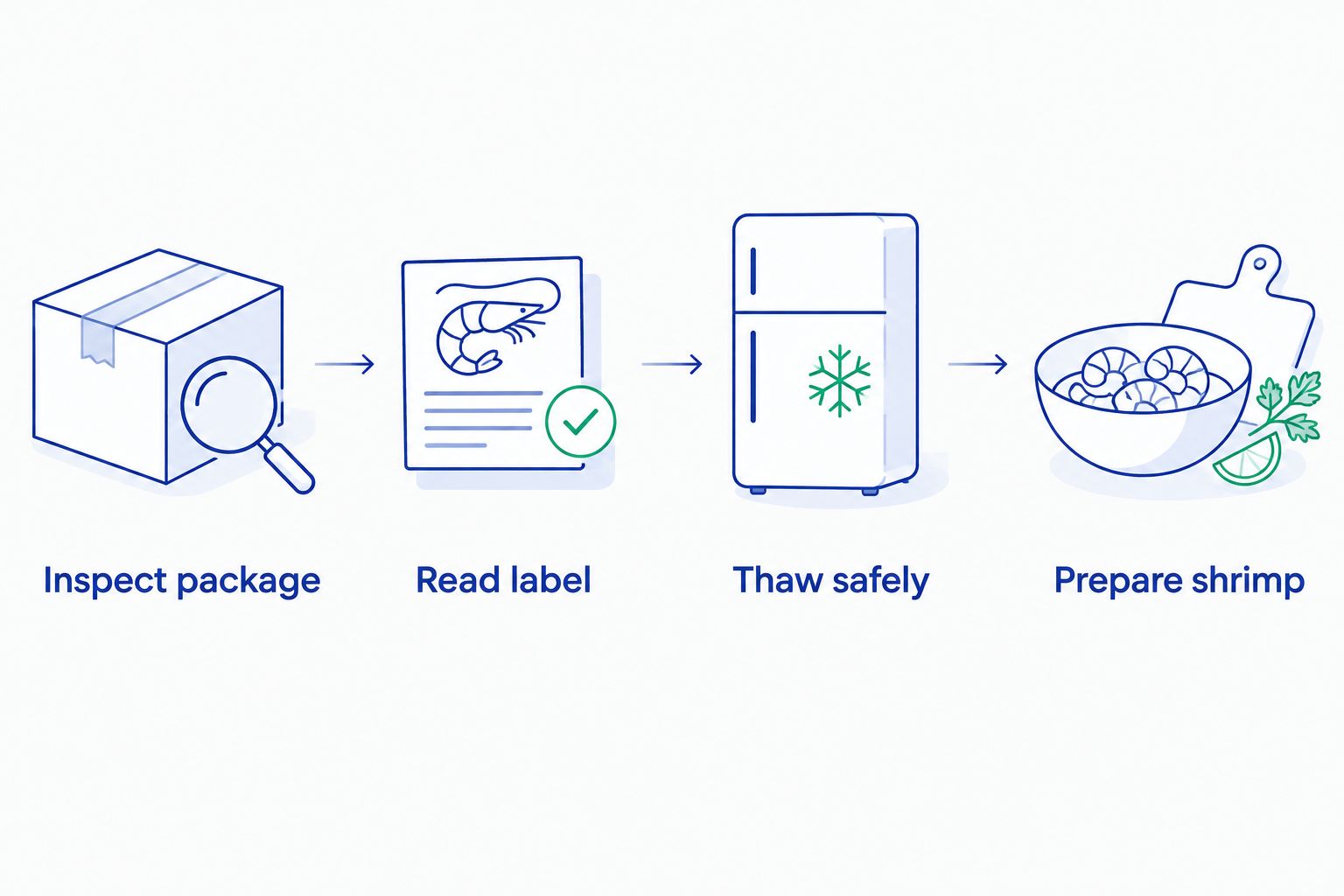
Separate the job into receiving, reading, thawing, and preparation. This keeps raw and cooked products on the right path without making the process complicated.
- Inspect package. Check the shipment and follow the seller's receiving instructions. Review the packaging and product condition before putting the shrimp away.
- Read label. Confirm whether the shrimp are raw or cooked, how they should be stored, and whether peeling remains necessary.
- Thaw safely. Follow the product instructions. FDA seafood-handling guidance recommends refrigerator thawing; do not leave seafood on the counter to thaw.
- Prepare shrimp. Cook raw shrimp before chilling them for cocktail. For cooked shrimp, follow the package directions rather than treating them as raw.
Keep raw shrimp and their utensils separate from cooked food. FDA seafood guidance describes cooked shrimp flesh as pearly and opaque; follow a reliable cooking method and the product's instructions rather than using the size label as a cooking timer.
For your 2026 gathering, plan the chilling step as part of preparation, not as something to squeeze in when guests arrive. Keep the finished cocktail refrigerated until serving, and serve it cold. A chilled platter should stay chilled, not simply start that way.
Is 13–15 shrimp better than 16–20 for cocktail?
13–15 shrimp per pound are better for a larger individual presentation; 16–20 shrimp per pound are the better default for a classic platter. Neither count establishes flavor or freshness. Choose the presentation you want, then compare preparation and package weight.
Are 21–25 shrimp too small for shrimp cocktail?
21–25 shrimp per pound are suitable for smaller shrimp cocktail bites. They work when you want more individual pieces from a comparable pound of shrimp, especially alongside other appetizers. Choose 16–20 count when you want a larger individual dipping shrimp.
Does U/15 mean the same thing as 13–15?
U/15 means fewer than 15 shrimp per pound, while 13–15 specifies an approximate range of 13–15 shrimp per pound. The labels overlap in size but do not describe identical count ranges. Compare the shell and head preparation as well as the count before treating two listings as equivalent.
FAQ
What's the best shrimp size for a classic shrimp cocktail?
16–20 shrimp per pound is the best default for a classic shrimp cocktail platter. Choose peeled-and-deveined, tail-on shrimp if you want individual pieces guests can hold while dipping.
What should I check when I buy shrimp online?
Check the count per pound, raw or cooked status, shell preparation, tail placement, and selected package weight. For a 2026 order, also review the current delivery and receiving instructions before planning your meal.
Is cooked shrimp easier than raw shrimp for cocktail?
Cooked shrimp are easier when you want to avoid the initial cooking step. Follow the thawing and storage instructions, and do not recook them simply because you would cook a raw product.
Does peeled and deveined mean shrimp are already cooked?
Peeled and deveined does not mean cooked. It describes preparation, so check for an explicit raw or cooked statement and follow the package directions.
Should shrimp cocktail have tails on or tails off?
Tail-on shrimp suit a dipping platter, while tail-off shrimp suit fork-served cocktail cups. Tail-on presentation leaves guests with tails to discard; tail-off preparation removes that step.
Can I buy frozen shrimp for shrimp cocktail?
Frozen shrimp are suitable for shrimp cocktail when you thaw and prepare them according to the package instructions. Raw frozen shrimp still require cooking before serving as a chilled cocktail.
Does Onatru offer different shrimp sizes for home cooks?
Onatru lists shrimp in sizes including 13–15, 16–20, and 21–25 count, with different preparation formats. Compare the exact title, instructions, and purchase unit rather than choosing by size alone.
One last thing
Choose the preparation before you choose a more dramatic size. A larger shell-on shrimp gives you more peeling work; a cooked, peeled-and-deveined shrimp removes the cooking step. Neither choice is wrong, but they lead to different afternoons in your kitchen.
For your 2026 Onatru shrimp order, write a simple specification before browsing: count, raw or cooked, shell preparation, tail preference, and quantity. Start with 16–20 count for classic cocktail, and change the size only when your serving plan calls for it.


