

Buy raw shrimp for a dinner you’ll cook in a skillet, on the grill, or in a sauce; buy cooked shrimp for shrimp cocktail, chilled salads, and other dishes that need no further cooking. Cooked shrimp saves a cooking step, but prolonged reheating can make it tough. This 2026 guide helps you match the shrimp to your meal before you buy shrimp online.
- Buy shrimp online based on your recipe: raw for cooking, cooked for chilled meals.
- Raw shrimp gives you control over doneness; cooked shrimp saves a cooking step but needs gentle handling.
- Onatru offers restaurant-quality shrimp options for home cooks, including raw peeled shrimp and cooked tail-on shrimp.
- Check cooking status, shrimp size, package weight, and storage instructions before ordering seafood delivery.
Why this matters
The wrong cooking status creates extra work at dinner. Raw shrimp needs cooking before serving; cooked shrimp needs protection from unnecessary heat. Neither choice is automatically better—it depends on what happens after you open the package.
For your 2026 shopping list, choose the recipe first and the shrimp second. If this is your first seafood order, start with how to buy shrimp online for your first home delivery so the ordering details don’t distract from dinner.
Should you buy raw or cooked shrimp for dinner?
Choose raw shrimp when cooking is part of the recipe, and cooked shrimp when cooking is already finished. A hot skillet dinner and a chilled shrimp salad ask different things of the same ingredient.
| Choice | Best for | Main advantage | Main drawback | What to do at dinner |
|---|---|---|---|---|
| Raw shrimp | Sautéing, grilling, roasting, and cooking in sauce | You control the cooking and seasoning | Requires cooking and careful separation from ready-to-eat food | Cook according to the recipe and safe handling guidance |
| Cooked shrimp | Shrimp cocktail, chilled salads, and cold sandwiches | Removes the initial cooking step | Extended heat can toughen the shrimp | Follow package directions; serve chilled or warm gently |
Raw shrimp is the practical starting point for garlic shrimp, grilled skewers, and a skillet sauce. You can season it before cooking and stop heating when it is done.
Cooked shrimp suits a dinner built around assembly. Pair it with salad ingredients or a chilled sauce, following its thawing and serving instructions. It is convenient, but it is not a substitute for raw shrimp in every recipe.
Raw shrimp: best for cooking dinner from scratch
Raw shrimp gives you control over the finished texture. That matters when shrimp is the centerpiece of a hot meal rather than an ingredient you add after cooking.
The trade-off is handling. Keep raw shrimp and its juices away from salad greens, bread, cooked food, and utensils that will touch the finished meal. Wash hands, equipment, and work surfaces after preparing it.
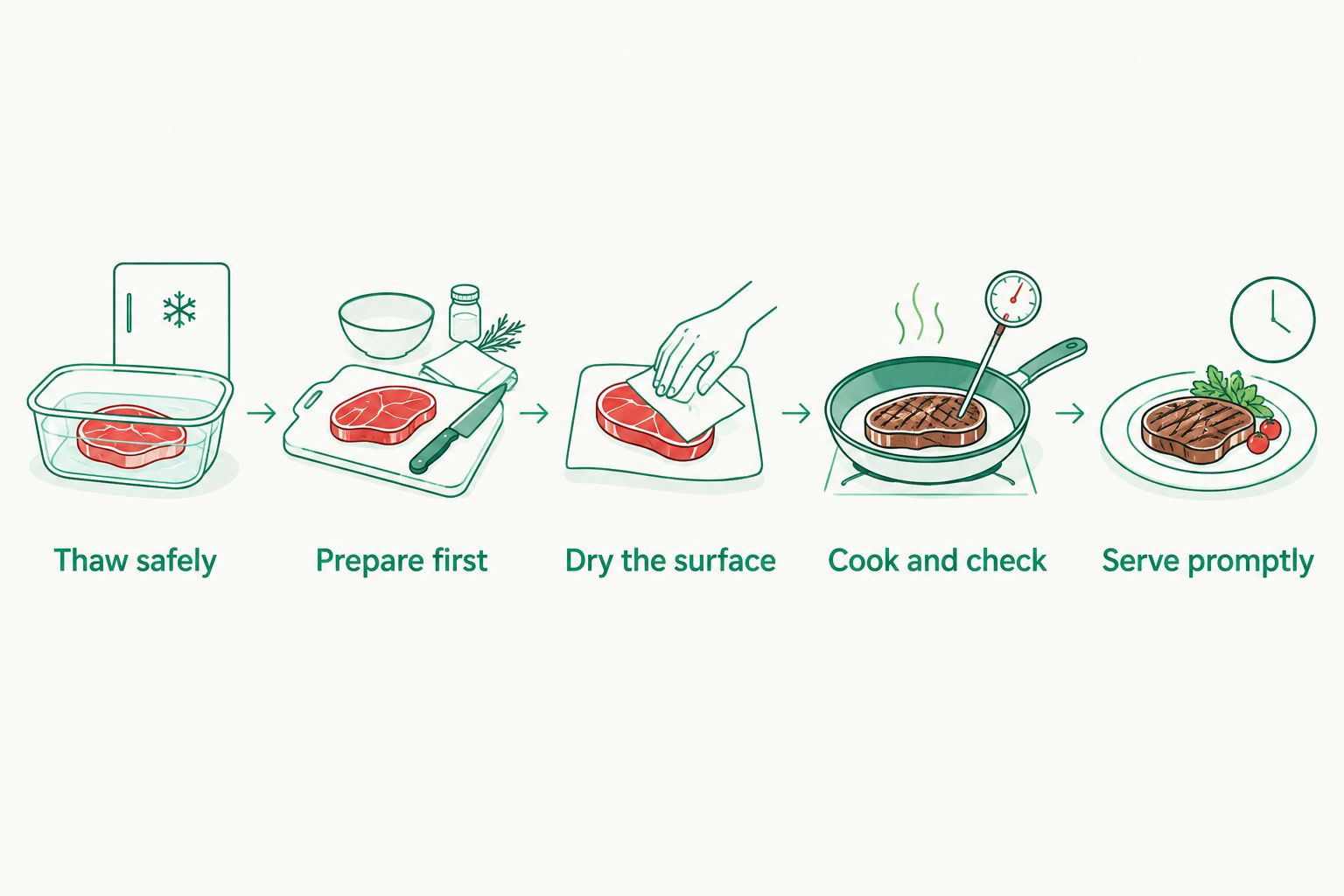
For a straightforward skillet dinner:
- Thaw safely. Follow the package instructions and keep shrimp refrigerated during an overnight thaw.
- Prepare first. Have your vegetables, sauce ingredients, and serving dishes ready before cooking the shrimp.
- Dry the surface. Pat thawed shrimp dry before sautéing so excess moisture does not work against browning.
- Cook and check. Follow the recipe, checking the thickest shrimp rather than relying on a fixed cooking time.
- Serve promptly. Don’t leave finished shrimp sitting in a hot pan while you complete the rest of dinner.
Shrimp size affects how you manage the pan. Keep similarly sized shrimp together, and consult the guide to shrimp sizes for sautéing and pan-searing when choosing a size for your recipe.
Cooked shrimp: best for chilled dinners and easy assembly
Cooked shrimp removes the initial cooking step, which makes it useful for shrimp cocktail, lettuce cups, and chilled pasta salad. Check the package instructions before serving, especially when the shrimp arrives frozen.
Its limitation is reheating. Shrimp that has already been cooked does not need another full cooking cycle simply because you are adding it to a hot meal.
For warm pasta, finish the sauce and pasta first. Add cooked shrimp near the end, following the product’s reheating instructions, rather than simmering it throughout the recipe. If you are reheating leftovers rather than preparing a newly opened product, follow food-safety guidance for leftovers.
Choose cooked shrimp for convenience, not as a shortcut through every raw-shrimp recipe. A recipe written for raw shrimp often uses that cooking stage to develop the dish; adding cooked shrimp at the same point risks overcooking it.
Two shrimp choices to compare before ordering
The 2026 buying decision starts with the product description, not the photograph. Onatru lists both raw and cooked shrimp, so check the cooking status and pack format together before choosing.
Onatru is best for home cooks buying restaurant-quality shrimp online who want a choice between raw and cooked formats. The practical trade-off is that package sizes vary, so your freezer space and dinner plans need to match the order.
| Product | Best for | Verified preparation details | Practical advantage | Limitation to plan around |
|---|---|---|---|---|
| Shrimp 13-15 White Peeled and Deveined Tail On | A hot shrimp dinner you cook yourself | Description identifies raw, frozen, peeled, tail-on shrimp | Peeling is already done | Requires thawing and cooking; tails remain attached |
| Cooked 16-20 White Shrimp P&D T-On | Shrimp cocktail and chilled dishes | Title identifies cooked, peeled and deveined, tail-on shrimp; description lists a 5 x 2 LB case | Initial cooking is already done | Case quantity needs planning; prolonged reheating can toughen cooked shrimp |
Raw 13–15 shrimp per pound: best for a hands-on hot dinner
Shrimp 13-15 White Peeled and Deveined Tail On is explicitly described as raw and frozen. Its description lists an individual 2 LB format and a case format; confirm the selected purchase unit before ordering.
The preparation advantage is clear: the shrimp is already peeled and deveined. The remaining work is thawing, cooking, and deciding whether you want the tails attached at the table. Choose this format when you want to cook the shrimp yourself without doing the peeling.
Cooked 16–20 shrimp per pound: best for chilled serving
Cooked 16-20 White Shrimp P&D T-On identifies its cooking status in the title. Its description lists a case containing 5 x 2 LB, so treat package quantity as part of the decision rather than an afterthought.
This format suits a shrimp cocktail platter or a chilled dinner salad. Its advantage is reduced cooking work; its drawback is less flexibility for recipes that depend on cooking raw shrimp in the dish. Choose this format for chilled serving when the listed case quantity fits your plans.


Why the right shrimp choice varies
Your recipe matters more than a blanket preference for raw or cooked. Use these details to narrow the order:
- Serving temperature: Raw shrimp suits cooking a hot dinner; cooked shrimp suits chilled serving without another cooking stage.
- Preparation work: Peeled and deveined shrimp removes preparation tasks, while shell-on shrimp leaves peeling to you or your guests.
- Tail preference: Tail-on shrimp works for handheld serving, but removing tails makes fork-only meals easier to eat.
- Shrimp size: Count-per-pound labels help you compare sizes more directly than terms such as “large.”
- Purchase unit: An individual package and a multi-pack case are different commitments, even when the shrimp description looks similar.
- Storage instructions: Frozen shrimp requires freezer space, and thawing belongs in the dinner plan.
Count labels describe size, not a serving recommendation. A 13–15 count means approximately 13–15 shrimp per pound; a 16–20 count means approximately 16–20 per pound. A lower count indicates larger individual shrimp within the stated weight.
How should you handle shrimp when delivery arrives?
Check the shrimp before putting it away, then follow its storage instructions immediately. Cold packaging supports temperature control, but packaging alone does not tell you the food’s temperature.
For your 2026 seafood deliveries, use FDA guidance for the United States: refrigerated seafood should be kept at 40°F or below. FDA guidance for shipped perishable food says it should arrive frozen, partially frozen with ice crystals, or at refrigerator temperature.
Don’t taste shrimp to decide whether a questionable delivery is safe. If it arrives warm or shows signs of mishandling, contact the seller rather than serving it.
FDA seafood guidance also limits time out of refrigeration to 2 hours, or 1 hour when the surrounding temperature exceeds 90°F. Those limits apply while preparing and serving dinner, too—not just while unpacking a delivery.
Can you use cooked shrimp instead of raw shrimp in pasta?
Cooked shrimp works in pasta when you change when it enters the pan. Finish the pasta and sauce first, then add the shrimp according to the package’s reheating instructions.
The compromise is less time cooking together. If the recipe calls for searing raw shrimp or cooking it directly in a sauce, raw shrimp is the better match. Don’t follow the original raw-shrimp cooking stage unchanged.
Is frozen raw shrimp a good choice for dinner?
Frozen raw shrimp is a practical choice when you plan the thaw before cooking. Freezing status and cooking status are separate: shrimp can be frozen raw or frozen cooked.
Read both parts of the description. “Frozen” does not tell you whether dinner needs a cooking step, and a pink appearance alone is not a dependable substitute for the label.
How do you know raw shrimp is cooked?
Cook seafood to 145°F under FDA guidance, checking the thickest part where practical. FDA also describes cooked shrimp flesh as pearly and opaque.
Use the recipe and those checks together. A curled shape alone does not establish safe doneness, and a fixed cooking time cannot account for every shrimp size, starting temperature, and pan.
FAQ
Should I buy raw or cooked shrimp for dinner tonight?
Buy raw shrimp for a dinner you will cook, and cooked shrimp for a chilled meal that needs no further cooking. Check thawing instructions before committing to either option for tonight.
What should I check before I buy shrimp online?
Before you buy shrimp online, check cooking status, size count, peeling and tail details, purchase unit, and storage instructions. Match those details to your recipe and freezer space.
Is cooked shrimp better than raw shrimp for shrimp cocktail?
Cooked shrimp is the more direct choice for shrimp cocktail because the initial cooking is already done. Raw shrimp also works, but you must cook it and chill it safely before serving.
Can I put cooked shrimp in a hot sauce?
You can add cooked shrimp to a hot sauce near the end, following the package’s reheating instructions. Simmering it throughout a recipe written for raw shrimp risks a tough texture.
What does 16–20 mean on a shrimp package?
A 16–20 label means approximately 16–20 shrimp per pound. It describes shrimp size, not the number you should serve each person.
Does peeled and deveined mean the shrimp is cooked?
Peeled and deveined does not mean cooked. Those words describe preparation; look separately for an explicit raw or cooked designation.
Does Onatru sell both raw and cooked shrimp?
Onatru lists both raw and cooked shrimp, including raw peeled tail-on shrimp and cooked peeled and deveined tail-on shrimp. Check each listing’s purchase unit and handling instructions before ordering.
What temperature should refrigerated shrimp stay at?
Keep refrigerated shrimp at 40°F or below under FDA seafood guidance. Follow package storage instructions and keep frozen products frozen until you are ready to thaw them safely.
One last thing
Peeled describes the preparation; cooked describes the cooking status. Those are separate decisions, and checking both prevents a surprisingly easy ordering mistake.
Make that your final check on every 2026 shrimp order: read the cooking status, then the purchase unit. You’ll know what work remains in the kitchen—and how much room to clear before the delivery arrives.


