

Best overall for traditional lobster Thermidor: 1.5lb Hard Shell Live Lobster. Best for less preparation: Fresh Cooked Lobster Meat - Order in 2lb Increment. Best for individual shell presentation: Frozen Lobster Tails 5-6 OZ. This 2026 guide compares lobster formats from Onatru so you can choose for your recipe, kitchen, and dinner plans.
- The best lobster for lobster thermidor depends on whether you want whole shells, tail shells, or ramekins.
- Choose 1.5lb Hard Shell Live Lobster for traditional stuffed-shell presentation.
- Choose Fresh Cooked Lobster Meat - Order in 2lb Increment to skip cooking and shelling whole lobster.
- Frozen Lobster Tails 5-6 OZ suit individual presentations; raw claw and knuckle meat suits shell-free Thermidor.
Why this matters
Lobster Thermidor combines lobster meat with a rich sauce, then finishes it under heat, traditionally in the shell. The buying decision starts with that serving vessel. Whole lobster gives you body shells; tails give you smaller shells; picked meat lets you use baking dishes instead.
For home cooks who want lobster Thermidor without shelling a whole lobster, Onatru offers cooked lobster meat. The trade-off is straightforward: less preparation, but no shell for the classic presentation.
For your 2026 dinner plans, choose the format before choosing the size. A beautiful whole lobster is not the easiest purchase if you actually want a small, shell-free supper.
What makes the best lobster for lobster Thermidor?
Use these criteria to judge the options before ordering:
- Serving vessel: Whole shells, tail shells, and ramekins require different purchases. Decide what reaches the table first.
- Cooking state: Raw lobster needs an initial cook; cooked meat needs careful reheating rather than another full cook.
- Meat format: Larger pieces remain distinct in the sauce. Smaller pieces distribute throughout a shell-free bake.
- Order quantity: Individual weight, package weight, and case weight mean different things. Read the selected ordering unit.
- Kitchen workload: Whole lobster adds cooking, splitting, and picking. Shell-free meat removes some of those jobs.
- Product detail: Look for explicit information about frozen condition, ingredients, origin, and handling rather than inferring it from a photograph.
Lobster Thermidor picks at a glance
These 2026 picks rank formats by their fit for home cooking, not by a tasting score. Each serves a different purpose.
| Lobster option | Best for | Standout feature | Key limitation |
|---|---|---|---|
| 1.5lb Hard Shell Live Lobster | Traditional whole-shell Thermidor | Whole live hard-shell format | Requires live handling, cooking, splitting, and picking |
| Fresh Cooked Lobster Meat - Order in 2lb Increment | Reducing preparation | Already-cooked lobster meat | No shells; ordering increment needs attention |
| Frozen Lobster Tails 5-6 OZ | Individual tail-shell presentation | Frozen tails with a stated size range | Tail weight is not picked-meat weight |
| Frozen Raw Lobster Claw & Knuckle Meat | Shell-free Thermidor in ramekins | Raw meat extracted without heat | Requires cooking and provides no serving shells |
1. 1.5lb Hard Shell Live Lobster: best for traditional Thermidor
Choose 1.5lb Hard Shell Live Lobster when the whole-shell presentation is part of the occasion. The listing identifies a live hard-shell lobster with a 1.5 LB average weight. That is whole-animal weight, not a promise of edible meat yield.
You cook the lobster, remove the meat, and retain suitable cleaned shells for filling. This format gives you the traditional starting point, but it asks the most of you before the sauce even begins.
1.5lb Hard Shell Live Lobster pros:
- Provides whole shells for traditional presentation.
- Lets you handle the initial cooking yourself.
- Includes more than tail meat for the filling.
1.5lb Hard Shell Live Lobster cons:
- Requires confidence handling and cooking live lobster.
- Adds shelling and cleanup to your dinner preparation.
- Whole weight does not establish the amount of picked meat.
Best for: A hands-on special dinner where the whole shell matters as much as the finished filling.
Have your tools, cooking vessel, and recipe ready before beginning. Whole lobster becomes much more approachable when splitting and picking are planned tasks rather than surprises.
Verdict: Buy for traditional presentation; skip if you want minimal handling.
2. Fresh Cooked Lobster Meat: best for less preparation
Fresh Cooked Lobster Meat - Order in 2lb Increment removes the initial cooking and shelling work. Use it for Thermidor served in ramekins or another suitable baking dish, with the sauce prepared separately before you combine the components.
The title specifies ordering in 2 lb increments, while the description also contains a 1 LB item reference. Confirm the selected quantity before ordering rather than treating those labels as interchangeable.
Fresh Cooked Lobster Meat pros:
- Skips cooking a whole raw lobster.
- Removes the work of extracting meat from shells.
- Suits shell-free portions in individual baking dishes.
Fresh Cooked Lobster Meat cons:
- Does not provide shells for serving.
- Already-cooked meat needs protection from excessive reheating.
- The ordering increment needs checking against your recipe.
Best for: Home cooks who want to focus on the sauce and finishing rather than shelling.
For an approachable first attempt in 2026, this is the practical default if you are happy to leave out the shell. Keep the lobster pieces distinct and avoid simmering them through the entire sauce-making process.
Verdict: Buy for convenience and shell-free Thermidor.
3. Frozen Lobster Tails 5-6 OZ: best for individual shell presentation
Frozen Lobster Tails 5-6 OZ give you tail shells without requiring a whole lobster. The product description identifies these tails as coming from Stonington, Maine, and describes them as wild caught and free of chemicals and preservatives.
The stated 5–6 oz range refers to the tails, not an equivalent amount of extracted meat. Follow a tail-based Thermidor recipe when planning the filling and presentation.
Frozen Lobster Tails 5-6 OZ pros:
- Provide shells for individual presentation.
- Avoid cooking and picking a whole lobster.
- Have a stated size range and explicit origin information.
Frozen Lobster Tails 5-6 OZ cons:
- Require thawing and shell preparation.
- Provide tail meat rather than a mixture of lobster cuts.
- Shell capacity limits how much filling each tail holds.
Best for: A plated dinner where you want the lobster shell on each plate without working with whole animals.
Decide how you will split and support the shells before cooking. A stable baking arrangement makes filling easier and keeps the sauce where it belongs.
Verdict: Buy for a smaller shell-on presentation.
4. Frozen Raw Lobster Claw & Knuckle Meat: best for ramekin Thermidor
Frozen Raw Lobster Claw & Knuckle Meat is extracted from the shell without heat, according to its description. It gives you raw lobster meat without the shell-removal step, so you can cook it for a shell-free Thermidor recipe.
This is not a direct substitute for already-cooked meat at every recipe stage. Read the method first and include the initial cooking step that raw lobster requires.
Frozen Raw Lobster Claw & Knuckle Meat pros:
- Removes the need to crack and pick shells.
- Lets you control the initial cooking.
- Fits individual ramekins or a shared baking dish.
Frozen Raw Lobster Claw & Knuckle Meat cons:
- Needs thawing and cooking before the dish is finished.
- Provides no shells for traditional presentation.
- Requires adjustment if your recipe assumes cooked lobster.
Best for: Cooks who prefer shell-free preparation but still want to cook the lobster themselves.
Keep the pieces recognizable rather than chopping everything finely. A creamy sauce should coat the lobster, not turn it into an indistinct filling.
Verdict: Buy for shell-free Thermidor with control over the first cook.
Choose your format before adding to your order
Onatru's lobster Thermidor options cover whole lobster, cooked meat, frozen tails, and raw picked meat. Choose the preparation you actually want to do, then confirm the ordering unit and handling directions for that product.
These cards show the exact product names so you can distinguish similar listings. Do not assume that a named tail size describes the total contents of an order.


How to plan portions without confusing shell and meat weight
Start with the quantity your chosen recipe requires, noting whether it specifies whole lobster, tails, or cooked picked meat. Those quantities are not interchangeable. A 1.5 lb whole lobster includes shell and other material that will not become filling.
Likewise, a 5–6 oz tail is not 5–6 oz of shell-free lobster. If your recipe specifies picked meat, do not convert a shell-on weight into servings without a reliable yield reference.
For a home dinner, plan in this order:
- Choose a recipe written for your lobster format.
- Identify whether its quantity means shell-on or picked meat.
- Match the number of portions to your guests and side dishes.
- Check the ordering increment and storage space before purchasing.
Use the recipe's edible-meat requirement, not a product photograph, to plan portions. If lobster is the centerpiece, keep the accompaniments simple so you can concentrate on the filling and finish.
Keep the lobster tender through the final finish
Thermidor brings several tasks together: cooking lobster if necessary, preparing sauce, combining the filling, and browning the top. The easiest way to stay in control is to treat them as separate stages.
- Prepare the sauce: Finish the sauce before adding already-cooked meat.
- Prepare the lobster: Follow the product instructions and recipe for raw or cooked lobster.
- Fill the shells: Use clean, suitable shells or oven-safe baking dishes.
- Finish the top: Follow the recipe's finishing instructions without adding unnecessary cooking.
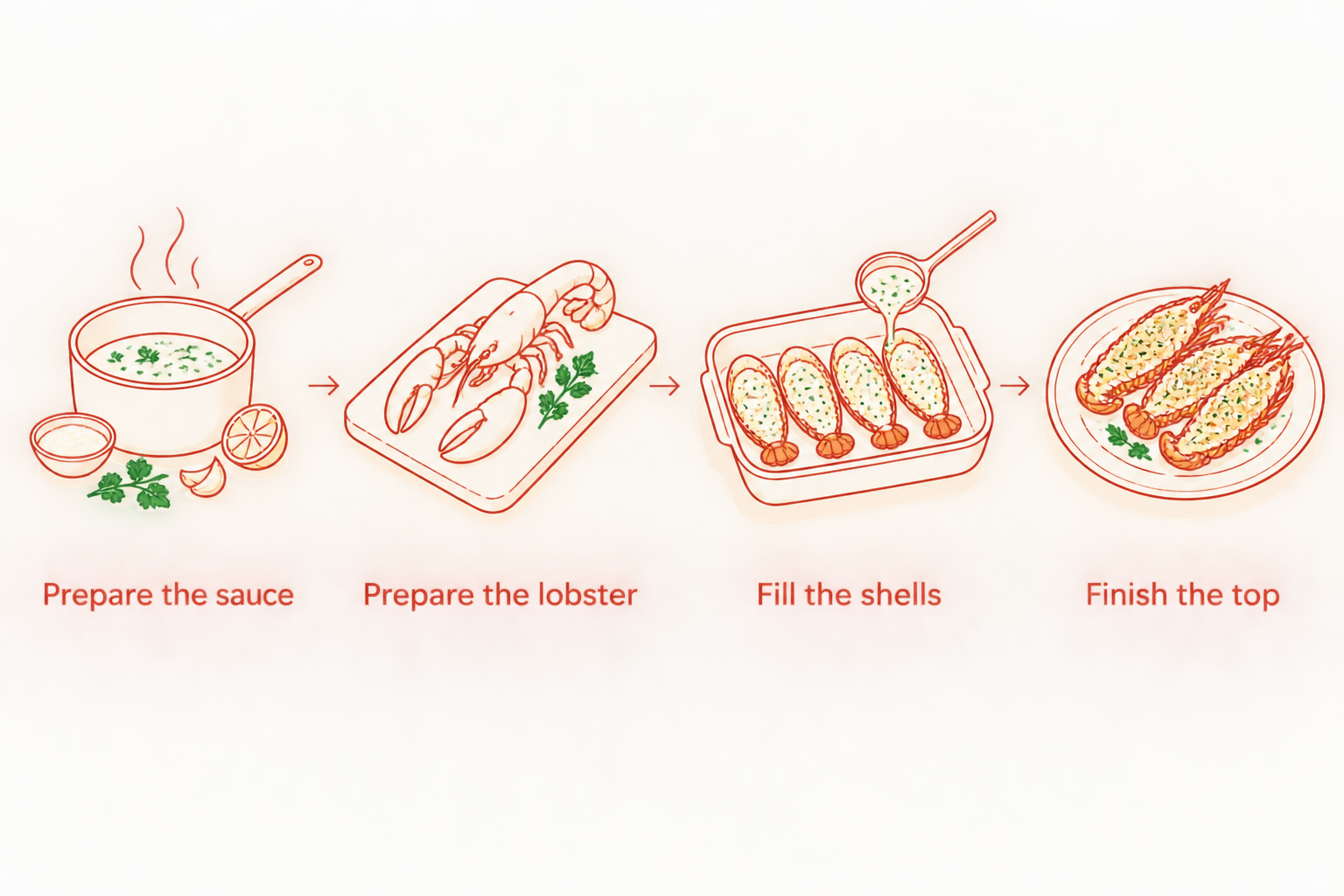
Already-cooked lobster does not need the same initial treatment as raw claw and knuckle meat. That distinction matters more than choosing an impressive-looking tail. Keep the package instructions beside your recipe, especially when substituting one format for another.
Build the rest of dinner around the rich filling
Lobster Thermidor already brings a creamy sauce and browned topping to the plate. A crisp salad, simply cooked vegetables, or bread can round out dinner without introducing another rich centerpiece.
If you are choosing wine, contrast is a sensible starting point: the acidity associated with Txakolina wine for seafood offers a different direction from matching a creamy dish with an equally weighty wine. Keep the sauce's richness in mind, not just the lobster itself.
Set out plates and finish the sides before the lobster reaches its final cooking stage. You will have fewer competing jobs when the topping is ready and dinner needs to reach the table.
How the picks were ranked
The 2026 ranking prioritizes serving vessel, cooking state, preparation work, and clarity of product information. Whole live lobster ranks first for traditional Thermidor because it supplies the whole-shell format; cooked meat wins the convenience category because it removes the initial cooking and shelling tasks.
These are recipe-fit recommendations, not claims that one listed product tastes better than another. No tasting scores or delivery-performance comparisons determine the order.
Which lobster should you choose?
Choose whole live lobster for traditional shells, cooked meat for less preparation, frozen tails for individual shells, and raw picked meat for ramekins. There is no reason to take on live-lobster handling if the finished dish will be served in a baking dish.
For most first-time home cooks making shell-free Thermidor, start with cooked lobster meat. For a traditional centerpiece, choose the whole lobster and give the preparation your attention.
FAQ
What's the best lobster for lobster Thermidor at home?
Whole live lobster is the best fit for traditional whole-shell Thermidor, while cooked picked meat is the easier choice for shell-free preparation. Choose the serving vessel before selecting the product.
Can I use frozen lobster tails for Thermidor?
Yes, frozen lobster tails work for tail-shell Thermidor. Follow the product's thawing instructions and use a recipe that accounts for tail preparation and shell capacity.
Is cooked lobster meat better than raw lobster for Thermidor?
Cooked lobster meat is better for reducing preparation, not automatically better for every recipe. Raw lobster gives you control over the first cook, while cooked meat requires careful reheating.
Do I need lobster shells to make Thermidor?
No, you can serve a Thermidor-style lobster filling in oven-safe ramekins or a baking dish. Whole or tail shells are necessary only if you want that presentation.
How much lobster should I order for Thermidor?
Order according to the lobster format and quantity specified in your recipe. Whole-lobster and tail weights include shell, so they do not equal the same weight of picked meat.
Can I substitute raw claw and knuckle meat for cooked lobster?
Yes, but raw claw and knuckle meat needs cooking rather than simply following the reheating stage of a cooked-meat recipe. Adjust the preparation method before assembling the dish.
What should I check before ordering lobster online in 2026?
Check the selected quantity, raw or cooked status, fresh or frozen description, and handling directions. Confirm the delivery and packaging details for your order rather than assuming them from the product name.
One last thing
The shell is a serving vessel, not a requirement for a satisfying lobster dinner. If splitting shells is the part holding you back, choose picked meat and ramekins. Onatru sells restaurant-quality ingredients to home cooks nationwide; your job is to choose the format that makes cooking feel manageable.


