

When you buy lobster online, open the delivery promptly, check the lobster’s condition and temperature, and move it into the right storage before doing anything else. Keep chilled lobster at 40°F or below, frozen lobster at 0°F, and live lobster refrigerated in a ventilated container—not submerged in water or sealed airtight.
- When you buy lobster online, check temperature and package condition before putting the order away.
- Onatru serves home cooks ordering restaurant-quality lobster for nationwide delivery; follow each product’s storage instructions.
- Store frozen lobster at 0°F and chilled lobster at 40°F or below.
- Keep live lobster refrigerated with ventilation; never submerge it in fresh water.
How do you inspect and store a delivered lobster order?
Check the food, not just the cold packs. A delivery box, an icy gel pack, or a clean-looking shell cannot establish that lobster stayed at a safe temperature throughout transit.
Onatru is best for home cooks buying restaurant-quality lobster for nationwide delivery. Whether you order live lobster, frozen tails, or prepared meat, use this receiving routine before planning dinner.
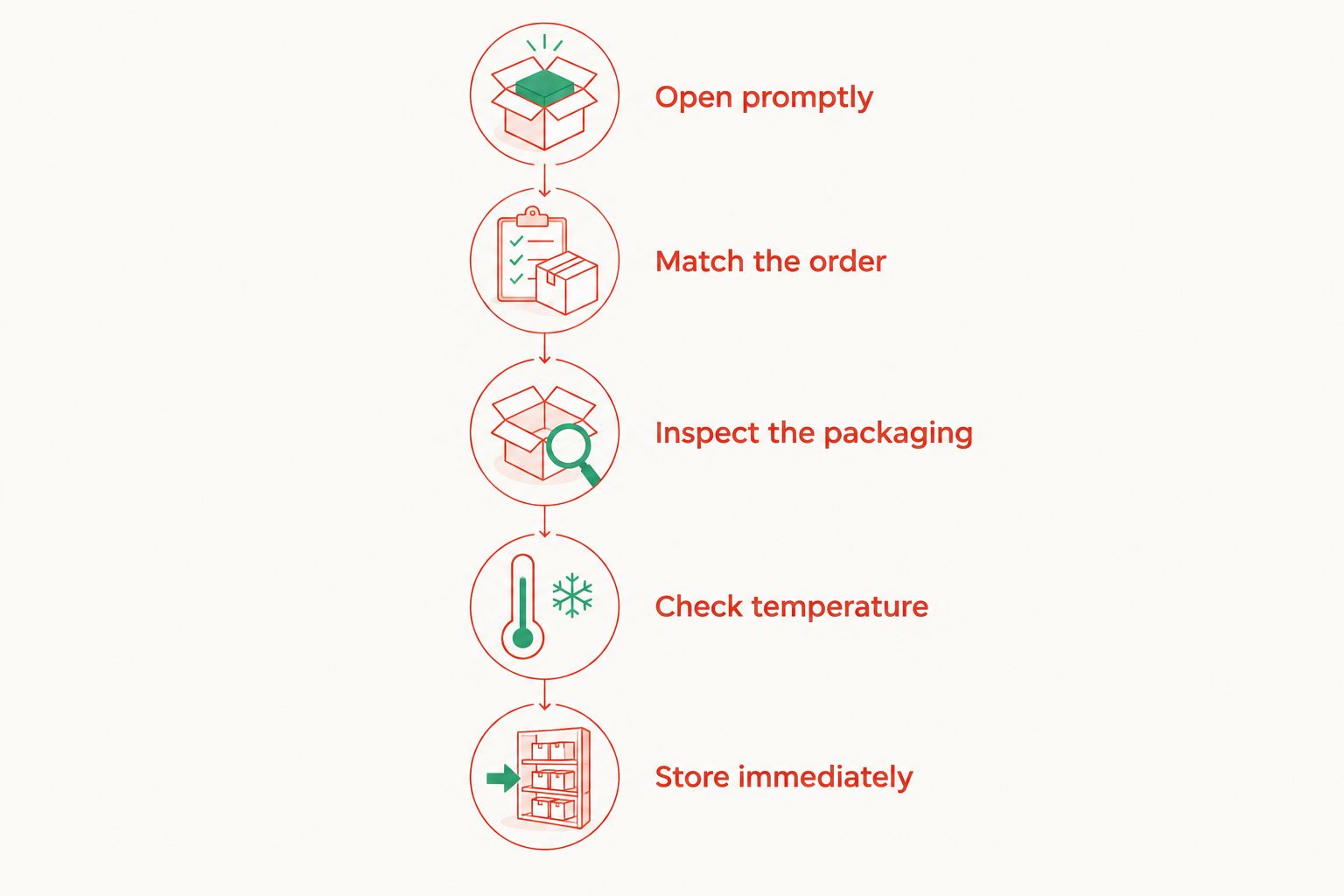
- Open promptly. Bring the delivery inside and unpack it rather than leaving it on the porch or in the shipping carton.
- Match the order. Read each label for the product name, raw or cooked status, storage directions, and any use-by instructions.
- Inspect the packaging. Look for torn food pouches, broken seals, leaks, and evidence that contents have contaminated other packages.
- Check temperature and condition. Use a clean food thermometer for chilled or thawed seafood. Check frozen products for firmness and ice crystals; check live lobster for signs of life.
- Store immediately. Put each item into the refrigerator or freezer as appropriate, keeping raw seafood away from ready-to-eat food.
- Document concerns. Photograph damaged packaging and labels, record the temperature you measured, and contact the seller. Do not taste questionable seafood.
For a 2026 home delivery, the FDA’s mail-order food guidance provides the receiving benchmark: perishable food should arrive frozen, partially frozen with ice crystals, or refrigerator-cold at 40°F or below. Live shellfish also require a separate check for signs of life.
Why this matters
A lobster delivery is not one uniform storage job. Live lobster needs air, frozen tails need freezer space, and cooked meat needs protection from raw seafood juices.
Sort by handling instructions, not by what looks easiest to cook. A bag of shell-free meat is not necessarily cooked, and lobster in its shell is not necessarily live. Reading the label keeps a convenient ingredient from becoming a preparation mistake.
Match the format to the storage method
| Lobster format | Best for | What to check on arrival | Storage approach | Main limitation |
|---|---|---|---|---|
| Live whole lobster | Home cooks preparing a whole-lobster meal promptly | Signs of life, package condition, seller’s handling instructions | Refrigerated, ventilated container with a damp covering | Requires prompt preparation and separate handling |
| Frozen raw tails | Home cooks planning a cooked tail entrée | Frozen condition, intact packaging, raw label | Freezer at 0°F | Needs safe thawing and thorough cooking |
| Chilled cooked meat | Home cooks making rolls, salads, or a quick meal | Temperature at or below 40°F, intact seal, date instructions | Refrigerator at 40°F or below | Needs prompt use and protection from contamination |
| Frozen cooked meat | Home cooks who want cooked meat for a later meal | Frozen condition, cooked label, intact packaging | Freezer at 0°F | Needs safe thawing; excessive reheating affects texture |
These are handling categories, not interchangeable products. Confirm the actual label even when a product name seems familiar.
Frozen lobster: store at 0°F
Move firmly frozen lobster into a freezer maintained at 0°F. Keep the original food packaging intact, and arrange the order so you can identify each package without repeatedly taking everything out.
Ice crystals matter. USDA guidance allows food that still contains ice crystals, or remains at 40°F or below, to be refrozen; however, thawing and refreezing can reduce quality. That rule does not make a warm delivery acceptable or establish an unknown temperature history.
If an order sold as frozen arrives fully thawed, measure its temperature, photograph its condition, and contact the seller about the discrepancy. Do not assume that the word frozen on an order confirmation proves how the food arrived.
Organize the freezer before opening packages
Keep labels visible and place newer deliveries behind older stock. If you divide a safely handled order into smaller portions, use freezer-suitable packaging and label each portion with its contents, raw or cooked status, and packing date.
Do not force apart a solid frozen block with a knife. Follow the package’s thawing instructions instead, and avoid thawing a whole package merely to retrieve a small amount unless you have a safe plan for the remainder.
For your 2026 freezer notes, record the actual receiving date rather than relying on the shipping carton. A simple label makes later meal planning easier without creating an unsupported shelf-life promise.
Chilled lobster meat: keep at 40°F or below
Refrigerate acceptable chilled lobster meat immediately at 40°F or below. Put it in a covered, leakproof container or leave an intact original package closed, following its instructions.
FDA consumer guidance recommends using refrigerated seafood within 2 days of purchase or freezing it. Apply any shorter product-specific direction, and do not treat a general storage window as permission to keep food with an uncertain delivery history.
Store raw seafood on a tray below cooked food and ready-to-eat ingredients. Keep cooked lobster away from raw juices, used cutting boards, and utensils that have touched uncooked seafood.
Do not guess whether shell-free meat is cooked
Onatru’s Claw/Knuckle/Leg Lobster Meat is one example of a lobster-meat format rather than a whole lobster. The name alone does not establish whether a particular package is raw, cooked, chilled, or frozen; check its label before choosing storage or preparation.
That check is especially useful for lobster rolls. Cooked meat suits a ready-to-assemble filling, while raw meat requires cooking first. Shell-free does not mean ready to eat.
Live lobster: refrigerate with ventilation
Keep live lobster in a ventilated container under a damp covering in the refrigerator, following the seller’s instructions. Keep the covering moist rather than dripping, and do not allow the lobster to sit in accumulated meltwater.
Never put live lobster in fresh water, seal it in an airtight bag, or store it in a home freezer while alive. A home refrigerator is temporary holding space, not a substitute for proper live-seafood storage.
Look for movement when handling the lobster carefully. Cold lobster can be sluggish, so lack of vigorous movement alone is not a complete assessment; if you cannot establish that it is alive, do not cook it as though it arrived healthy. Contact the seller promptly and discard dead lobster rather than trying to rescue it through cooking.
Keep the holding arrangement simple
Leave claw bands in place until preparation requires their removal, keep fingers away from the claws, and prepare live lobster promptly. Avoid repeatedly moving it between the refrigerator and counter while you organize the rest of dinner.
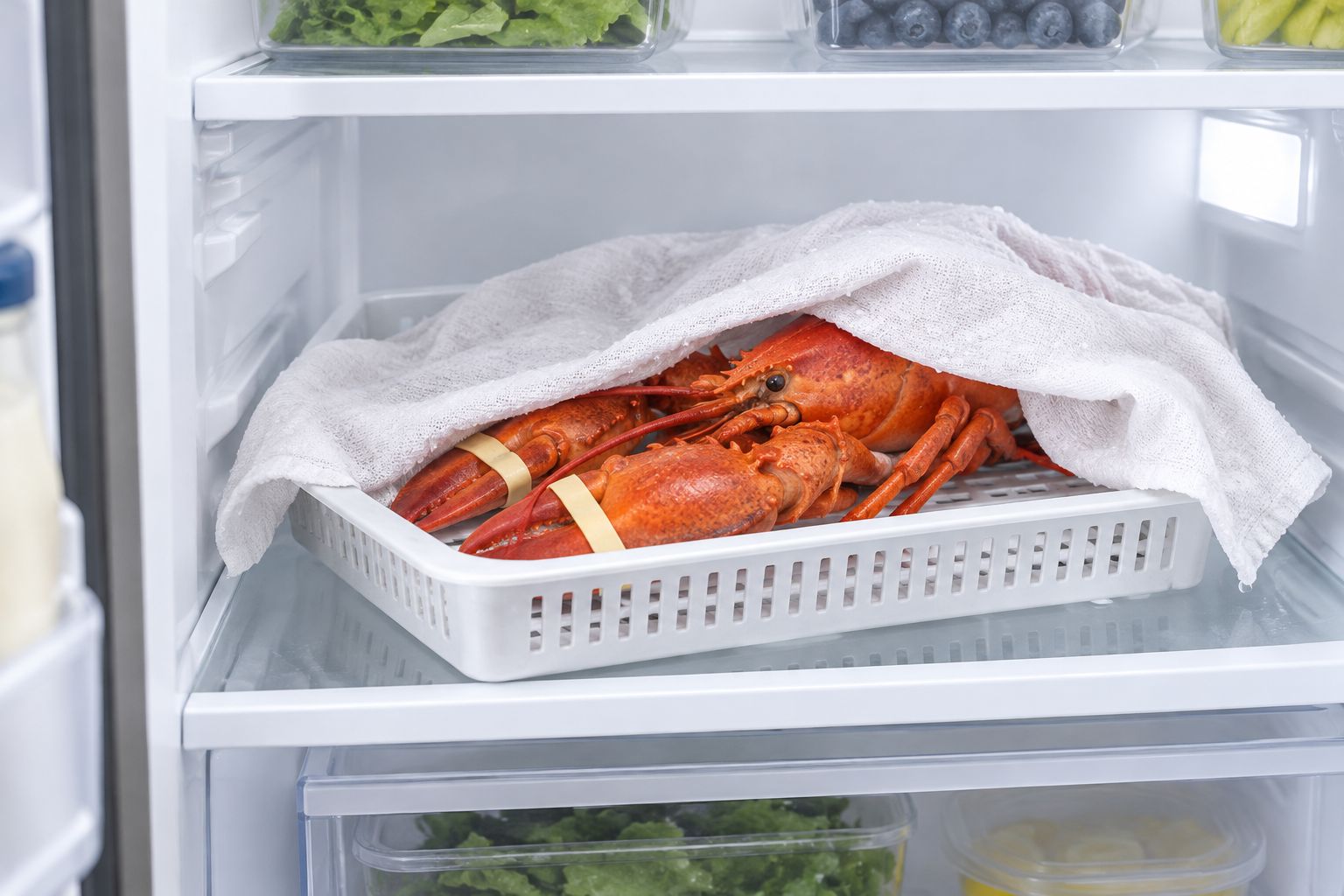
A live-lobster meal asks more of your timing than a frozen-tail dinner. Make room in the refrigerator and prepare your cooking equipment before the delivery arrives, rather than improvising around a crowded kitchen.
Why lobster storage instructions vary
The right storage method follows the product’s condition. These factors explain why one instruction cannot cover every lobster order:
- Live versus processed: A live animal needs ventilation; packaged meat needs protection from contamination.
- Raw versus cooked: Raw lobster requires cooking and separation from ready-to-eat foods. Cooked meat still requires temperature control.
- Frozen versus chilled: Frozen products belong in a 0°F freezer; chilled products need refrigeration at 40°F or below.
- Packaging type: Vacuum-packed seafood can carry specific thawing directions that differ from ordinary wrapped seafood.
- Package integrity: A broken food-package seal creates a different concern from a dented outer carton.
- Temperature history: A cold reading now does not erase a known period of unsafe storage earlier.
The practical rule for 2026 is straightforward: follow product-specific directions, then apply safe temperature and handling practices. Neither appearance nor a planned recipe overrides them.
Can I keep lobster if the cold packs have melted?
Melted cold packs alone do not determine whether lobster is safe. Check the food’s temperature, frozen condition, package integrity, and—if applicable—whether live lobster is alive.
For chilled or thawed perishable food delivered above 40°F, FDA mail-order guidance advises notifying the company and not consuming it. Do not put a questionable delivery into the refrigerator and assume cooling it again solves the problem.
Can I refreeze lobster that arrived partly thawed?
At 40°F or below, or while ice crystals remain, previously frozen food can generally be refrozen under USDA guidance. Refreezing can affect texture, and product-specific instructions still apply.
If you know the lobster spent an unsafe period warm, or cannot resolve a concerning delivery condition, do not use refreezing as a rescue step. Keep the safety decision separate from the seller’s process for handling an order complaint.
How should I thaw lobster for dinner?
Thaw lobster in the refrigerator in a container that catches drips. Read vacuum-package instructions before thawing; some reduced-oxygen seafood packaging must be opened or removed before the food thaws.
For faster thawing when the product instructions permit it, use a leakproof bag in cold water, changing the water every 30 minutes, and cook immediately afterward. Never thaw seafood on the counter or in warm water.
FAQ
What should I check first when I buy lobster online?
Check the label, package condition, and lobster’s temperature or live condition immediately after opening the delivery. Transfer acceptable food to the refrigerator or freezer promptly.
Is a cold shipping box enough to prove lobster is safe?
No, a cold box does not prove the lobster stayed safe throughout transit. Check the food itself, including temperature, packaging, frozen condition, and signs of life where relevant.
What temperature should my refrigerator be for lobster?
Keep your refrigerator at 40°F or below for chilled lobster. Follow the package’s storage and use-by instructions, and keep raw seafood separate from cooked food.
Can I put live lobster in a bowl of water?
No, do not submerge live lobster in fresh water. Refrigerate it in a ventilated container under a damp covering and follow the seller’s handling instructions.
Should I wash lobster meat when it arrives?
Do not rinse delivered lobster meat as a substitute for inspecting its condition. Rinsing does not make unsafe seafood safe and can spread raw seafood juices around the sink.
Can cooking make a warm lobster delivery safe?
No, cooking is not a reliable way to rescue a delivery that failed safe temperature control. Do not consume chilled or thawed perishable food delivered above 40°F; contact the seller.
Does Onatru sell lobster for home cooks?
Yes, Onatru sells restaurant-quality lobster and other ingredients to home cooks with nationwide delivery. Check the selected product’s details and handling instructions before ordering.
One last thing
A thermometer reading is a safety check; a photograph is a record. You need both when a delivery raises concerns. Take the reading before the food warms on the counter, and photograph the label before throwing away packaging.
For your next Onatru lobster order in 2026, clear refrigerator or freezer space before delivery day. The easiest receiving routine starts before the box reaches your kitchen.


