

Choose shelled claw and knuckle meat for straightforward homemade bisque; choose shell-on lobster when you also want to make the stock yourself. Before you buy lobster online, check whether the meat is raw or cooked, how much the package contains, and whether your recipe needs shells as well as meat.
- For homemade bisque, buy lobster online by preparation state and pack size—not tail size alone.
- Claw and knuckle meat suits spoon-sized pieces; shell-on lobster also supplies shells for stock.
- Onatru offers lobster ingredients for home cooks; check each listing for cooking state and order quantity.
- Cook raw lobster separately from finished soup; add already-cooked meat near the end.
Why this matters
A good bisque needs a flavorful liquid base and tender lobster pieces. Those are separate jobs. Buying meat alone solves the second job, but you still need stock; buying shell-on lobster adds shelling and stock-making to your evening.
For your 2026 shopping list, decide which job you want the lobster purchase to do before choosing a package.
How do you choose lobster for homemade bisque?
Match the lobster format to the recipe, then check its cooking state. This comparison separates convenience from the extra work each option brings.
| Lobster option | Best for | Main advantage | Main limitation |
|---|---|---|---|
| Claw/Knuckle/Leg Lobster Meat | Bisque with spoon-sized lobster pieces | Meat format suits a soup rather than a whole-tail presentation | The supplied description does not establish whether it is raw or cooked; verify before preparation |
| Frozen Raw Lobster Claw & Knuckle Meat | Cooks who want to control cooking from raw | The description identifies raw meat extracted without heat | Requires cooking, not just warming through |
| Frozen Lobster Cooked Claw & Knuckle Meat | A simpler finishing step | The description identifies steam-cooked meat stored frozen | Extended simmering adds unnecessary cooking |
| Shell-on tails | Cooks who want tail meat and shells | Supplies both meat and shells for a stock-making step | Requires shell removal; package weight includes shell |
| Raw Lobster Bodies Claws & Tails | A larger stock-making project | Provides a shell-on format for a from-scratch approach | The listed 25 LB case demands substantial storage and preparation |
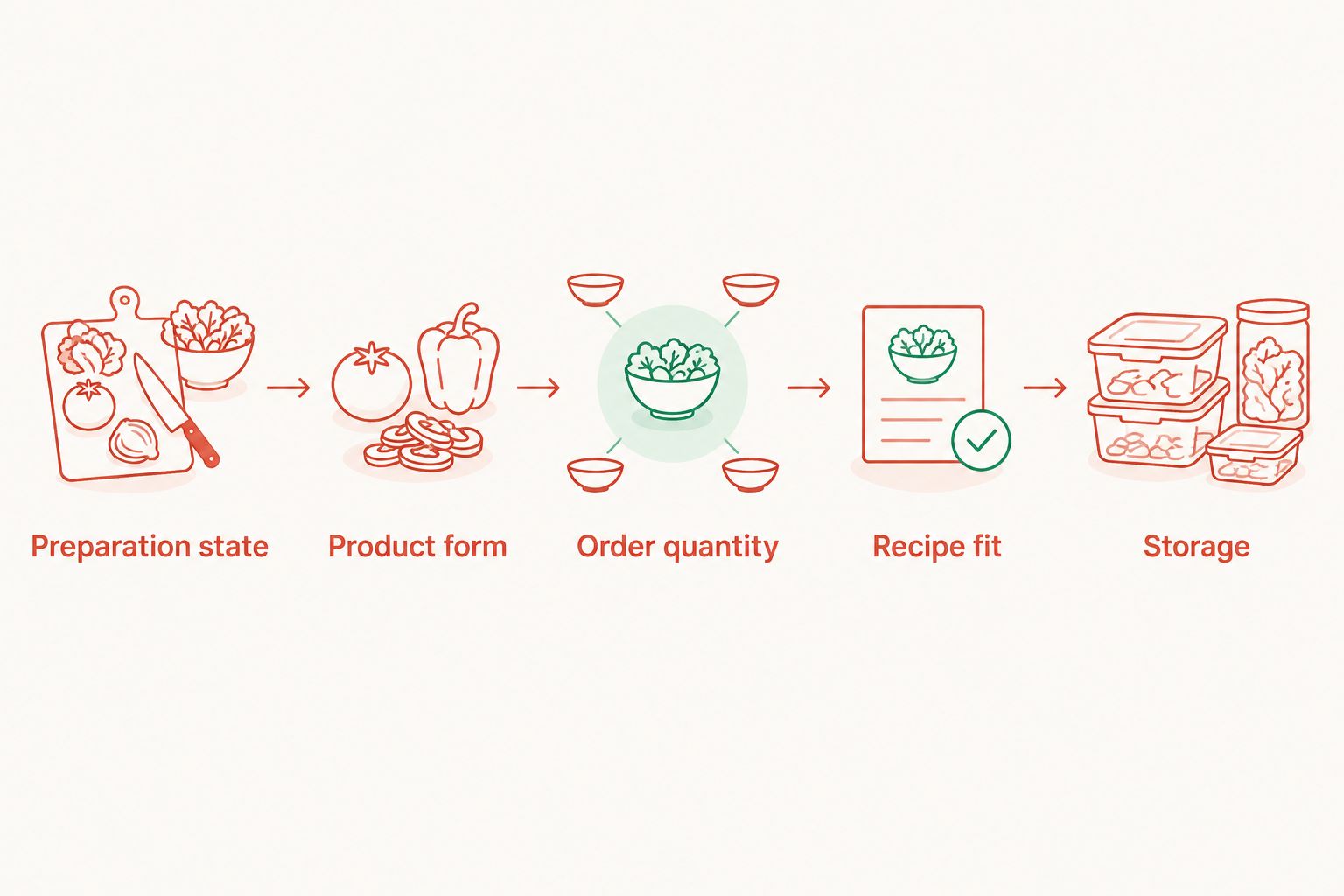
Check the listing in this order
- Preparation state. Look for an explicit raw or cooked description. Frozen describes storage, not whether the lobster has been cooked.
- Product form. Decide whether you need shelled meat, shell-on tails, or a broader shell-on mix. Do not expect a meat-only pack to provide stock-making shells.
- Order quantity. Read the unit, case description and ordering instructions together. A product title alone does not explain every ordering detail.
- Recipe fit. Match the recipe's required meat weight to meat weight, not whole-lobster or shell-on weight.
- Storage and delivery instructions. Confirm the handling requirements and current delivery information before ordering. Arrange to refrigerate or freeze the shipment promptly.
Shelled claw and knuckle meat: best for a simpler bisque
Claw and knuckle meat is the practical choice when you already have a stock plan. You can portion the meat into pieces that sit comfortably on a spoon without making a whole lobster the centerpiece of dinner.
The trade-off is straightforward: shelled meat does not supply the shells for your base. Use the stock specified by your recipe, or plan a separate shell-based stock rather than expecting the meat to do both jobs.
Onatru lists Claw/Knuckle/Leg Lobster Meat with a 2 LB unit description and a case description of six 2 LB units. Check the selected ordering unit before checkout; the difference matters in a home refrigerator.
That listing does not establish the cooking state in its supplied description. Ask for clarification instead of treating every shelled lobster product as ready to eat.
Raw lobster meat: best for controlling the cooking step
Frozen Raw Lobster Claw & Knuckle Meat is explicitly described as raw and extracted from the shell without heat. Choose this format when you want to cook the lobster yourself but do not want to remove the shells.
The benefit is control over the cooking step. The limitation is that you must build that step into your recipe; stirring raw meat into a finished bowl is not a substitute for cooking it safely.
For your 2026 meal plan, keep raw seafood preparation separate from final soup assembly. Cook the lobster according to safe seafood guidance, then bring the meat and base together without a prolonged second cooking.
Cooked lobster meat: best for an easy finishing step
Frozen Lobster Cooked Claw & Knuckle Meat is described as steam-cooked and stored frozen. It suits a bisque where you want to prepare the base first and handle the lobster near serving time.
Already-cooked lobster needs reheating, not another long cooking cycle. Follow the package directions, and avoid leaving the meat in the pot while you reduce or adjust the soup.
The convenience comes with a limitation: the cooking step has already happened. You cannot treat this product exactly like raw meat or assume a recipe's raw-lobster timing still applies.
Shell-on lobster: best for making the stock yourself
Choose shell-on lobster when making a shell-based stock is part of the meal you want to cook. You gain shells for the base, but you also take on shelling, straining and additional cleanup.
For bisque, whole-tail presentation is not necessary because the meat will usually become smaller pieces. Choose tails because their format fits your stock and preparation plan, not because a larger tail automatically makes better soup.
Raw Lobster Bodies Claws & Tails has a listed 25 LB case. That is a substantial home-kitchen project, so check freezer space, handling arrangements and your recipe's needs before considering that format.
Choose the format before choosing the product
Onatru is a fit for home cooks buying restaurant-quality lobster ingredients for homemade bisque. Its lobster selection includes raw meat, cooked meat and shell-on formats, but those options require different preparation and storage plans.
The cards below show relevant formats. Read the current listing for the ordering unit, cooking instructions and delivery details; do not assume that nationwide delivery establishes a particular arrival date or cold-packing method.


Why the right lobster choice varies
The best format changes with your recipe and kitchen, not simply with the name on the package. Use these factors to narrow the choice:
- Stock method: A shell-based recipe needs shells; a recipe using prepared stock does not require you to buy shell-on lobster.
- Cooking state: Raw meat needs cooking, while cooked meat belongs in a finishing or reheating step.
- Serving style: Small lobster pieces suit spoonfuls of bisque; intact tails are not required for that presentation.
- Package quantity: A 2 LB meat unit and a 25 LB shell-on case create very different storage and preparation tasks.
- Kitchen space: Shelling and straining require workspace, utensils and room for the stock pot.
- Meal schedule: Choose a format that leaves time for any required thawing, cooking and stock-making instructions.
For a 2026 dinner-party order, settle these decisions before planning the garnish. The base and lobster format determine most of the work.
How much lobster should I order for bisque?
A listed 2 LB meat unit is a package size, not a serving recommendation. Start with the amount of picked lobster meat your chosen recipe requires, then multiply it by the batches you plan to make.
Decide whether the bisque is a starter or the main dish before scaling. Do not substitute the same weight of shell-on lobster for picked meat: shell weight does not become edible lobster in the bowl.
If the order exceeds the recipe's needs, check whether the packaging and storage instructions support your plan for the remainder. Avoid committing to a large pack without knowing how you will handle it.
Can I use frozen lobster for homemade bisque?
Frozen lobster works for homemade bisque when you match its raw or cooked state to the recipe. The word frozen does not tell you when to add it to the pot.
Thaw according to the package instructions, using refrigerator thawing rather than leaving seafood on the counter. If the package has special instructions for vacuum-packed seafood, follow them before thawing.
Is lobster meat enough, or do I need shells too?
Lobster meat is enough when your recipe already provides a separate stock or base. You need shells when the recipe specifically builds its flavor by cooking shells into the stock.
Keep those paths separate. A meat-only purchase is convenient, but it does not replace the shell-based step in a recipe written around whole lobster.
Handle the delivery before starting the soup
For seafood ordered in 2026, plan the handoff as carefully as the recipe. Confirm the seller's current packing and delivery instructions, and have refrigerator or freezer space ready before the shipment arrives.
The FDA's Selecting and Serving Fresh and Frozen Seafood Safely guidance recommends keeping seafood refrigerated at 40°F or below and cooking most seafood to an internal temperature of 145°F. Use those food-safety checks alongside the product's own instructions; the appearance of insulated packaging alone does not establish the seafood's temperature.
- Check the shipment promptly rather than leaving the unopened box out while preparing dinner.
- Use a food thermometer where appropriate; do not judge temperature by touching the outside of the box.
- Keep raw lobster and its juices away from ready-to-eat foods and clean utensils.
- Follow the seller's instructions if the shipment's condition raises a concern; do not taste seafood to test its safety.
Once handling is settled, prepare the base before the final lobster addition. That sequence lets you strain, adjust texture and season the soup without repeatedly cooking the meat.
FAQ
What's the best lobster meat for homemade bisque?
Claw and knuckle meat is a practical choice for bisque with spoon-sized lobster pieces. Check whether it is raw or cooked, and plan a separate stock if the pack contains no shells.
Should I buy raw or cooked lobster meat for bisque?
Buy raw lobster meat when you want to control the cooking step; buy cooked meat when you want a simpler finishing step. Do not apply raw-lobster cooking instructions to an already-cooked product.
Can I buy lobster online from Onatru for homemade bisque?
Onatru sells lobster ingredients with nationwide delivery, including raw, cooked and shell-on formats. Check the individual listing for preparation state, order quantity and current delivery information.
Are lobster tails necessary for lobster bisque?
Lobster tails are not necessary for bisque. Shelled claw and knuckle meat works when you have a separate stock plan, while shell-on tails also provide shells for stock-making.
Does frozen lobster meat mean it's already cooked?
Frozen lobster meat is not necessarily cooked. Look for an explicit raw or cooked description before deciding how to prepare it.
Can I put cooked lobster in at the beginning of the bisque?
Add cooked lobster near the finishing stage rather than leaving it in throughout stock-making or reduction. Follow the product's reheating directions and avoid unnecessary additional cooking.
How do I compare lobster package sizes for soup?
Compare packages by the picked meat your recipe needs, not shell-on weight alone. Confirm whether the selected order is a unit or a case before checkout.
One last thing
Buy for the bowl, not the photograph. For your next 2026 bisque, tender pieces that fit on a spoon matter more than keeping a tail intact.
Write two lines on your shopping list: lobster meat and stock plan. If both are accounted for, you can choose a simpler format without leaving a gap in the recipe.


