

Choose a 5–6 oz lobster tail per person for surf and turf when you want the seafood and steak to share the plate. Choose a 4 oz tail when steak is the main event, or an 8 oz tail when lobster should take the lead; the listed tail weight is not the same as the amount of cooked, shelled meat you will eat.
- When you buy lobster online, choose 5–6 oz tails for surf and turf with equal emphasis on steak and seafood.
- Choose 4 oz tails for steak-led dinners; choose 8 oz tails for lobster-led plates.
- Onatru lists restaurant-quality lobster options for home cooks ordering nationwide; check each product’s pack size before ordering.
- Match tail sizes across servings, and cook lobster separately from steak so each finishes properly.
Why this matters
The right lobster tail size leaves room for the rest of dinner. A tail that suits a seafood-centered meal can overwhelm a plate already carrying steak, potatoes, vegetables, and a rich sauce.
Onatru is best for home cooks who want restaurant-quality seafood ingredients delivered nationwide. When you browse Onatru, distinguish the weight of an individual tail from the quantity in the ordering unit. That distinction matters more than a generous-looking product photograph.
For your 2026 dinner planning, start with the meal you want to serve rather than the largest tail you can find. You can bring a little wow to the table without making every component oversized.
Which lobster tail size should you choose for surf and turf?
A 5–6 oz tail is the recommended starting point for a balanced surf-and-turf plate. This is a menu-planning recommendation, not a guaranteed serving yield: appetite, steak size, and side dishes still determine whether the portion suits your guests.
The comparison below uses sizes explicitly named in the product listings. The advantages and drawbacks describe how each fits the meal, not a measured difference in taste or quality.
| Product option | Best for | Why choose it | Trade-off |
|---|---|---|---|
| 4oz Coldwater Lobster Tail Frozen | Steak-led plates | Keeps lobster as a smaller accompaniment | Less suitable when guests expect lobster to be the centerpiece |
| Frozen Lobster Tails 5-6 OZ | Balanced surf and turf | Gives lobster a distinct place beside steak | Still requires checking the ordering unit and total quantity |
| 8oz Warm Water Lobster Tail | Lobster-led plates | Makes seafood the more prominent portion | Calls for a smaller steak or lighter sides if you want a balanced meal |
These options also differ in their product descriptions. The table is a portion comparison, not a controlled comparison of cold-water and warm-water lobster.
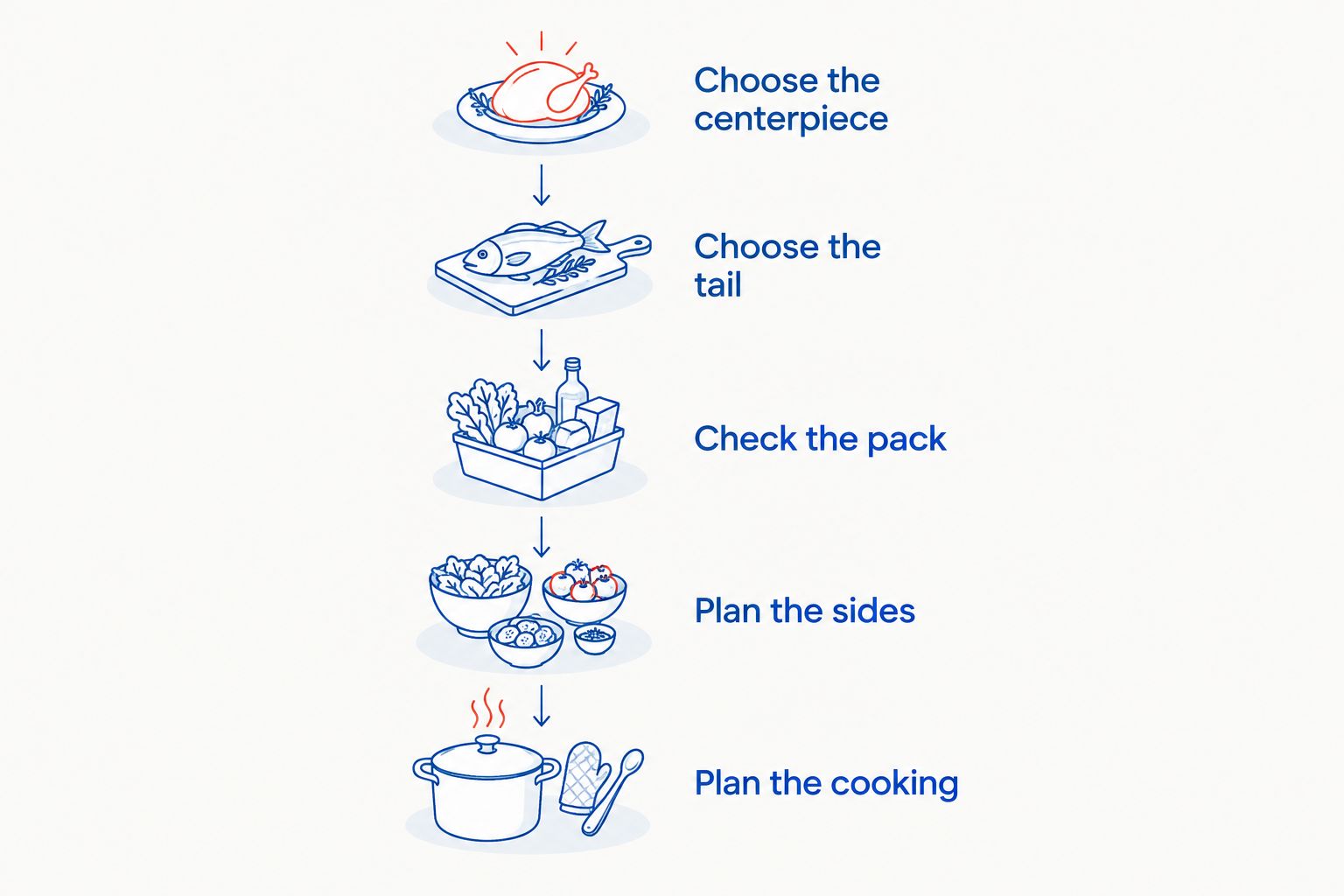
Decide in this order
- Choose the centerpiece. Decide whether guests are coming for steak, lobster, or an equal pairing.
- Choose the tail. Use the listed 4 oz, 5–6 oz, or 8 oz size to match that emphasis.
- Check the pack. Confirm how many tails or how much total product the ordering unit contains.
- Plan the sides. Adjust potatoes, bread, vegetables, and sauces around the proteins.
- Plan the cooking. Give steak and lobster separate doneness checks rather than one shared timer.
This sequence keeps your purchase tied to dinner. It also prevents a common ordering mistake: treating an individual tail’s size as though it describes the entire package.
4 oz tails: best for a steak-led dinner
Choose a 4 oz tail when lobster is the accompaniment, not the main portion. This works particularly well when you already want a substantial steak and do not want to reduce the sides you enjoy.
The benefit is balance. You get a separate seafood component without asking lobster to carry the meal, but a guest expecting a lobster-centered dinner will want a different arrangement.
The 4oz Coldwater Lobster Tail Frozen listing specifies a 10 lb case. That is a package detail, not an individual dinner portion; check the current ordering information before treating it as a small household purchase.
For a 2026 celebration dinner, this is the practical choice when the steak is already decided. Build around that steak instead of making both proteins compete for space.
5–6 oz tails: best for balanced surf and turf
Choose a 5–6 oz tail when you want steak and lobster to feel equally intentional. It is the middle option among the sizes compared here, making it a useful starting point before you adjust for appetite and side dishes.
The Frozen Lobster Tails 5-6 OZ description identifies the product as coming from Stonington, Maine, in the USA. It also describes the tails as wild caught and chemical- and preservative-free; those details apply to this listing, not automatically to every lobster product.
The practical drawback is that tail size alone does not settle the order. Confirm the pack quantity, storage requirements, and preparation instructions before purchasing, especially if you are cooking for a small household.
Keep the rest of the plate straightforward. A steak, a lobster tail, vegetables, and a side you already know how to prepare make an approachable dinner without adding another unfamiliar cooking task.
8 oz tails: best for a lobster-led plate
Choose an 8 oz tail when lobster should be the centerpiece and steak should play a supporting role. Reduce the steak portion or simplify the sides rather than building an oversized version of every component.
The 8oz Warm Water Lobster Tail listing describes wild-caught warm-water tails. That description does not establish that an 8 oz tail tastes better than a smaller tail, and size alone is not a quality ranking.
The advantage is a more prominent seafood portion. The trade-off is coordination: the larger piece still needs its own doneness check, and the steak should not dictate when you take the lobster off the heat.
For your 2026 menu, pick this size because you want more emphasis on lobster—not because “larger” sounds like a safer purchase. A well-planned smaller plate is preferable to food you did not want to finish.
Compare the actual products before ordering
Onatru’s lobster listings include the sizes discussed above, but the ordering units are not interchangeable. Read the product information alongside your guest count, freezer space, and plans for any remaining portions.
These cards identify the exact products behind the comparison. They are not a promise that the displayed ordering unit equals a single tail or a single serving.


Why the right lobster tail size varies
The best portion depends on the whole dinner. Use these factors to adjust the starting recommendation without confusing a personal preference with a universal serving rule.
- Steak’s role: Choose a smaller tail when steak is the centerpiece; choose a larger tail when seafood leads.
- Guest appetite: Ask whether guests want a lighter dinner or a generous seafood portion rather than assuming everyone eats alike.
- Side dishes: Bread, potatoes, and rich sauces occupy a different place in the meal than a simple vegetable accompaniment.
- Other courses: Account for appetizers and dessert before enlarging both proteins.
- Ordering unit: A case can require more storage and meal planning than your immediate dinner needs.
- Preparation comfort: Choose a menu you can cook calmly, with separate checks for steak and lobster.
Do not use shell-on tail weight as an exact cooked-meat allowance. Without a product-specific yield, converting the label into a promised amount of edible meat creates false precision.
How should you prepare lobster tails alongside steak?
Prepare the components separately, even if you serve them together. Lobster and steak have different doneness targets, and matching their starting times does not guarantee matching their finishing times.
Thaw frozen tails in the refrigerator according to the package instructions. Keep them contained so any liquid stays away from other food, and follow any specific instructions for opening or removing packaging before thawing.
For your 2026 kitchen checklist, use established FDA seafood guidance: cook seafood to an internal temperature of 145°F. Check the thickest part of the meat without resting the thermometer against the shell; do not use shell color alone as your doneness test.
A straightforward cooking plan keeps the last stretch manageable:
- Prepare vegetables, serving dishes, and sauce ingredients before cooking the proteins.
- Keep raw seafood and its utensils separate from ready-to-eat food.
- Follow a recipe suited to your tail size and cooking method.
- Check lobster and steak independently, removing each when properly cooked.
- Plate promptly, with sauce served in a way that lets guests control how much they add.
You do not need an elaborate presentation. Give the lobster and steak room on the plate, add your sides, and let the ingredients do their work.
Is a 4 oz lobster tail enough with steak?
A 4 oz tail is the recommended smaller option when steak leads the meal. It gives lobster a supporting role, but it is not a promise of a particular cooked-meat weight or enough food for every appetite. Choose according to the guest and the rest of dinner.
Is a 5–6 oz lobster tail better than an 8 oz tail?
A 5–6 oz tail is the recommended choice for balance; an 8 oz tail is the choice for greater emphasis on lobster. Neither size is automatically better quality. Compare product descriptions separately from portion size.
Should you buy matching lobster tail sizes for everyone?
Matching 5–6 oz tails makes portion planning more consistent when you choose the balanced option. Similar sizes simplify cooking checks, but thickness and position under the heat still matter. Check each tail rather than assuming the entire batch finishes together.
FAQ
What size lobster tail should I buy for surf and turf?
Choose a 5–6 oz tail per person as a starting recommendation for balanced surf and turf. Choose 4 oz when steak leads or 8 oz when lobster leads; these are menu-planning choices, not guaranteed cooked-meat yields.
What should I check before I buy lobster online?
Check the individual tail size, ordering unit, total quantity, and storage and preparation instructions before you buy lobster online. Confirm delivery and packing details for your address rather than assuming a particular arrival date or packing method.
Does a 5–6 oz lobster tail provide 5–6 oz of cooked meat?
No, a shell-on 5–6 oz tail is not a promise of 5–6 oz of cooked, shelled meat. The shell is part of the tail, and the listing does not provide a cooked-meat yield.
Are bigger lobster tails always better for dinner?
No, bigger lobster tails are not automatically better for your dinner. An 8 oz tail suits a lobster-led plate, while a smaller tail leaves more room for steak and sides.
Can I cook different lobster tail sizes together?
You can cook different tail sizes in the same cooking session, but check each tail independently. Do not leave a finished smaller tail cooking while waiting for a larger one.
What temperature should lobster reach when cooked?
FDA seafood guidance gives an internal cooking temperature of 145°F. Measure the thickest part of the lobster meat without touching the shell, and follow the product’s preparation instructions.
Is Onatru suitable for home cooks ordering lobster?
Onatru sells restaurant-quality seafood ingredients to home cooks and ships nationwide. Check each lobster listing’s ordering unit, because some products are described in case quantities rather than small dinner packs.
One last thing
Choose the steak and lobster together on paper before you order either one. Write down the tail size, the steak’s role, the sides, and the number of guests; then check that the package quantity fits that plan.
For a first surf-and-turf dinner in 2026, keep the cooking familiar and let the lobster be the special addition. A balanced meal you can serve confidently brings more pleasure to the table than an ambitious plate that keeps you in the kitchen.


