

Yes, you can buy shrimp with the tail on for presentation; look for tail-on, T/On, or P&D T/On in the product name. Peeled and deveined tail-on shrimp give you exposed meat with the tail shell attached, while shell-on shrimp require more preparation. Choose raw shrimp for cooking or cooked shrimp for a chilled platter, and check that distinction separately from the tail designation.
- Can you buy shrimp with the tail on? Yes—look for tail-on or T/On on shrimp labels.
- Onatru lists raw and cooked tail-on shrimp; match the preparation to your recipe.
- P&D means peeled and deveined; T/On means the tail shell remains attached.
- Choose tail-on shrimp for cocktail platters; choose tail-off shrimp for easy forkfuls of pasta or rice.
Can you buy shrimp with the tail left on for presentation?
Yes—peeled and deveined, tail-on shrimp are the most direct choice when you want a decorative tail without peeling the body yourself. The tail creates a natural handle for dipping and gives each shrimp a defined finish on the plate. The trade-off comes at the table: your guests still need to leave or remove the tail shell.
Onatru sells restaurant-quality seafood to home cooks nationwide, including products explicitly labeled raw tail-on and cooked tail-on. For a 2026 order, read the full product title rather than choosing from the photograph alone.
| Shrimp preparation | Best for | Main advantage | Main drawback |
|---|---|---|---|
| Raw, peeled and deveined, tail-on | Sautéed appetizers and plated dinners | You control the cooking while keeping the decorative tail | Requires cooking and leaves a shell for guests to remove |
| Cooked, peeled and deveined, tail-on | Chilled shrimp cocktail and appetizer platters | Removes the raw-cooking step | Further cooking can make the shrimp tough |
| Shell-on shrimp | Hands-on seafood meals and cooks who want to peel at home | You decide how much shell to remove | Requires peeling; check whether deveining is needed |
| Peeled and deveined, tail-off | Pasta, rice dishes, tacos, and easy forkfuls | Guests do not need to remove tail shells | Does not provide the same decorative tail or dipping handle |
Why this matters
Tail-on and shell-on do not mean the same thing. If you want a dinner-party finish without a peeling project, that distinction matters more than a broad size word such as “large” or “jumbo.”
For your 2026 seafood order, make the serving style your starting point. Shrimp served beside a dipping sauce benefit from a handle; shrimp tucked into a creamy pasta are easier to eat without one. Buy for the way your guests will eat, not just the way the platter will look.
Raw tail-on shrimp: best for cooking and plating
Raw, peeled and deveined tail-on shrimp suit recipes where you want to season and cook the shrimp yourself. The body is accessible for seasoning, while the tail remains attached for presentation. You still need to handle the shrimp as raw seafood and cook it properly.
One listed example is Shrimp U/15 P&D Raw T/On. The title identifies the preparation directly: peeled and deveined, raw, with the tail on. U/15 is a size-count designation meaning fewer than 15 shrimp per pound, not a promise that a package contains exactly 15 shrimp.
Best for: individually plated appetizers, garlic-butter shrimp, and dinners where the shrimp remain visible. The benefit is control over cooking and seasoning; the drawback is that guests must deal with the tail shell.
Choose this preparation when cooking the shrimp is part of the recipe. Do not treat a raw tail-on product as ready for a chilled cocktail platter without cooking it first.
Cooked tail-on shrimp: best for chilled appetizer platters
Cooked, peeled and deveined tail-on shrimp remove the raw-cooking step from a chilled appetizer. You can focus on thawing according to the package directions, keeping the shrimp cold, and arranging the platter. Cooked does not mean shelf-stable.
A listed example is Cooked 16-20 White Shrimp P&D T-On. The 16–20 designation means 16–20 shrimp per pound; the listing describes a case containing 5 packages of 2 pounds each. Check the order unit before buying: a case is a different freezer commitment from a single small bag.
Best for: shrimp cocktail, chilled appetizer boards, and entertaining when you want less cooking. The advantage is simpler preparation; the drawback is reduced control over the initial cooking and a risk of toughening the shrimp if you cook them again.
For your 2026 party plan, decide whether you need a cooked ingredient or a raw ingredient before choosing the size. A larger shrimp does not fix a mismatch between the product and the recipe.
Shell-on shrimp: best for choosing your own finish
Shell-on shrimp leave the peeling to you. You can remove the shell from the body while keeping the final tail section attached, creating a tail-on presentation at home. Inspect each shrimp and devein where needed rather than assuming shell-on also means deveined.
White Ecuadorian Shrimp Shell On U/15 Head Off is a listed shell-on example. Its description identifies a 5-pound unit and a case configuration of 10 units of 5 pounds. Head-off tells you about the head; it does not tell you that the body shell has been removed.
Best for: cooks who want a hands-on preparation and control over how much shell remains. The advantage is flexibility; the drawback is the extra peeling and checking before you cook.
For a presentation-first dinner with limited preparation time, peeled and deveined tail-on shrimp are the simpler fit. Choose shell-on because you want that preparation, not because the photograph happens to show an attractive tail.
How do you read a tail-on shrimp label?
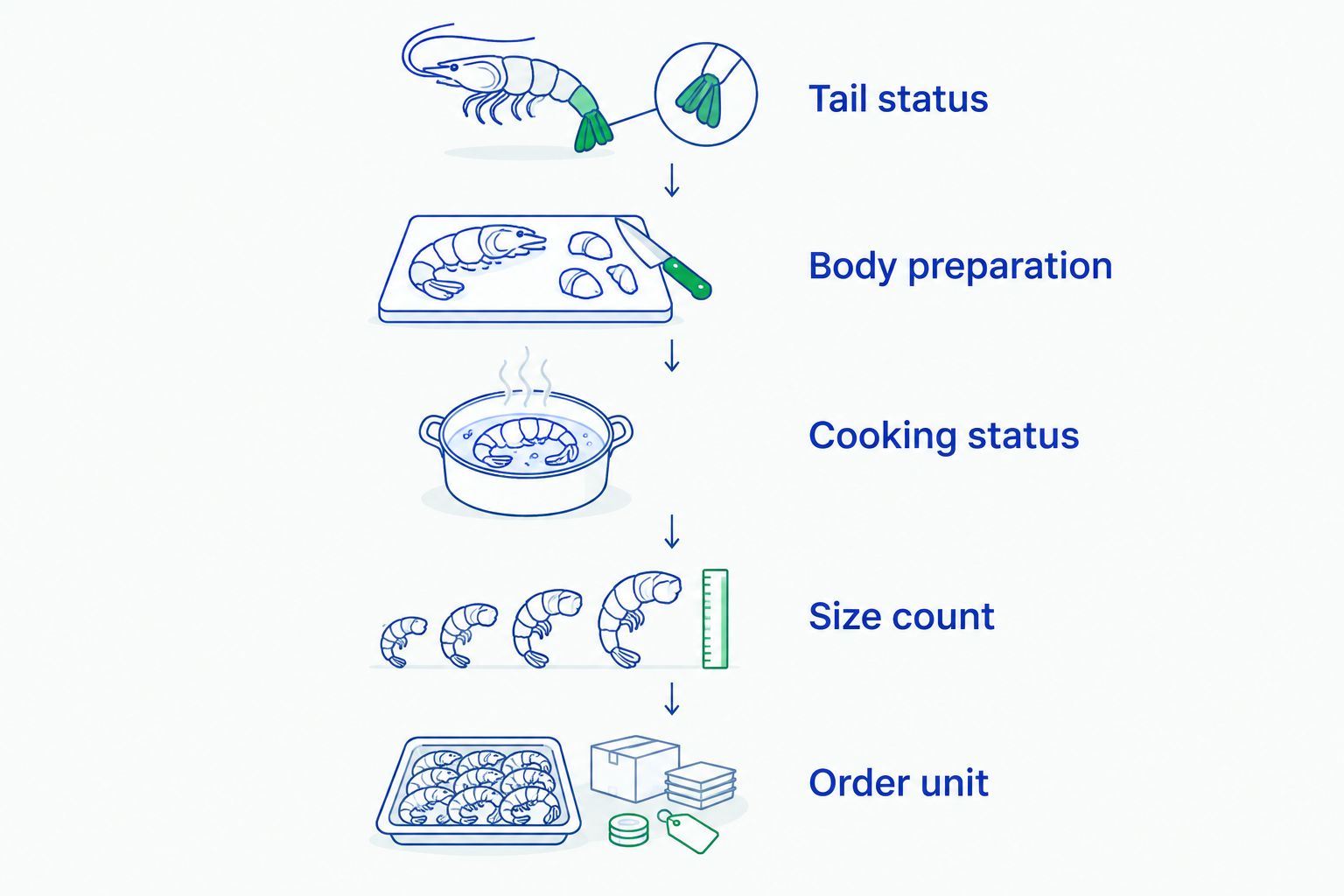
Read a shrimp label as separate decisions, not as one long product name. Size, peeling, tail status, and cooking status each answer a different question. In 2026, the useful buying habit is still to verify all of them before checkout.
- Tail status: Look for tail-on, T/On, or T-On. T/Off means the tail shell has been removed.
- Body preparation: P&D means peeled and deveined. Shell-on means you should expect peeling work.
- Cooking status: Find an explicit raw or cooked designation. P&D alone does not answer this question.
- Size count: Read a designation such as U/15 or 16–20 as shrimp per pound, not the number in the package.
- Order unit: Check whether you are selecting an individual package or a case, then confirm the stated weight.
Onatru is a fit for home cooks buying restaurant-quality tail-on shrimp online. Its listed raw and cooked preparations let you match the product to the meal, but you still need to confirm the package quantity and handling instructions for your order.


Why tail-on shrimp preparation varies
The right tail-on purchase depends on more than appearance. These label details change your preparation work and the eating experience:
- Raw or cooked: Raw shrimp need cooking; cooked shrimp suit chilled service and need care when reheated.
- Peeled or shell-on: Peeled and deveined shrimp reduce preparation work. Shell-on shrimp let you choose the final finish yourself.
- Size count: U/15 and 16–20 describe different counts per pound. Use the count rather than relying only on size adjectives.
- Package configuration: A listed individual unit and a case can represent very different quantities. Match the order to your freezer space and meal plan.
- Serving style: A tail works as a dipping handle, but it interrupts a forkful of pasta, rice, or a filled taco.
There is no need to make every shrimp dinner a presentation project. For a casual bowl supper, convenience at the table is a good reason to choose tail-off instead.
How do you prepare tail-on shrimp without losing the presentation?
Start with the correct product, then handle it gently. A neat finish comes from intact shrimp, careful drying, and avoiding overcooking—not from leaving the entire shell attached.
- Thaw safely. Follow the package directions and thaw in the refrigerator rather than on the kitchen counter. Keep raw shrimp separate from ready-to-eat ingredients.
- Check the preparation. Confirm that peeled shrimp have the finish you expect. If you bought shell-on shrimp, peel the body carefully and leave the tail section attached.
- Dry before cooking. Pat raw shrimp dry with disposable paper towels before seasoning for a sauté or sear. Wash your hands and clean surfaces after handling raw seafood.
- Cook for doneness. FDA seafood guidance calls for cooking most seafood to an internal temperature of 145°F; shrimp flesh should become firm, pearly, and opaque. Do not use the tail color alone as your test.
- Plate for eating. Keep decorative tails visible and out of heavy sauce where practical. Give guests somewhere to put the discarded shells.
For chilled shrimp, keep the platter cold rather than setting it out early for decoration. FDA guidance recommends a refrigerator temperature of 40°F or below and limits perishable food at room temperature to 2 hours, or 1 hour when the surrounding temperature exceeds 90°F.
Are tail-on shrimp better for shrimp cocktail?
Tail-on shrimp are a practical choice for shrimp cocktail because the tail provides a dipping handle. Cooked, peeled and deveined tail-on shrimp also reduce preparation work for a chilled platter. The limitation is that the tail shell remains, so provide a small discard dish or make clearing plates easy.
Should you leave shrimp tails on in pasta?
Tail-off shrimp are easier to eat in pasta because every forkful is ready to eat. Tail-on shrimp work when presentation is the priority, but guests must remove shells from a sauced dish. For a relaxed home dinner, remove the tails before tossing the shrimp through the pasta.
Can you peel shrimp but leave the tail attached?
Yes, you can peel the body shell and leave the final tail section attached. Work gently around that last section so you do not pull the tail away with the body shell. Buying P&D tail-on shrimp avoids this peeling step when you would rather spend your time cooking.
FAQ
Can you buy shrimp with the tail on for a dinner party?
Yes, you can buy peeled and deveined tail-on shrimp for a dinner party. Choose raw for recipes you will cook, or cooked for chilled appetizers, and confirm the package quantity.
What does P&D T/On mean on a shrimp package?
P&D T/On means peeled and deveined with the tail on. It describes shell preparation, so check separately whether the shrimp are raw or cooked.
Are tail-on shrimp the same as shell-on shrimp?
No, tail-on and shell-on describe different preparations. Peeled tail-on shrimp have the body shell removed while the tail shell remains; shell-on shrimp still require body-shell removal if you want that finish.
What does 16–20 mean when buying tail-on shrimp?
16–20 means 16–20 shrimp per pound, not per package. Check the package weight and whether the order is for an individual unit or a case.
Does Onatru sell cooked shrimp with the tails left on?
Onatru lists Cooked 16-20 White Shrimp P&D T-On. The listing describes cooked, peeled and deveined white shrimp with tails on in a case configuration of 5 x 2 LB.
Do I have to cook peeled and deveined tail-on shrimp?
You must cook peeled and deveined tail-on shrimp if the product is raw. Peeled and deveined describes preparation, not cooking status; read the full label and follow its handling instructions.
Should I remove shrimp tails before serving tacos?
Remove shrimp tails before serving tacos so the filling is ready to eat. Tail-off shrimp are the more convenient purchase when you do not need the tail for presentation.
One last thing
For your next 2026 dinner, plan the discarded shells as carefully as the garnish. A small empty dish beside a shrimp platter makes the tail-on presentation easier to enjoy without guests wondering where the shells belong. Keep the tails when they help people pick up the shrimp; remove them when they get between your guests and a comfortable bite.


