

Buy peeled shrimp for pasta, tacos, and other meals you want to eat without peeling at the table; choose shell-on shrimp for peel-and-eat dinners or when you want shells for stock. When you buy shrimp online in 2026, check deveining, tail status, and raw versus cooked separately—the word “peeled” does not settle all three.
- Buy shrimp online by recipe: peeled for fork-ready meals, shell-on for peel-and-eat dinners and stock.
- Onatru suits home cooks seeking restaurant-quality shrimp with nationwide delivery; check the individual product format before ordering.
- Peeled and deveined shrimp can still have tails attached and can be raw or cooked.
- Compare shrimp count per pound and package weight separately; shell weight is not edible meat weight.
Why this matters
The right shrimp format removes a kitchen chore—or makes that chore part of dinner. Shell-on shrimp work well when everyone expects to use their hands. A bowl of shrimp pasta is a different experience: stopping to peel each bite interrupts the meal.
For your first order, the guide to buying shrimp online for home delivery covers the broader shopping process. Here, the decision comes down to what you want to cook, how much preparation you want, and whether shells belong on the serving plate.
Choose the format for the finished dish, not just the product photograph. A tail-on shrimp can look fully prepared while still leaving something for your guests to remove.
Should you buy shell-on or peeled shrimp?
Buy peeled shrimp for convenience; buy shell-on shrimp when the shells have a purpose. Neither format is automatically better quality. Shell status describes preparation, not a verified origin, handling standard, or cooking result.
These options show how the choice translates into a home kitchen. The named products are from Onatru’s shrimp selection; the tail-off row describes a preparation format rather than a particular product.
| Option | Best for | Main advantage | Main drawback |
|---|---|---|---|
| White Ecuadorian Shrimp Shell On U/15 Head Off | Peel-and-eat dinners and cooks who want shells for stock | Heads are removed; shells remain for cooking or peeling | You still need to peel the shrimp and check deveining status |
| Shrimp 13-15 White Peeled and Deveined Tail On | Cooks who want body shells and veins removed but prefer tails attached | Removes the main peeling and deveining tasks | Tails still need removing for fully fork-ready dishes |
| Peeled, deveined, tail-off shrimp | Pasta, tacos, rice bowls, and meals without table-side peeling | No body shells or tails to remove | No shells to save for stock |
Do not treat these rows as an exact size comparison. U/15 and 13–15 are different count designations, and shell-on and peeled weights do not represent the same amount of edible meat.
Shell-on shrimp: best for hands-on dinners
Shell-on shrimp make sense for a shrimp boil or a platter where peeling is part of the experience. You can also peel them before cooking and reserve the shells for stock. Buying shell-on does not commit you to cooking shell-on.
The trade-off is preparation and cleanup. If you peel at the table, provide somewhere for the shells to go; if you peel beforehand, allow room for that task in your dinner plan.
“Head off” answers a different question from “shell on.” A head-off shrimp can still have its body shell and tail attached, and the title alone does not establish whether the digestive tract has been removed.
Peeled shrimp: best for getting dinner ready with less handling
Peeled shrimp remove the body-shell task. Peeled and deveined shrimp also have the digestive tract removed, making them a practical starting point when you want to focus on the sauce, vegetables, or side dishes.
The limitation is that “peeled” does not always mean completely ready for your recipe. Tail-on shrimp still need tail removal for a meal you want to eat entirely with a fork, and raw shrimp still need cooking.
For pasta or tacos, peeled, deveined, tail-off shrimp are the simplest format to serve. For a platter where the tail provides a handle, tail-on shrimp can be a deliberate choice rather than unfinished prep.
What changes the shell-on versus peeled decision?
For a 2026 online order, these are the useful differences to check before you choose a package:
- The finished dish. Shells fit a peel-and-eat meal; tail-off shrimp fit dishes where each bite should be ready to eat.
- Preparation work. Shell-on shrimp leave peeling to you or your guests. Peeled and deveined shrimp remove those specific tasks.
- Your plan for the shells. Shell-on shrimp give you shells for stock. Peeled shrimp do not.
- Tail preference. Tail-on and tail-off are separate choices from whether the body shell has been removed.
- Raw or cooked status. Raw shrimp need cooking. Previously cooked shrimp need a preparation method that avoids unnecessary recooking.
- Package weight and count. A package’s total weight and its shrimp count describe different things, and shell weight affects edible yield.
No single factor settles every meal. If you enjoy peeling shrimp but are making a fork-ready dinner for guests, peeling before cooking gives you the shells without passing the work around the table.
How do you read shrimp labels before ordering?
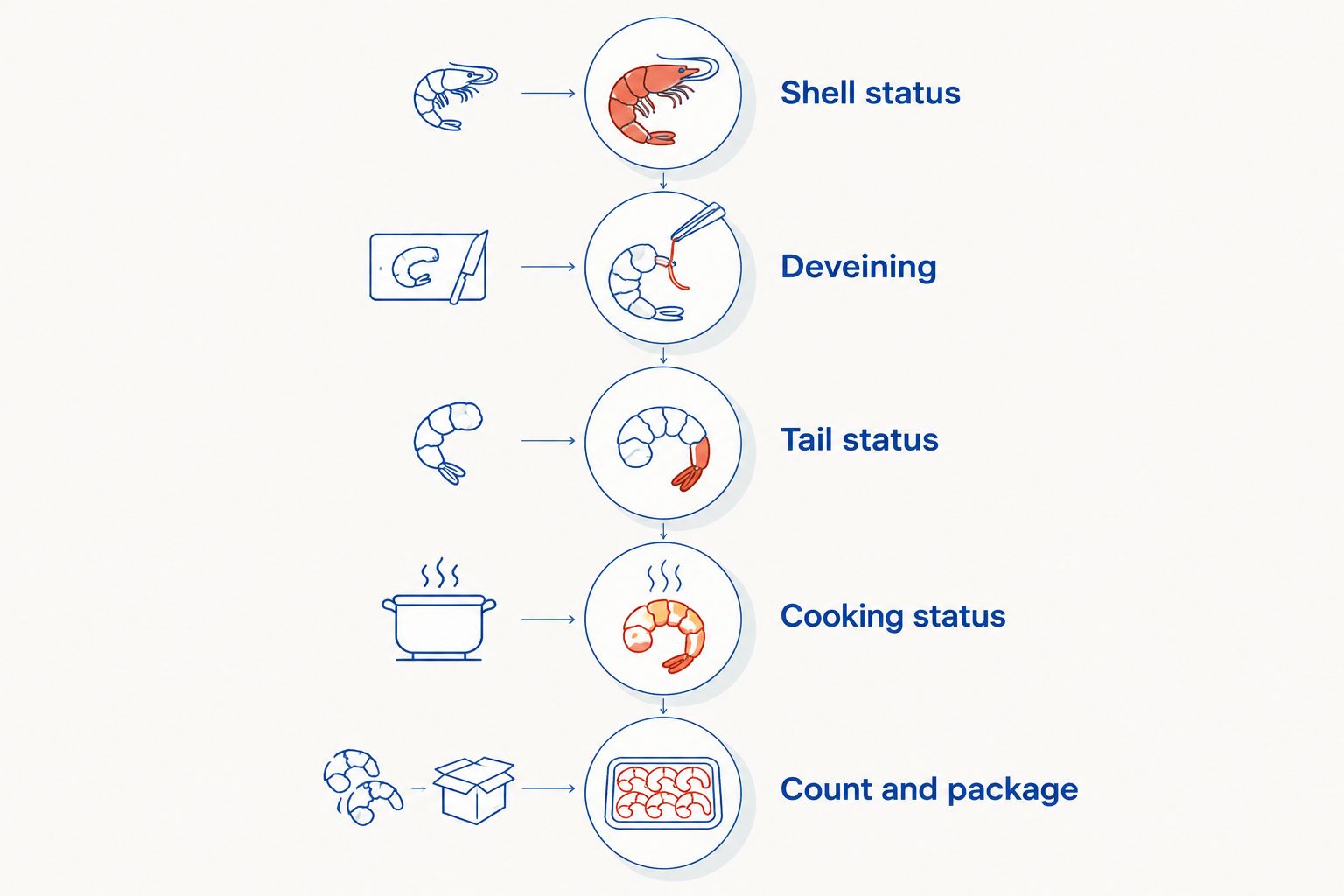
Read the preparation terms first, then the count, then the package information. That order keeps a large-looking shrimp from distracting you from a format that does not suit dinner.
- Shell status: Look for shell-on or peeled. Do not infer it from “head off.”
- Deveining: Look for “deveined” or “P&D,” meaning peeled and deveined. Shell removal alone does not confirm deveining.
- Tail status: “T-On” means tail-on; “T-Off” means tail-off. Decide whether you want a handle or a completely fork-ready bite.
- Cooking status: Find an explicit raw or cooked description. Peeled shrimp can be either.
- Count and package: Read the count designation separately from the weight and any case information.
A 13–15 count means approximately 13–15 shrimp per pound. A 21–25 count means approximately 21–25 shrimp per pound, so the individual shrimp are smaller. U/15 means under 15 shrimp per pound.
Those numbers describe size, not a serving recommendation. Your portions still depend on whether shrimp are the main course, part of a pasta dish, or one item on an appetizer table.
Package information needs the same care. When a listing includes both individual-package and case details, confirm which purchase unit you are selecting rather than treating every weight shown as the contents of one order.
Which shrimp formats are worth comparing for your kitchen?
Start with the two formats that answer the main question: head-off shell-on shrimp and peeled, deveined tail-on shrimp. Onatru offers both, allowing you to choose between keeping the shells and removing the main preparation tasks.
The White Ecuadorian Shrimp Shell On U/15 Head Off is the shell-on choice in this comparison. The Shrimp 13-15 White Peeled and Deveined Tail On removes body shells and veins; its description identifies it as raw shrimp that arrive frozen.
Choose the shell-on option if you want to peel or save shells; choose the peeled option if removing that work matters more. For either product, check the current package selection and handling instructions before ordering.


Nationwide delivery makes restaurant-quality ingredients accessible to home cooks, but it does not replace checking the specific order. Confirm the shipping information and storage directions for the shrimp you select; do not infer a delivery date or packaging method from the preparation format.
How do you prepare each format without overcomplicating dinner?
Decide when the peeling will happen before you start cooking. This keeps raw-seafood handling separate from finishing the meal and helps you avoid discovering unwanted tails after the shrimp are already in the sauce.
- For shell-on shrimp: Follow the product’s thawing instructions, then decide whether to peel before cooking or serve as a peel-and-eat dish. Inspect for the digestive tract and remove it if needed.
- For peeled, tail-on shrimp: Check whether the recipe benefits from the tail. Remove tails beforehand when you want uninterrupted forkfuls.
- For peeled, tail-off shrimp: Check raw versus cooked status, then follow the recipe and handling directions. Less peeling does not mean less attention to cooking.
For food safety in 2026, follow FDA seafood guidance: refrigerate seafood at 40°F or below and thaw frozen seafood in the refrigerator. For shrimp, FDA guidance describes properly cooked flesh as firm, pearly, and opaque; shell color alone is not a reliable endpoint.
Use clean utensils and keep raw shrimp and their juices away from ready-to-eat foods. Shell-on and peeled shrimp need the same basic care—the convenience difference is not a safety exemption.
Are shell-on shrimp better for flavor?
Shell-on shrimp give you shells to use in stock, but shell status alone does not establish better-tasting shrimp. Choose shell-on when your cooking method uses the shells, not because the label guarantees a better result.
If your recipe needs peeled shrimp, you can peel first and use the shells separately. That separates two useful jobs: preparing the shrimp for dinner and building a stock.
Does peeled mean the shrimp are already cooked?
Peeled shrimp can be raw or cooked; peeling describes shell removal, not cooking. Look for an explicit raw or cooked statement before deciding how to prepare them.
This matters especially when you are planning shrimp cocktail or adding shrimp to a hot dish. Match the recipe to the product rather than assuming all peeled shrimp need the same treatment.
Should you remove shrimp tails before cooking?
Remove shrimp tails before cooking when you want pasta, tacos, or rice bowls that require no peeling at the table. Leave tails attached when you deliberately want a handle or a tail-on presentation.
Neither choice makes the meal more correct. Think about how your guests will eat it, then do the preparation that makes that experience comfortable.
FAQ
What's the easiest shrimp format to buy online for a weeknight dinner?
Peeled, deveined, tail-off shrimp are the easiest format when you want no peeling at the table. Check whether they are raw or cooked so you can match the preparation to your recipe.
Should I buy shell-on shrimp for pasta?
Buy shell-on shrimp for pasta only if you plan to peel them before serving or deliberately want a hands-on meal. Peeled, tail-off shrimp make the finished pasta easier to eat.
Does head-off shrimp mean the shell is removed?
Head-off shrimp have the heads removed, but the body shells can remain attached. Check shell status and deveining separately.
What does P&D mean when I buy shrimp online?
P&D means peeled and deveined. It does not establish whether the tails are removed or whether the shrimp are raw or cooked.
What does U/15 mean on a shrimp package?
U/15 means under 15 shrimp per pound. It is a size designation, not the package weight or a serving recommendation.
Can I save shrimp shells for stock?
Yes, shrimp shells can be used to make stock. Handle them as perishable seafood and keep them refrigerated or frozen until you use them.
Does Onatru sell shrimp for home delivery?
Onatru sells restaurant-quality ingredients, including shrimp, with nationwide delivery in the United States. Check the individual listing for preparation format, package details, and shipping information.
What should I check before ordering shrimp in 2026?
Before ordering shrimp in 2026, check shell status, deveining, tails, raw versus cooked status, count per pound, and package size. Confirm handling and shipping details for the specific item.
One last thing
You do not have to choose between shells for stock and peeled shrimp on the plate. Buy shell-on, peel before cooking, and keep the two parts separate until each has a job.
For your next 2026 shrimp order, write the dish name first and the format second: “pasta—peeled, deveined, tail-off” or “peel-and-eat platter—shell-on.” That small decision makes the product label much easier to read.


