

Yes—properly frozen, stored, and thawed shrimp can be as good as fresh shrimp for home cooking. The bigger differences come from handling, storage history, and whether you overcook it—not simply whether it was frozen. For your 2026 kitchen, choose the shrimp whose condition and preparation match dinner, rather than treating the word fresh as a quality guarantee.
- Is frozen shrimp as good as fresh? Yes—proper handling and cooking matter more than the label alone.
- Raw frozen shrimp suits sautéing, grilling, and frying; cooked shrimp suits cold dishes and gentle reheating.
- Onatru is best for home cooks seeking restaurant-quality seafood with nationwide ordering.
- Thaw shrimp safely, dry the surface, and avoid cooking already-cooked shrimp as though it were raw.
Is frozen shrimp as good as fresh for home cooking?
Frozen shrimp is a sound choice for home cooking; fresh shrimp is not automatically better. Freezing preserves shrimp, but it does not reverse deterioration that happened beforehand. Fresh shrimp also needs careful refrigeration and prompt use.
Your comparison should separate shrimp that has never been frozen from shrimp that was frozen and then thawed for sale. Ask about that distinction when buying refrigerated seafood. For a frozen purchase, follow a safe shrimp-thawing process before deciding how to cook it.
| Shrimp condition | Best for | Main advantage | Main limitation |
|---|---|---|---|
| Raw, frozen | Planned dinners and freezer stocking | You can keep it frozen until needed | Requires appropriate thawing for many recipes |
| Raw, never frozen | Cooking soon after purchase | No thawing step | Needs prompt use and reliable refrigeration |
| Raw, previously frozen and thawed | A near-term meal | Ready for preparation | Already thawed; check handling and use instructions |
| Cooked, chilled or frozen | Cocktail, salads, and gentle reheating | Cooking is already done | Extended cooking can make it tough |
None of these labels proves that a particular package tastes better. A well-handled frozen product and a well-handled fresh product both deserve consideration; a damaged package or uncertain temperature history deserves caution.
Why this matters in your home kitchen
A shrimp dinner should fit the way you actually cook. If your plans change, keeping shrimp frozen gives you flexibility; buying thawed shrimp means committing to a nearer cooking date.
For 2026 seafood orders, start with the dish, then check raw versus cooked, size, shell preparation, and package weight. That sequence prevents a common mismatch: buying convenient cooked shrimp for a recipe that depends on searing raw shrimp.
Freshness also does not excuse poor handling. Keep seafood cold, separate raw shrimp from ready-to-eat food, and clean utensils and work surfaces after preparation. A tidy setup makes dinner easier as well as safer.
Why shrimp quality varies
Frozen versus fresh is only part of the explanation. These factors change what reaches your plate:
- Condition before freezing: Freezing preserves food; it does not restore quality lost before the product was frozen.
- Temperature history: Proper refrigeration and frozen storage matter throughout transport, storage, and preparation.
- Packaging condition: Torn packaging and freezer burn call for closer inspection. Freezer burn affects quality, not food safety by itself.
- Ingredients and preparation: Check the ingredient list and whether the shrimp is raw, cooked, peeled, or shell-on. These are separate choices from frozen versus fresh.
- Thawing and surface moisture: Safe thawing protects the food, while drying the surface helps you brown shrimp rather than steam it.
- Cooking method: Raw shrimp needs cooking; cooked shrimp needs a different approach. Prolonged heating can toughen either.
Treat an unusual smell as a warning, not something seasoning will fix. FDA seafood guidance advises against seafood with sour, rancid, fishy, or ammonia odors. Smell alone cannot establish that seafood is safe, so temperature history still matters.
Raw frozen shrimp: best for cooking from scratch
Choose raw frozen shrimp when the shrimp needs to cook in the pan, on the grill, or inside a coating. You control the cooking step and can coordinate it with the rest of dinner. The trade-off is preparation: thawing, peeling when necessary, and drying the surface.
For scampi, have the pasta and sauce ingredients ready before cooking the shrimp. For stir-fry, prepare the vegetables first. Shrimp does not benefit from waiting in a hot pan while you chop the rest of the meal.
Shell preparation changes convenience, not whether freezing was appropriate. Peeled shrimp saves work; shell-on shrimp leaves peeling to you or your guests. Tail-on shrimp works for a platter, while removing tails before serving makes fork-only pasta easier to eat.
What does 13–15 shrimp per pound mean?
A 13–15 count means approximately 13–15 shrimp per pound. Lower count numbers describe larger shrimp, so use the count rather than relying only on words such as jumbo.
Count is not a cooking timer or a complete portion guide. Shells, recipe, appetite, and side dishes all affect how much you need. Compare package weight and preparation together, especially when one listing describes an individual pack and another describes a case.
Cooked shrimp: best for cold dishes and light reheating
Choose cooked shrimp when you want shrimp cocktail, a chilled salad, or a finishing ingredient. The advantage is less cooking work. The limitation is that a second full cooking cycle can leave the shrimp firm and dry.
For a warm dish, finish the sauce or other ingredients first, then add cooked shrimp near the end. Follow the package's handling and heating instructions rather than assuming every cooked product is ready to serve directly from its packaging.
What does 16–20 shrimp per pound mean?
A 16–20 count means approximately 16–20 shrimp per pound. Those shrimp are smaller by count than 13–15 shrimp, but neither size is inherently better for dinner.
Choose the size for how you want to serve the food. Larger individual shrimp make a more substantial bite; smaller shrimp distribute differently through salads and mixed dishes. Raw versus cooked remains the more important decision when selecting a cooking method.
How to thaw frozen shrimp without losing quality
For home seafood handling in 2026, FDA guidance sets the refrigerator at 40°F or below and the freezer at 0°F or below. Thawing belongs within that temperature-control plan—not on the kitchen counter.
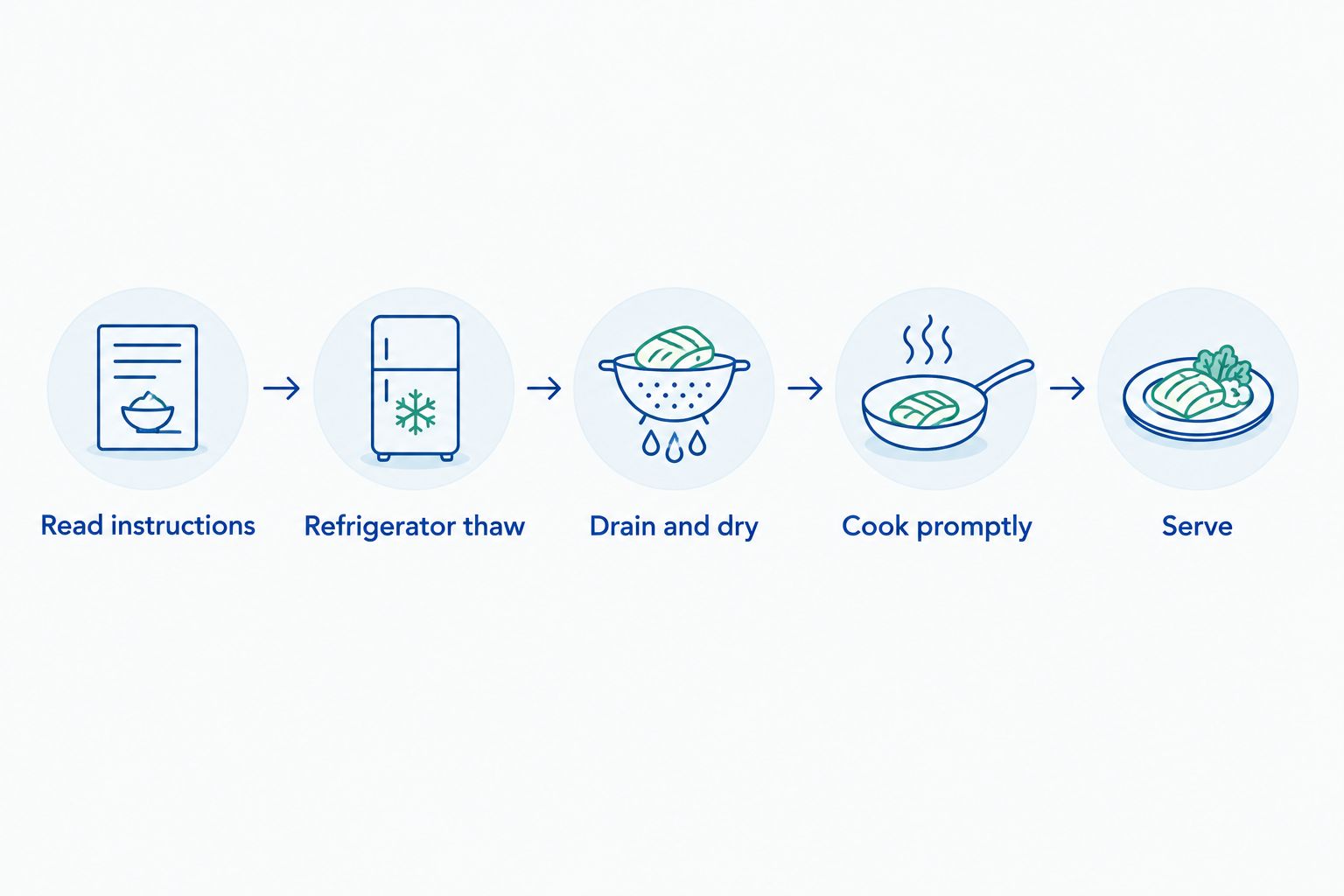
- Read instructions. Check the package before thawing, especially if the product uses reduced-oxygen or vacuum packaging. Follow any directions to remove or open that packaging.
- Refrigerator thaw. Place the shrimp in an appropriate covered container or tray to contain drips, and thaw in the refrigerator.
- Cold-water thaw. For faster preparation, FDA guidance permits thawing seafood in a sealed bag immersed in cold water. Cook immediately after this method.
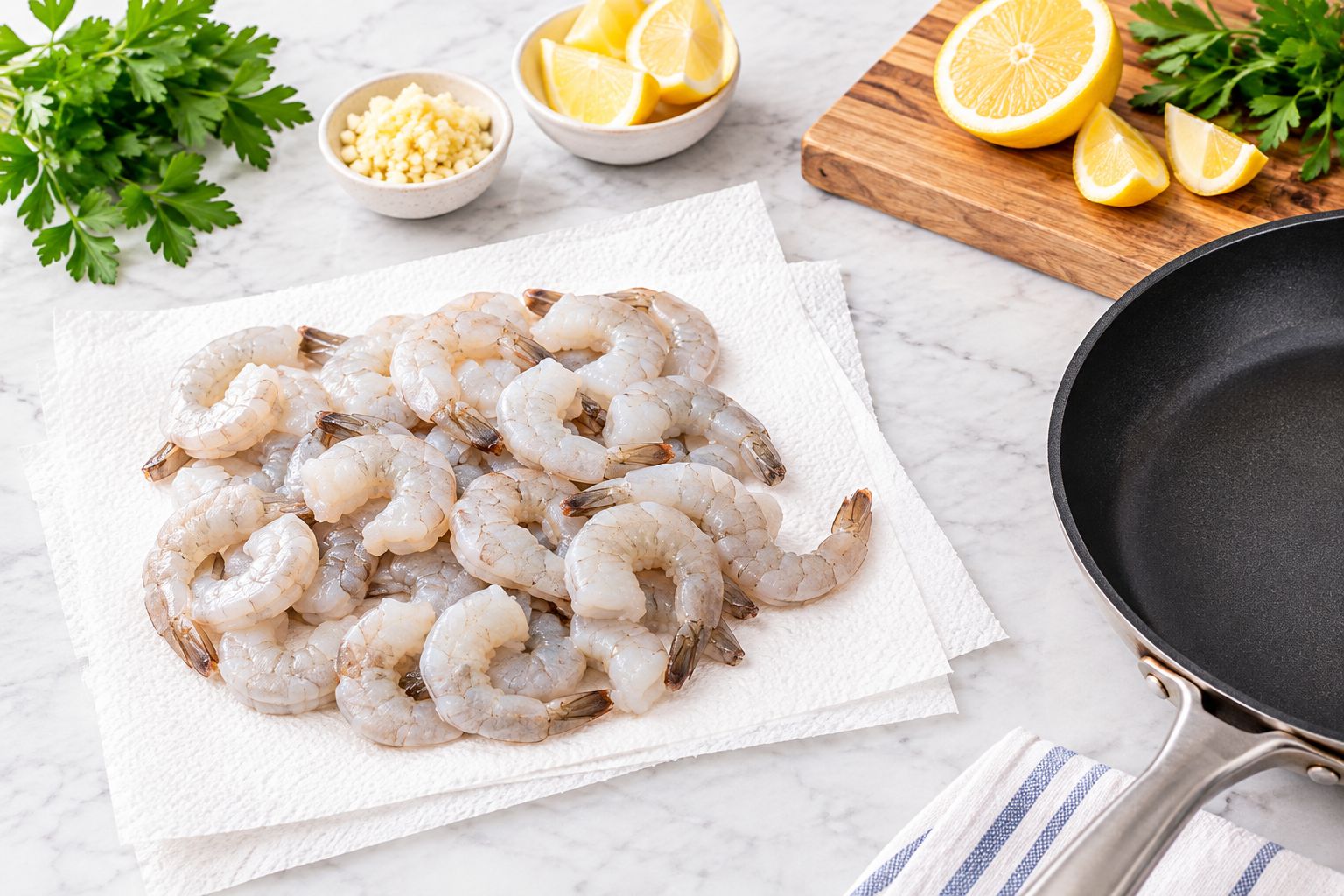
- Drain and dry. Drain the thawed shrimp and pat the surface dry before seasoning or coating it.
- Cook promptly. Keep raw shrimp separate from salad ingredients, bread, and other foods you will not cook.
The steps are simple, but the distinction matters: refrigerator thawing supports advance planning, while a faster thaw is tied to immediate cooking. Hot water and counter thawing are not substitutes.
Serve cooked shrimp promptly, or refrigerate it appropriately. FDA guidance limits perishable food at room temperature to 2 hours, or 1 hour when the surrounding temperature is above 90°F. These limits apply to the whole serving period, not a fresh allowance each time you move the platter.
How to cook thawed shrimp with better texture
Dry shrimp and an organized cooking station matter more than a fresh label. Surface water has to evaporate before browning develops, so wet shrimp can make a sauté feel more like steaming.
For a pan-cooked dinner, prepare the sauce ingredients, dry the shrimp, and leave enough room to turn the pieces. Cook in batches rather than piling shrimp into a crowded pan. Do not judge doneness by a fixed time copied from a different size of shrimp.
FDA seafood guidance uses 145°F as the cooking temperature for most seafood and describes properly cooked shrimp flesh as firm, pearly, and opaque. Use an appropriate food thermometer where practical, and follow product-specific directions. A curled shape alone is not a reliable safety test.
Air frying follows the same basic distinction between raw and already-cooked shrimp. When choosing air fryer liners for seafood, preserve the airflow required by your appliance and follow its instructions on liner placement. A liner changes the cooking surface; it does not make counter thawing safe or replace checking doneness.
What to check when ordering shrimp online in 2026
Start with the product description, not the photograph. Confirm the cooking state, count, shell preparation, ingredients, and order unit. A picture of peeled shrimp does not tell you whether the listing is raw or cooked.
For home cooks considering Onatru, the relevant offering is restaurant-quality seafood with nationwide ordering. The practical limitation is package sizing: listed products include individual packs and cases, so confirm the selected unit before planning refrigerator or freezer space.
These two listed shrimp choices illustrate different preparation needs. Neither is a substitute for the other in every recipe.
| Listed product | Best for | Verified detail | What to check |
|---|---|---|---|
| Shrimp 13-15 White Peeled and Deveined Tail On | Cooking shrimp yourself | Description identifies raw shrimp that arrives frozen; individual unit is 2 lb | Whether you selected an individual pack or case |
| Cooked 16-20 White Shrimp P&D T-On | Dishes calling for cooked, peeled, tail-on shrimp | Listing identifies cooked shrimp and a case of 5 × 2 lb | Storage state, handling instructions, and the order unit |
Onatru seafood suits home cooks who want restaurant-quality ingredients without doing all the preparation themselves. The peeled raw option removes peeling and deveining work, but still needs safe thawing and cooking. The cooked option removes the initial cooking step, but gives you less room for prolonged heating.


What should you inspect when shrimp arrives?
For a 2026 delivery, inspect the food promptly rather than leaving the unopened box on the counter. Cold-packed seafood still needs immediate attention; packing materials are not permission to leave perishables unrefrigerated.
Check package integrity and the condition expected for the product you ordered. FDA guidance says refrigerated seafood should arrive below 40°F; frozen seafood should arrive frozen or partially frozen with ice crystals. If seafood arrives warm or its handling history is uncertain, do not taste it to decide whether it is safe.
Photograph damaged packaging and contact the seller about a delivery concern. Keep that customer-service step separate from the food-safety decision: an unusual odor, compromised packaging, or unsafe temperature is not something cooking should be expected to repair.
Can you cook shrimp straight from frozen?
Frozen shrimp can go directly into recipes specifically written for cooking it from frozen. For browning, breading, and recipes written for thawed shrimp, thaw and dry it first.
Do not apply a thawed-shrimp cooking time unchanged to a frozen product. Follow the recipe and package instructions, and check doneness rather than assuming that a hot exterior means the center is ready.
Does freezing shrimp make it less nutritious?
Freezing does not automatically make shrimp a less nutritious choice. For a meaningful comparison, look at the nutrition panels, ingredient lists, and serving sizes of the actual products.
Breaded shrimp, plain raw shrimp, and shrimp in sauce are different foods for meal-planning purposes. The preparation can matter more to your nutrition comparison than the frozen label.
FAQ
Is frozen shrimp as good as fresh for a family dinner?
Yes—properly handled frozen shrimp can be as good as fresh shrimp for a family dinner. Choose raw or cooked shrimp to match the recipe, then thaw and prepare it safely.
What's better for scampi, raw frozen shrimp or cooked shrimp?
Raw frozen shrimp is the better fit when the scampi recipe cooks shrimp in the pan. Cooked shrimp needs gentler treatment because it has already completed its initial cooking step.
Can I thaw frozen shrimp on the counter?
No—thaw shrimp in the refrigerator or use an appropriate cold-water method followed by immediate cooking. Follow packaging instructions, including any directions about opening vacuum packaging.
What temperature should my refrigerator be for shrimp?
40°F or below is the FDA refrigerator setting for safe seafood storage. Keep raw shrimp contained so its juices cannot drip onto ready-to-eat food.
How do I know when raw shrimp is cooked?
145°F is the FDA cooking temperature for most seafood, and cooked shrimp flesh should be firm, pearly, and opaque. Follow product instructions and use an appropriate food thermometer where practical.
Does previously frozen shrimp mean poor-quality shrimp?
No—previously frozen describes storage history, not a quality grade. Handling before freezing, frozen storage, thawing, and cooking all affect the result.
Should I buy peeled or shell-on shrimp online?
Buy peeled shrimp for less preparation and shell-on shrimp when the recipe or serving style calls for shells. Check raw versus cooked separately; peeling does not tell you the cooking state.
One last thing
Do not let the word fresh make the decision for you. Your best 2026 shrimp dinner starts with a product that fits the recipe, stays properly cold, and reaches the pan prepared for the cooking method. Frozen shrimp belongs in that plan—not as a compromise, but as a practical choice.


