Instead of remembering to buy fresh yeast for bread baking whenever you run out, connect a weekly stock check to your baking calendar so each order matches the bread you actually plan to make. Set up a simple reminder, record the yeast required by your recipes, and check the package instructions before assigning a delivery to a baking day.
- Match fresh yeast for bread baking to scheduled recipes, not an automatic weekly purchase.
- Onatru serves home cooks buying restaurant-quality ingredients; confirm yeast product details before planning an order.
- Keep fresh yeast refrigerated and follow its package storage and use-by instructions.
- Use a calendar reminder and a bread log to connect ordering, receiving, and baking.
Why this matters
Fresh yeast is a perishable ingredient, not a pantry staple you can forget between baking sessions. Ordering more than your next recipes require creates a storage problem; ordering without checking your schedule creates an unnecessary deadline.
Onatru is best for home cooks who want restaurant-quality ingredients delivered nationwide. When shopping with Onatru, confirm the specific yeast type, package weight, and handling instructions before building a bread routine around a product.
The aim for your 2026 baking calendar is simple: know what you will bake, how much yeast each recipe needs, and when someone can receive the order. This guide connects those decisions without assuming a subscription, a particular checkout screen, or a promised delivery date.
Before you start
- Gather your recipe and equipment. Choose a tested bread recipe written for fresh yeast, and have a kitchen scale, a refrigerator thermometer, and a suitable storage container ready.
- Open your planning tools. Use a calendar or reminder app, a note for ingredient quantities, and access to the retailer's current product and delivery information. An ordinary paper calendar works too.
- Check the non-obvious gotcha: yeast types are not interchangeable by equal weight. Fresh, active dry, and instant yeast require different quantities and sometimes different preparation. Do not copy a dry-yeast quantity into a fresh-yeast shopping list.
Fresh yeast is also called compressed yeast or cake yeast. Check that the product description identifies the yeast itself, rather than a ready-made dough or another baking ingredient.
Choose the yeast that fits your actual routine
Fresh yeast is a sensible choice when your recipe calls for it and you can manage refrigerated storage. It is not automatically the easiest choice for occasional baking.
| Yeast option | Best for | Practical advantage | Limitation |
|---|---|---|---|
| Fresh yeast | Regular bakers following fresh-yeast recipes | Crumbles easily for weighing and incorporation | Needs refrigeration and close attention to package dates |
| Active dry yeast | Home cooks following recipes written for active dry yeast | Convenient dry format | Preparation instructions vary; follow the recipe and package |
| Instant yeast | Home cooks following recipes written for instant yeast | Commonly mixes directly with flour | Requires a suitable conversion when replacing fresh yeast |
Choose the yeast specified by your recipe unless you have a reliable conversion from the recipe author or yeast manufacturer. Fresh yeast does not, by itself, guarantee a better loaf. Flour, fermentation, dough handling, and baking all remain part of the result.
Recipe and quantity setup
Start your 2026 bread plan with a recipe you already trust. Keep the recipe unchanged while you establish the ordering routine; otherwise, a disappointing loaf leaves you guessing whether the problem was the yeast, the formula, or the timing.
The bold labels below are fields to create in your own note or spreadsheet. They are not retailer checkout labels.
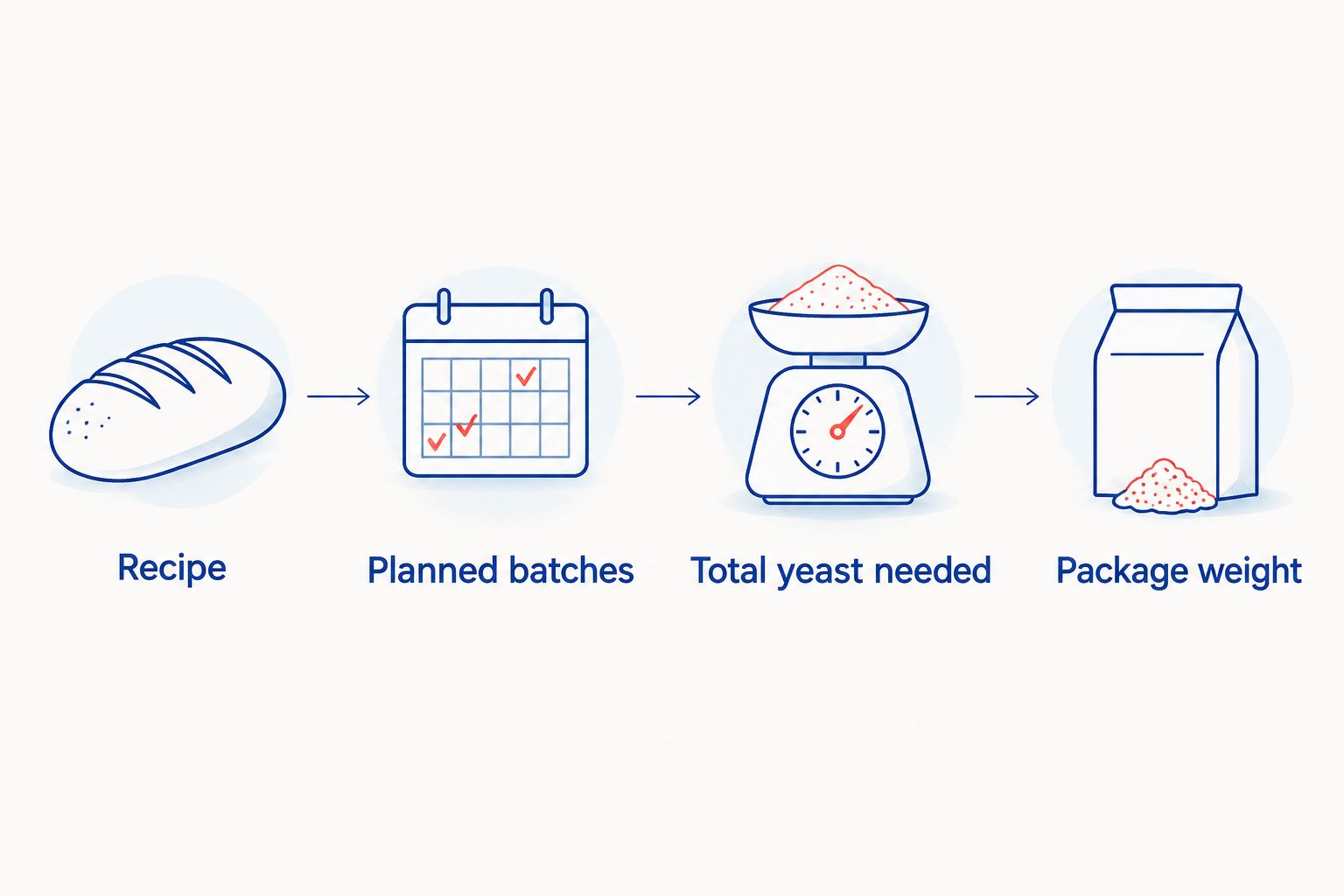
- Create a note titled Weekly bread plan. Record the recipe name, recipe source, intended baking day, and the yeast type it specifies.
- Add Fresh yeast per batch. Copy the weight directly from the recipe, including the unit, rather than estimating a chunk from a block.
- Add Planned batches. Count only the batches you genuinely expect to make before the product's use-by instructions require otherwise.
- Calculate Total yeast needed by multiplying the recipe's yeast weight by your planned batches. Keep separate recipes on separate lines before adding their totals.
- Add Package weight and Package instructions after checking the exact product. Compare the amount you need with the amount you would receive.
For example, if your chosen recipe specifies 10 grams per batch and you plan 2 batches, your shopping requirement is 20 grams. These are planning-example quantities, not a recommended dose for every loaf.
Expected result: your note shows a recipe-based requirement and a package-based purchase quantity. If those quantities leave a large remainder, adjust your purchase or baking plan before ordering.
Do not add an extra batch merely to justify a larger order. A smaller purchase or a different yeast format is a better fit when the proposed routine already feels like a chore.
Calendar and ordering setup
Build a reminder that asks you to make a decision, not one that tells you to purchase automatically. For a 2026 weekly routine, a stock check every 7 days is a planning interval you choose; it is not a statement about fresh yeast's shelf life.
- Create a repeating calendar event named Check bread ingredients. Place it before your usual shopping decision, with enough flexibility to review the retailer's current delivery information.
- Put Check yeast, Check flour, and Confirm baking day in the event notes. Include the recipe quantities from your bread plan.
- At each reminder, inspect the yeast already in your refrigerator. Read its package date and storage instructions before deciding that you need another order.
- Review the current product listing and delivery terms. Confirm the yeast format, package weight, handling requirements, and whether the stated delivery arrangements fit a day when someone can receive it.
- Record the order confirmation and any supplied tracking details in your note. Keep the baking appointment provisional until the delivery information supports it.
Expected result: your calendar prompts a stock check, and an order happens only when your recipe plan requires one. You also know who will bring the delivery inside.
If a product listing leaves the yeast format or package quantity unclear, ask before purchasing. Use the contact page to resolve product-specific questions rather than assigning an identity to an unexplained product code.
Avoid a tightly timed dinner-party loaf for your first run through this system. Establish the receiving and baking routine on an ordinary week before making bread essential to a hosting schedule.
Receiving and baking setup
The delivery is the handoff between your shopping plan and your kitchen. Finish that handoff before opening flour bags or mixing dough.
- Inspect the delivery. Check the package condition, product label, and supplied handling instructions immediately. If temperature or condition raises a concern, keep the product separate and contact the seller before using it.
- Refrigerate promptly. Follow the yeast manufacturer's directions. FDA home food-safety guidance sets refrigerator temperature at 40°F or below; use a thermometer rather than judging the refrigerator by touch.
- Record the package date. Add the use-by information and opening date to your bread note. Keep the original label so storage directions remain available.
- Weigh the recipe quantity. Use a scale and clean utensils. Return the remaining yeast to storage promptly, following its packaging directions.
- Mix according to the recipe. Dissolve or crumble the yeast as instructed. Use the specified liquid temperature instead of assuming that hotter water will make the bread rise faster.
- Record the dough's behavior. Note the room conditions, fermentation observations, and finished result. Judge readiness by the recipe's dough cues as well as its suggested timings.
Expected result: the yeast is stored correctly, the dough contains the measured recipe quantity, and your notes explain what happened during the bake.
For your 2026 bread log, keep observations brief enough that you will actually write them. A note such as dough rose slowly in a cool kitchen is more useful than a blank page reserved for a perfect baking journal.
Second variant: update the order when your baking plan changes
A fixed weekly loaf is not the only workable routine. If your household switches between sandwich bread, dinner rolls, and pizza, let the recipe change trigger a quantity review instead of keeping the same yeast purchase every week.
- Open Weekly bread plan whenever you replace or add a recipe.
- Update Fresh yeast per batch from that recipe, even if the flour quantity looks similar to your usual dough.
- Recalculate Total yeast needed, then subtract only the yeast you can still use under its package instructions.
- Review the order decision again. Canceling a baking session should reduce the planned requirement, not leave an automatic purchase untouched.
Pizza makes this distinction especially useful. Choosing 00 flour for pizza dough does not determine the fresh-yeast dose; your chosen dough recipe and fermentation schedule still control that quantity. Keep flour selection and yeast calculation as separate entries in your plan.
Expected result: your shopping list follows your actual menu. A pizza night, an extra batch of rolls, or a weekend away changes the yeast requirement before you place an order.
If you move to an overnight dough, use a recipe designed for that schedule. Do not take a same-day formula, leave its yeast quantity unchanged, and assume refrigeration makes every timing interchangeable.
Troubleshooting your weekly bread routine
The package contains more yeast than your next bakes require
Fix the purchase plan before expanding the menu. Compare package weight with the recipes you can realistically complete within the labeled storage period. Choose a more suitable quantity or yeast format if the remainder has no clear use.
Do not assume freezing is the default answer. Follow the manufacturer's freezing and thawing instructions if it supplies them; otherwise, plan around refrigerated use.
The dough is rising slowly
Check the recipe, yeast type, measured quantity, liquid temperature, and kitchen conditions. A cool dough can ferment more slowly, while excessively hot liquid can damage yeast.
Follow the recipe's readiness cues rather than adding more yeast to an already mixed dough. Record the conditions so the next bake starts with a specific adjustment, not a guess.
The yeast has mold, unusual discoloration, or a concerning odor
Discard yeast that shows spoilage. Do not trim away a questionable area or taste it to decide whether it is usable.
Also review the storage conditions and package instructions. A calendar reminder helps you notice a date; it cannot make a mishandled ingredient suitable for baking.
Your baking day changes after the order arrives
Recheck the product's use-by and storage instructions before moving the appointment. If the revised date no longer fits, change your plan rather than assuming the yeast will remain usable until you have time.
For the next order, leave the baking event provisional until both your household schedule and delivery information align.
Customize your workflow
Once the basic routine works, add only the fields that answer recurring problems. Package date, Recipe quantity, and Bake notes usually tell you more than a complicated inventory system you stop updating.
A shared household calendar helps when one person orders and another receives the delivery. Assign the receiving task explicitly, and keep storage directions with the order note rather than buried in a message thread.
For a dinner that includes seafood, plan bread as its own task. Onatru's restaurant-quality ingredients can be part of the same meal, but bread fermentation and seafood preparation need separate instructions and separate timing decisions.
Keep your 2026 routine flexible enough to skip a week. The goal is dependable bread for your household, not a streak of purchases.
FAQ
What's the simplest way to plan fresh yeast for bread baking each week?
Choose your recipes, total their fresh-yeast requirements, and compare that quantity with the package weight and use-by instructions. Set a weekly stock-check reminder rather than an automatic purchase reminder.
Can I replace instant yeast with the same weight of fresh yeast?
No, fresh yeast and instant yeast are not interchangeable by equal weight. Use a conversion supplied by the recipe author or yeast manufacturer, and follow the corresponding mixing instructions.
Does fresh yeast need to be refrigerated?
Yes, fresh yeast requires refrigerated storage according to its package directions. FDA home food-safety guidance sets refrigerator temperature at 40°F or below; check it with a thermometer.
Should I order fresh yeast every week even if I have some left?
No, order only when your planned recipes require more usable yeast than you already have. Check the remaining quantity, package date, and storage history before making that decision.
Can I freeze leftover fresh yeast for another baking day?
Follow the yeast manufacturer's instructions on freezing and thawing. Do not make freezing part of your routine unless the product guidance supports it.
Does Onatru's nationwide delivery mean I can assume a specific arrival day?
No, nationwide delivery does not establish a particular arrival day for an individual order. Confirm current product and delivery details before committing to a baking appointment.
Is fresh yeast better than instant yeast for homemade bread?
Fresh yeast is not automatically better than instant yeast. Choose the format that fits your tested recipe, storage arrangements, and baking frequency; either format still requires appropriate fermentation and dough handling.
One last thing
Put the reminder on your calendar to check, not to buy. That small wording choice keeps the routine tied to your kitchen: what is already refrigerated, what your recipe requires, and whether you actually have time to bake.
A bread schedule should make a warm loaf easier to bring to the table. It should not make a perishable ingredient another weekly obligation.