

Raw shrimp lasts up to 2 days in the fridge before cooking, with a recommended storage window of 1–2 days at 40°F or below for your 2026 meal planning. That window assumes the shrimp stayed properly chilled; time spent warm can make it unsafe sooner. Shrimp thawed in cold water or a microwave needs immediate cooking rather than another refrigerator holding period.
- How long does raw shrimp last in the fridge? Use it within 1–2 days at 40°F or below.
- Refrigerator-thawed shrimp keeps for another 1–2 days; cold-water-thawed shrimp needs immediate cooking.
- Discard shrimp left out over 2 hours, or over 1 hour above 90°F.
- Onatru shrimp buyers should plan refrigerator space and cooking dates before unpacking a seafood delivery.
Why this matters
Shrimp dinner is easier when you decide when to cook before you start thawing. A sealed bag, a mild smell, or a splash of lemon does not extend the safe refrigerator window.
The storage guidance in this 2026 guide follows USDA household recommendations for raw seafood and thawing, alongside FDA seafood-handling guidance. For the preparation step, use the guide to thawing frozen shrimp safely for dinner. Keep frozen shrimp frozen until your meal plan calls for thawing it.
How long does raw shrimp last in the fridge before cooking?
Cook refrigerated raw shrimp within 1–2 days, keeping it at 40°F or below. USDA guidance gives raw fish and shellfish this short refrigerated holding period. Treat it as a limit for properly handled seafood, not permission to keep questionable shrimp until the last possible moment.
The thawing method changes your next move. USDA guidance allows seafood thawed in the refrigerator another 1–2 days before cooking, but calls for immediate cooking after cold-water or microwave thawing.
| Shrimp condition | Refrigerator guidance | Best for | Benefit | Limitation |
|---|---|---|---|---|
| Fresh, unfrozen raw shrimp | Cook within 1–2 days at 40°F or below | A meal already on your calendar | No thawing step | Short holding window |
| Raw shrimp thawed in the refrigerator | Cook within another 1–2 days after thawing | Planned dinners | Gives you some scheduling flexibility | Requires advance planning |
| Raw shrimp thawed in cold water | Cook immediately after thawing | A same-day dinner | Faster than refrigerator thawing | Requires attention and prompt cooking |
| Raw shrimp thawed in the microwave | Cook immediately after thawing | Immediate preparation when the label permits | Useful when dinner preparation has started | Some areas can begin cooking during thawing |
| Shrimp with an unsafe or unknown temperature history | Do not rely on a refrigerator countdown | No recommended use | None | Refrigeration cannot undo unsafe handling |
Keep the distinction between storage and thawing clear. Moving shrimp into the fridge does not erase earlier time on the counter, in a warm car, or in a delivery box that failed to keep it cold.
Fresh raw shrimp: 1–2 days refrigerated
For fresh, unfrozen shrimp, plan to cook within 1–2 days of purchase while maintaining refrigeration. If dinner moves beyond that window, freeze the shrimp promptly while it is still safe rather than waiting until it seems questionable.
An unopened package does not automatically buy extra days. Follow any shorter handling instructions on the label, and do not treat a printed date as proof that temperature-abused seafood is safe.
Refrigerator-thawed raw shrimp: another 1–2 days
For shrimp thawed under refrigeration, USDA guidance allows another 1–2 days before cooking. Keep the shrimp cold throughout thawing and storage, with a tray underneath to catch leaks.
If you cannot tell when thawing finished, choose the earlier cooking date instead of stretching the window. Writing the thawing date on the container makes that decision easier when several ingredients are sharing your fridge.
Cold-water-thawed raw shrimp: cook immediately
Cold-water thawing is a preparation method, not a way to create several more days of refrigerator storage. Keep shrimp in a leakproof bag, submerge it in cold water, and change the water every 30 minutes, following USDA thawing guidance.
Once thawed, cook it immediately. If you need flexibility for tomorrow rather than dinner tonight, refrigerator thawing is the better choice.
Why the safe holding window varies
For your 2026 kitchen routine, focus on temperature and handling rather than shrimp size or the recipe you plan to make. These factors determine whether the normal refrigerator guidance applies:
- Refrigerator temperature: The 1–2-day window assumes a temperature of 40°F or below. Check with an appliance thermometer rather than relying only on the control dial.
- Thawing method: Refrigerator thawing permits a short holding period afterward; cold-water and microwave thawing require immediate cooking.
- Time outside refrigeration: Shopping, unpacking, peeling, and meal preparation all add time away from cold storage. Putting shrimp back in the fridge does not reset that exposure.
- Condition before storage: Shrimp that arrived warm or was already spoiled does not become safe when chilled.
- Package directions: Follow product-specific storage and preparation instructions, including any shorter use period or special thawing directions.
Shell-on and peeled shrimp both need the same temperature discipline. Neither the shell nor deveining creates an exemption from safe seafood handling.
How do you store raw shrimp safely until dinner?
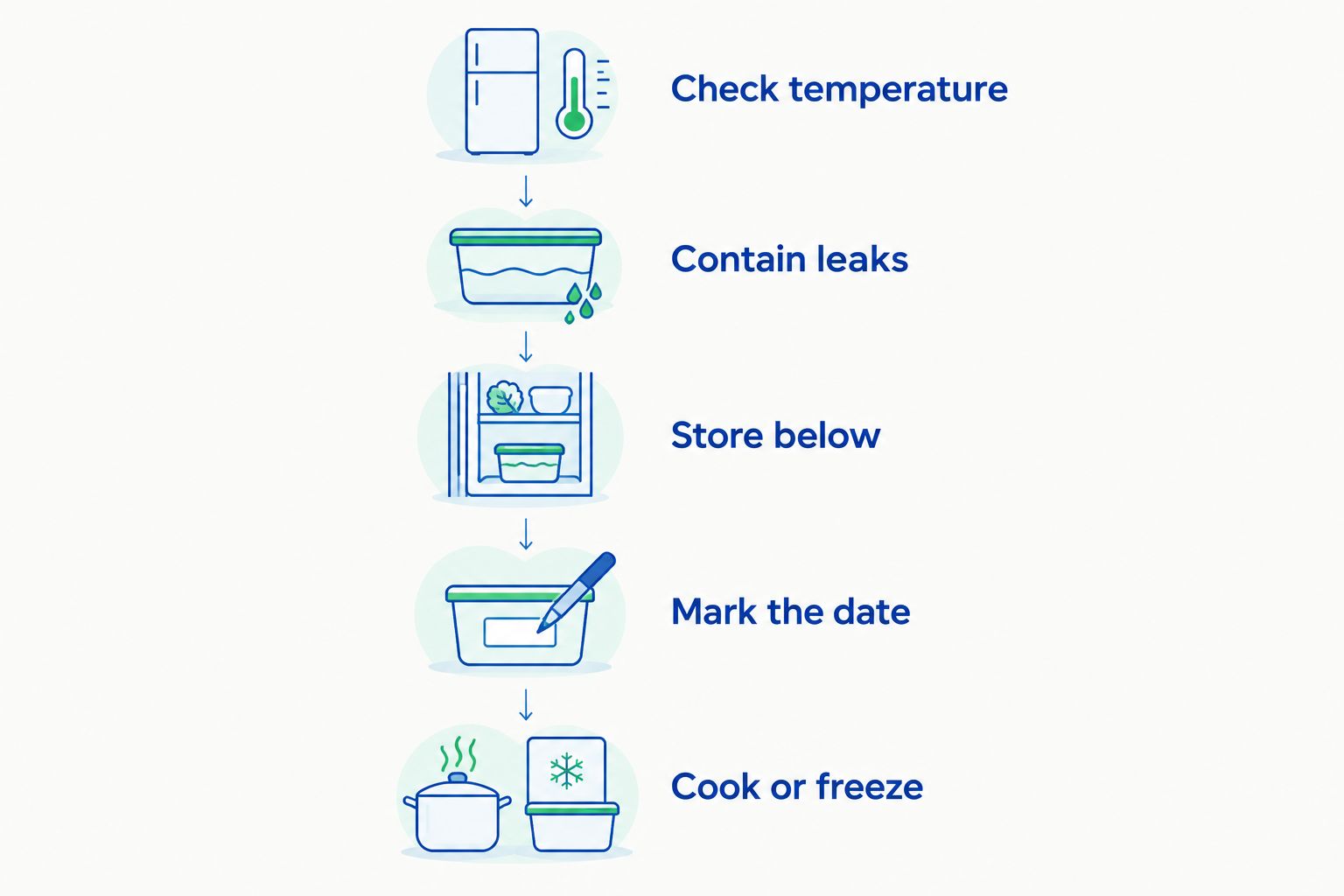
A little organization keeps raw seafood separate from the rest of your meal. You need a cold refrigerator, a container that controls drips, and a clear cooking plan—not an elaborate setup.
- Check temperature. Confirm that your refrigerator stays at 40°F or below. Leave enough room for cold air to circulate around stored food.
- Contain leaks. Keep the shrimp in suitable food-safe packaging and place it inside a rimmed tray or covered container. Follow the package's instructions rather than assuming every wrapper is suitable for thawing.
- Store below. Place raw shrimp below ready-to-eat foods so leaking juices cannot drip onto salad, fruit, or cooked dishes. Avoid the refrigerator door, where temperatures fluctuate during opening.
- Mark the date. Record the purchase date for fresh shrimp or the thawing date for frozen shrimp. Choose the cooking day immediately.
- Cook or freeze. Cook within the applicable safe window, or freeze promptly while the shrimp is still safe. Do not use freezing to rescue spoiled seafood.
Wash your hands after handling raw shrimp, and clean utensils and work surfaces before using them for ready-to-eat ingredients. Keep the salad bowl and cooked pasta away from the tray holding raw seafood.
How do you know when raw shrimp has gone bad?
Discard shrimp with a sour, rancid, or ammonia-like odor, or an unusually slimy texture. FDA seafood guidance identifies sour, rancid, fishy, and ammonia odors as warning signs. Do not taste shrimp to check whether it is safe.
Appearance needs context. Raw shrimp naturally differs in color by species and product, so a particular shade alone is not a reliable safety verdict; use the storage history, package condition, and spoilage signs together.
Most importantly, the absence of a bad smell does not prove safety. Disease-causing bacteria do not always produce an obvious odor or visible change, so shrimp that exceeded safe handling limits belongs in the trash even if it looks ordinary.
Lemon juice, rinsing, seasoning, and marinating do not make spoiled shrimp safe. Keep marinating shrimp refrigerated, and count that time within its existing holding window rather than starting a new one.
What if raw shrimp sat out while you were cooking?
Discard perishable seafood left outside refrigeration for more than 2 hours, or more than 1 hour when the temperature is above 90°F. FDA applies these limits to perishable foods, including seafood. They matter during grocery trips, outdoor cooking, and kitchen preparation—not just after food reaches the table.
Keep cumulative exposure in mind. Shrimp that spent time in a warm car and then sat beside the stove has not had a fresh start simply because you refrigerated it between those events.
For a 2026 backyard dinner, leave the shrimp refrigerated while you prepare the grill, vegetables, and serving dishes. Bring out only what you are ready to cook, and keep the remaining seafood properly chilled.
When you do not know how long shrimp was warm, do not substitute a smell test for a temperature history. Cooking is not a reliable rescue for food that has been stored unsafely.
Can you refreeze raw shrimp after thawing it?
You can refreeze raw shrimp thawed safely in the refrigerator while it remains within its safe holding period. USDA guidance permits refreezing refrigerator-thawed food without cooking, although moisture loss can affect quality.
Shrimp thawed in cold water or the microwave needs cooking before refreezing. That difference is another reason to choose your thawing method around the meal you actually intend to make.
Freeze meal-sized amounts when the product's packaging and condition allow it. Avoid repeatedly thawing a large bag just to remove a few shrimp, and do not force apart a solid frozen block with a knife.
How do you plan an online shrimp order around refrigerator storage?
Onatru is best for home cooks who want restaurant-quality seafood delivered nationwide. The same household storage rules apply after delivery: check the product's condition, follow its directions, and move it promptly into the appropriate cold storage.
For Onatru shrimp orders, read whether the specific item is raw or cooked, frozen or fresh, and sold as an individual pack or case. Those details determine your freezer space and preparation plan; a large order does not mean you should thaw everything together.
Cold-packed delivery still needs an arrival check. FDA mail-order food guidance says perishable food should arrive frozen, partially frozen with ice crystals, or refrigerator-cold at 40°F or below; use a food thermometer rather than judging the coolant alone.
The benefit of ordering ahead is having ingredients ready for a planned meal. The trade-off is that you need room to store the order and someone ready to unpack it—delivery does not extend shrimp's refrigerated shelf life.
Before your next 2026 seafood dinner, decide which portion goes into the refrigerator and which stays frozen. If the shipment arrives above safe refrigeration temperature, do not taste the shrimp or assume chilling it afterward fixes the problem; contact the seller about the condition.
How can you cook the shrimp without overcomplicating dinner?
Prepare the sides before taking raw shrimp from the refrigerator. Have the pan, seasonings, clean plate, and serving utensils ready so the seafood spends less time waiting on the counter.
FDA seafood guidance recommends cooking most seafood to an internal temperature of 145°F; for shrimp, it also describes the flesh as pearly and opaque. Use the package's cooking directions and check doneness rather than relying on a universal minute count, because shrimp size and cooking method differ.
Transfer cooked shrimp to a clean plate, never back onto the unwashed tray that held it raw. If dinner plans change after cooking, refrigerate promptly rather than leaving the finished dish out while you decide what to do.
FAQ
Can I cook raw shrimp after three days in the fridge?
The recommended refrigerator window for raw shrimp is 1–2 days at 40°F or below, so three days exceeds that guidance. Do not use a normal smell as proof that it is safe.
How long does thawed raw shrimp last in the fridge?
Raw shrimp thawed in the refrigerator can stay refrigerated for another 1–2 days before cooking, according to USDA guidance. Shrimp thawed in cold water or the microwave needs immediate cooking.
Does peeled raw shrimp last longer than shell-on shrimp?
No—both peeled and shell-on raw shrimp follow the 1–2-day refrigerated storage guideline. Keep either type at 40°F or below and follow package instructions.
Can I leave raw shrimp in the fridge overnight?
Yes, overnight refrigeration fits within the 1–2-day window if the shrimp was safely handled and stays at 40°F or below. Keep it contained below ready-to-eat foods.
Is raw shrimp safe if it smells fine?
A normal smell does not prove raw shrimp is safe. Discard shrimp that exceeded safe storage or temperature limits, even without obvious spoilage signs.
Can I keep raw shrimp in a lemon marinade for extra days?
No—lemon marinade does not extend the 1–2-day refrigerator window or make spoiled shrimp safe. Marinate under refrigeration and count that time toward the existing storage period.
What should I check when my Onatru shrimp delivery arrives?
Check the shrimp's temperature, packaging, and product-specific storage instructions before putting it away. Perishable seafood should arrive frozen, partially frozen with ice crystals, or at 40°F or below; do not judge safety from cold packs alone.
One last thing
The most useful label is the cooking date you write yourself. A quick note on the container turns a vague dinner idea into a clear plan, and it prevents an unopened bag from disappearing behind the milk.
For your 2026 kitchen routine, pair that note with an appliance thermometer. Knowing when shrimp entered storage helps only when you also know the refrigerator is cold enough.


