

Yes, you can cook lobster tails from frozen, but thawing first gives you better control over even cooking and texture. Follow any cook-from-frozen instructions on the package, and check that the thickest part of the meat reaches 145°F before serving. Frozen tails take longer to heat through, so a cooked-looking exterior does not prove that the center is ready.
- Can you cook lobster tails from frozen? Yes, but thawing first gives you better control over texture and doneness.
- Use package instructions and a thermometer; raw lobster meat should reach 145°F in its thickest part.
- Never force kitchen shears through a rock-hard tail or use shell color alone to judge doneness.
- Onatru sells restaurant-quality seafood for home cooks ordering nationwide; check each item's preparation and pack details.
Why this matters
Lobster is easier to manage when you separate two questions: is it cooked safely, and is it still tender? A frozen tail can have a hot exterior while its thick center remains undercooked. Keeping it over heat until that center is ready can leave the outside tough.
For your 2026 seafood dinners, build the meal around the preparation instructions rather than a fixed serving deadline. Onatru is best for home cooks seeking restaurant-quality seafood ingredients shipped nationwide. When browsing Onatru, check the individual item's frozen or cooked status, pack size, and handling directions before choosing your recipe.
Can you cook frozen lobster tails without thawing them first?
Yes, provided you cook the tails thoroughly and follow the product's directions. The FDA's seafood safety guidance identifies 145°F as the cooking temperature for most seafood and describes cooked lobster meat as firm, pearly, and opaque. Use a thermometer for the temperature check; appearance is supporting evidence, not a substitute.
Choose your approach based on the result you want, not simply on whether you forgot to thaw dinner.
| Approach | Best for | Main advantage | Main drawback |
|---|---|---|---|
| Cook from frozen using package directions | Tails with explicit frozen-cooking instructions | Removes a separate thawing step | The outside heats before the center |
| Thaw in the refrigerator, then cook | Planned dinners and butterflied tails | Easier preparation and more even starting temperature | Requires advance planning |
| Thaw in a sealed bag in cold water, then cook immediately | Same-day preparation | Makes cutting and seasoning more manageable | Requires attention and immediate cooking afterward |
Thaw first when presentation or precise texture matters most. Cooking from frozen is an option, not a promise that every recipe written for thawed lobster will work unchanged.
How do you cook lobster tails from frozen safely?
Start with the label. A recipe for thawed, butterflied lobster is not automatically a cook-from-frozen recipe, and different products need different handling.
- Read the package. Confirm whether the lobster is raw or already cooked. Follow preparation directions specific to that product, including any requirement to thaw before cooking.
- Separate the tails. Cook individual tails rather than a solid frozen cluster. If the tails are frozen together, thaw them safely until they separate instead of forcing them apart with a knife.
- Choose the method. Use the manufacturer's cook-from-frozen method when one is supplied. Do not transfer a thawed-tail cooking time directly to frozen tails.
- Check the center. Insert a clean food thermometer into the thickest meat without resting the tip against the shell. Check each tail because size and position affect heating.
- Finish and serve. Raw lobster should reach 145°F. Remove individual tails as they finish rather than leaving smaller ones cooking while larger ones catch up.
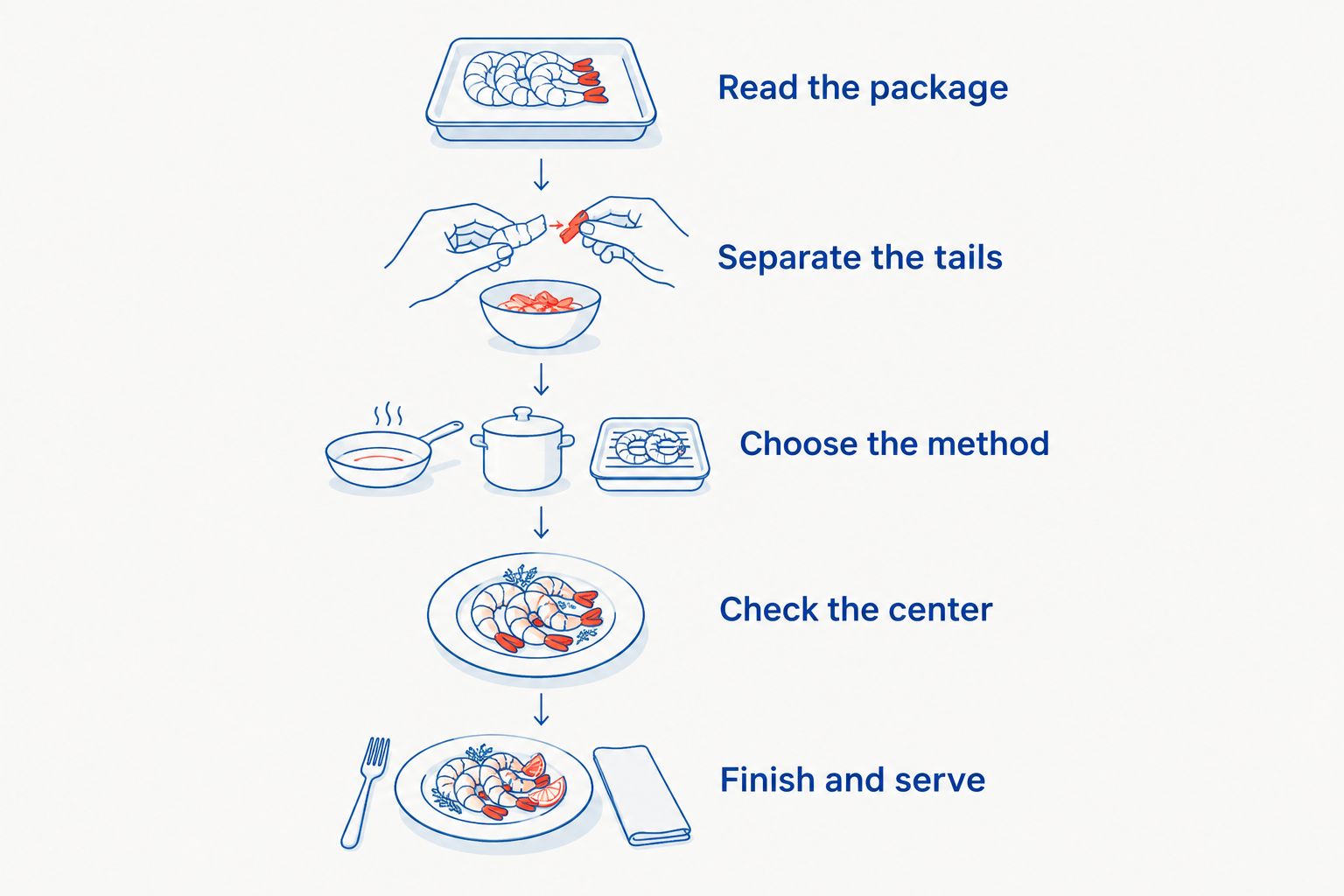
Keep butter, lemon, and serving plates ready before the lobster finishes. That small bit of preparation lets you serve promptly without leaving cooked tails over heat while you organize the rest of dinner.
Refrigerator thawing: best for planned dinners
Refrigerator thawing is the simplest choice when you can plan ahead. Place the tails in a leakproof container on a tray, keep them separate from ready-to-eat food, and follow the package's thawing instructions. Your refrigerator should stay at 40°F or below.
Check the packaging before putting it in the refrigerator. Vacuum-packed seafood can carry special instructions requiring removal from the reduced-oxygen package before thawing; follow those directions rather than assuming every sealed pouch should remain closed.
A thawed tail is easier to position, cut, and season. The trade-off is planning: tail thickness, packaging, and whether the pieces are frozen together all affect how quickly they thaw, so avoid scheduling dinner around a universal thawing estimate.
For a 2026 dinner-party plan, make thawing part of preparation rather than a last-minute task. Choose the recipe before you move the lobster out of the freezer, especially if it calls for butterflying or exposing the meat above the shell.
Cold-water thawing: best for same-day preparation
Cold-water thawing gives you another route when refrigerator thawing does not fit your plans. Follow the label's packaging directions, then use a clean, leakproof bag and cold water. Cook immediately after cold-water thawing.
Keep the water cold throughout the process. Do not substitute warm water to hurry things along, and do not leave lobster soaking unattended while you run errands or prepare the rest of the meal.
This method makes shell preparation more manageable without leaving the seafood on the counter. Its limitation is attention: you need to manage the thawing process and be ready to cook once the tails are thawed.
If the package gives a specific thawing method, use it. General kitchen guidance does not override instructions written for that particular seafood product.
Which cooking method should you choose?
Moist-heat methods and direct-heat methods behave differently around a frozen center. Boiling and steaming surround the shell with heat; broiling and grilling expose the exterior to more intense direct heat. Neither approach removes the need to check the thickest meat.
| Method | Best for | Benefit | Limitation |
|---|---|---|---|
| Steaming | A moist-heat approach supported by the package directions | Keeps the lobster out of direct contact with boiling water | Needs a covered pot and a center-temperature check |
| Boiling | Simple shell-on preparation supported by the package directions | Surrounds individual tails with hot water | Continued cooking can toughen the meat |
| Broiling | Thawed, prepared tails with exposed meat | Browns the surface | Can brown the outside before a frozen center cooks |
| Grilling | Thawed tails prepared for a grill recipe | Adds surface browning | Direct heat makes uneven cooking harder to manage |
For a first lobster dinner, thaw before broiling or grilling. It makes cutting the shell and managing surface browning less demanding. If you cook straight from frozen, choose instructions specifically written for that starting condition.
Do not use extra butter as a fix for uneven cooking. Butter adds flavor, but it does not tell you whether the center has reached a safe temperature or prevent overcooking at the edges.
Why cooking time varies
There is no reliable single cooking time for every frozen lobster tail. For your 2026 recipe notes, record the product, preparation method, and doneness check rather than treating one successful batch as a rule for all tails.
- Tail thickness: Heat has farther to travel through a thick center than through a thin one. Weight alone does not describe the whole shape.
- Starting condition: A solidly frozen tail and a partly thawed tail do not start at the same temperature. Follow the directions for the condition you actually have.
- Cooking method: Steam, boiling water, a broiler, and a grill transfer heat differently. Instructions are not interchangeable.
- Batch size and spacing: Crowded equipment makes consistent positioning and individual temperature checks harder. Leave enough room to handle the tails safely.
- Product preparation: An intact shell-on tail is different from a split or butterflied tail. Raw lobster also needs different handling from a previously cooked product.
When tails differ noticeably in size, check them individually. Removing a finished tail is better than keeping every piece cooking until the largest one is ready.
Can you butterfly a lobster tail while it is frozen?
Butterfly lobster tails after thawing, not while they are rock-hard. Forcing kitchen shears through frozen shell and meat makes the task harder to control and increases the chance of a slip.
Once the tail is thawed, use clean kitchen shears and follow your recipe's cutting directions. Keep the seafood cold while you work, and clean the board, shears, and surrounding surfaces after handling raw lobster.
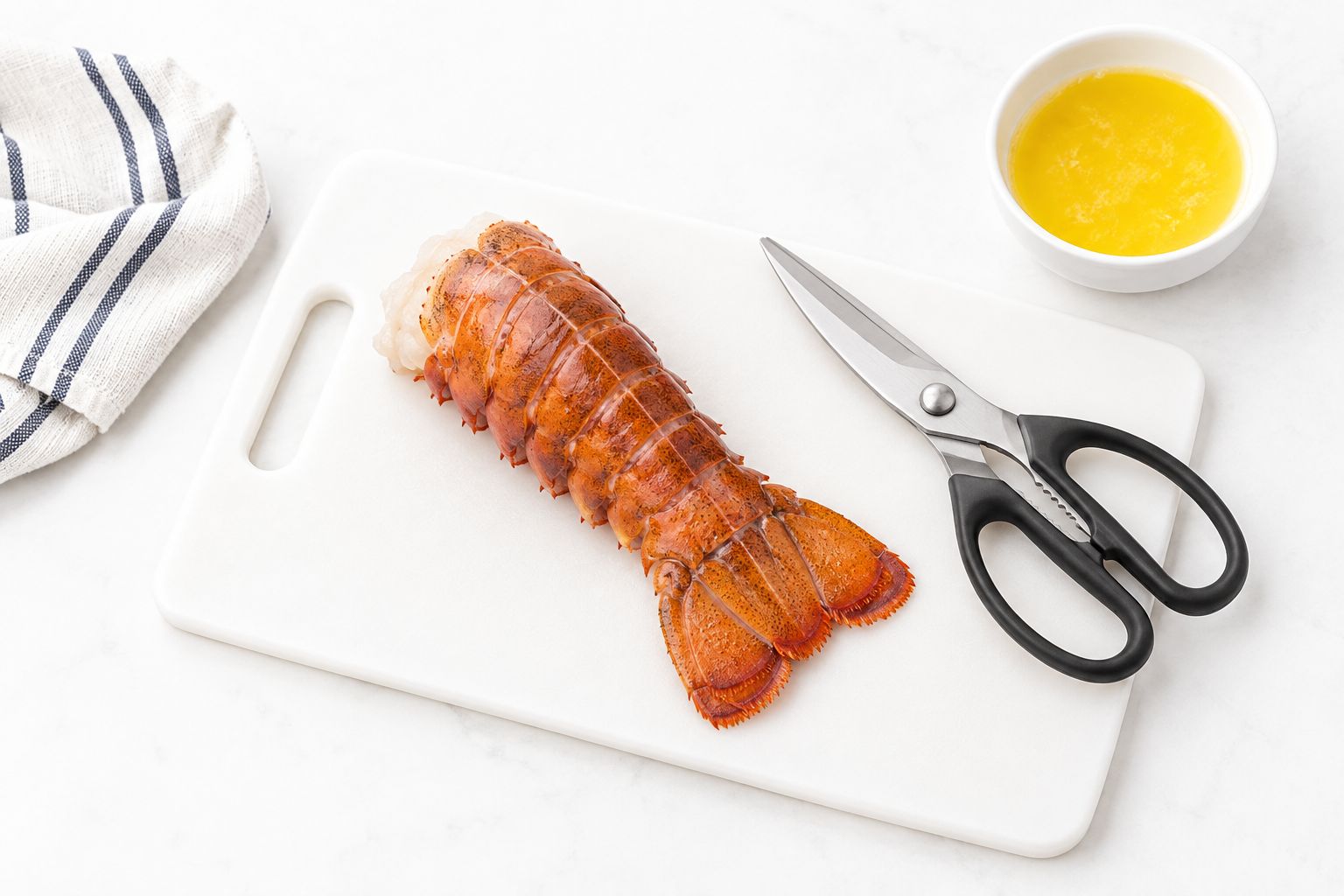
For your 2026 hosting menu, choose between a simple shell-on presentation and a butterflied presentation before cooking. You do not need an elaborate cut to make lobster feel special; a straightforward preparation with lemon and butter keeps the meal approachable.
How do you know the middle is cooked?
145°F in the thickest meat is the temperature check for raw lobster. Approach from an accessible angle and keep the thermometer tip in the flesh rather than against the shell. If the reading seems inconsistent with the rest of the tail, reposition the probe and check again.
The meat should also look pearly and opaque. Shell color alone is not enough: the shell can change appearance while the center still needs cooking, particularly when the tail starts frozen.
Use time as a prompt to inspect, not as proof of doneness. If a recipe's stated time has elapsed but the center has not reached the required temperature, continue cooking and recheck rather than serving by the clock.
What should you check before ordering frozen lobster tails?
Choose the preparation you want before choosing the pack. A shell-on tail suits a plated dinner; picked lobster meat serves a different purpose and should not be treated as the same product.
For Onatru seafood orders, check the item title, package quantity, storage directions, and whether the product is raw or cooked. Confirm the delivery and cold-packing details for your order rather than assuming that nationwide shipping means a particular arrival day or packaging method.
A pack described by tail size can still contain more than you need for one meal. Compare the full pack quantity with your freezer space and dinner plan, then keep the handling instructions with the seafood after unpacking.
For a 2026 freezer routine, make the label easy to find. Knowing which tails need thawing, which instructions apply, and whether the product has already been cooked is more useful than relying on memory when dinner gets busy.
FAQ
Can you cook lobster tails from frozen without thawing?
Yes, you can cook lobster tails from frozen, but follow the package's preparation directions and check the thickest meat. Raw lobster should reach 145°F; thawing first gives you better control over even cooking.
Is it better to thaw lobster tails before cooking?
Thawing first is better for easier shell preparation and more even cooking. It is especially useful before butterflying, broiling, or grilling lobster tails.
How long do frozen lobster tails take to cook?
There is no single cooking time for all frozen lobster tails. Thickness, starting temperature, preparation, and cooking method affect the result, so use product-specific directions and check raw meat for 145°F.
Can I thaw lobster tails on the kitchen counter?
No, do not thaw lobster tails on the kitchen counter. Use refrigerator thawing or an appropriate cold-water method, following the package's instructions.
Should I remove lobster tails from vacuum packaging before thawing?
Follow the package's directions for vacuum-packed lobster tails. Reduced-oxygen seafood packaging can require removal before thawing, so do not assume the pouch should stay sealed.
Does a red shell mean a lobster tail is fully cooked?
No, a red shell does not prove the center is fully cooked. Check the thickest raw lobster meat for 145°F and look for pearly, opaque flesh.
What should I check when buying frozen lobster from Onatru?
Check the Onatru product's preparation status, pack quantity, and handling instructions before ordering. Confirm the shipping and cold-packing details for your order rather than assuming a delivery date.
One last thing
Prepare the side dishes first and cook the lobster last. Lobster needs your attention near the finish, especially when tails differ in thickness, so have the salad dressed, bread ready, and serving plates nearby before the final temperature checks.
That is the easiest way to bring a little occasion to the table without making the cooking more complicated. A thermometer and a clear preparation plan matter more than an elaborate presentation.


