

Yes, you can refreeze shrimp after thawing if it thawed in the refrigerator, stayed at 40°F or below, and remains within its safe refrigerated storage window. Raw shrimp thawed in cold water or the microwave must be cooked before you freeze it again. Refreezing can reduce moisture and firmness, so a safe batch will not necessarily have the same texture after another thaw.
- Can you refreeze shrimp after thawing? Yes—refrigerator-thawed shrimp can return to the freezer if safely handled.
- Cook shrimp immediately after cold-water or microwave thawing before freezing it again.
- Refreezing does not make temperature-abused shrimp safe, and smell cannot prove safety.
- Onatru serves home cooks ordering restaurant-quality seafood nationwide; safe storage starts when your order arrives.
Why this matters
Dinner plans change. Knowing whether to refreeze, cook, or discard thawed shrimp helps you avoid waste without taking a food-safety shortcut. The deciding factor is the shrimp’s temperature history—not whether it still looks good.
For your 2026 kitchen routine, use the refrigerator as your default thawing method whenever dinner plans are uncertain. This guide follows USDA Food Safety and Inspection Service guidance on thawing and refreezing, alongside FDA seafood-handling guidance. The safe shrimp-thawing guide explains how to start that process.
Onatru is a fit for home cooks ordering restaurant-quality seafood nationwide. The same home-storage rules apply whether you order seafood online or bring it home from a store.
Can you refreeze shrimp after it has thawed?
You can refreeze refrigerator-thawed shrimp without cooking it first, provided it stayed safely refrigerated. USDA guidance allows food thawed in the refrigerator to be refrozen, although moisture loss can affect quality. FDA guidance places raw refrigerated seafood within a short storage window: use raw shrimp within 1–2 days after refrigerator thawing, or refreeze it promptly within that window.
Use this comparison to choose your next step. The advantages and drawbacks concern handling, not a promise about the finished dish.
| Thawing method or condition | Can it go back into the freezer? | Best for | Advantage | Drawback |
|---|---|---|---|---|
| Refrigerator, held at 40°F or below | Yes, while still within the safe storage window | Flexible dinner plans | Allows refreezing without cooking first | Requires advance planning; texture can decline |
| Cold water in a leakproof bag | Cook immediately, then freeze the cooked shrimp | Same-day cooking | Faster than refrigerator thawing | Commits you to cooking immediately |
| Microwave | Cook immediately, then freeze the cooked shrimp | Immediate cooking | Useful when you need to cook now | Uneven heating can affect texture |
| Partly frozen, with ice crystals remaining | Yes, if safely handled | Assessing an interrupted thaw | Remaining ice crystals help establish its condition | Does not excuse known temperature abuse |
| Counter thawing or unknown warm exposure | Do not refreeze as a rescue step | No recommended use | None as a thawing method | Unsafe exposure requires discarding |
A freezer preserves food; it does not reverse unsafe handling. If you cannot establish that the shrimp stayed safely cold, do not use refreezing to postpone the decision.
Refrigerator-thawed raw shrimp: 1–2 days refrigerated
Refrigerator thawing gives you the simplest route back to the freezer. Keep the shrimp in a covered container or on a tray that catches drips, away from ready-to-eat foods. Check the refrigerator with an appliance thermometer rather than judging its temperature by touch.
Refreeze raw shrimp promptly once you know you will not cook it. The 1–2 days are a refrigerated storage window, not a reason to leave shrimp sitting until the last possible moment. Package it while it is still cold and return it directly to the freezer.
Record the thawing date and the refreezing date. Freezing pauses microbial growth but does not erase earlier refrigerated storage, so cook the shrimp promptly after its next refrigerator thaw rather than treating it as a brand-new purchase.
For a useful 2026 freezer label, include the contents, whether the shrimp is raw or cooked, and its handling dates. That small habit gives you a clearer answer than trying to remember which bag changed dinner plans.
Cold-water-thawed shrimp: cook before refreezing
Shrimp thawed in cold water needs immediate cooking before it returns to the freezer. USDA thawing guidance calls for a leakproof bag, cold tap water, and water changes every 30 minutes during cold-water thawing. Do not leave the bag in a bowl of warming water while you decide what to make.
The benefit is speed compared with refrigerator thawing. The trade-off is commitment: once the shrimp has thawed this way, your next step is cooking, not raw storage for another dinner.
If plans change, cook the shrimp, divide it into shallow containers, and refrigerate it promptly. Freeze the cooled portions afterward. You do not need to finish an entire pasta dish or casserole just to save the shrimp; cooking it separately keeps your next meal more flexible.
Microwave-thawed shrimp: cook immediately
Microwave-thawed shrimp must also be cooked immediately before refreezing. Microwave heating is uneven, and some areas can warm substantially while others remain frozen. Moving that unevenly warmed shrimp straight into the freezer is not the recommended handling route.
Choose microwave thawing only when you are ready to cook. Follow the appliance instructions, then move directly into your cooking method. This is a less forgiving choice for delicate shrimp because partial cooking during thawing can make the final texture harder to control.
Do not microwave a bag simply to loosen a portion and return the rest to storage. Portioning while the shrimp is still frozen avoids that problem.
Cooked shrimp: 3–4 days refrigerated
Safely handled cooked shrimp can be frozen, including shrimp that was previously frozen raw. USDA leftovers guidance gives cooked leftovers 3–4 days in a refrigerator held at 40°F or below. Freeze cooked shrimp sooner when you already know you will not eat it within that period.
Cooking does not make earlier temperature abuse acceptable. Shrimp that spent too long warm should be discarded, not cooked and frozen as a workaround.
After cooking, divide a large batch into shallow containers and refrigerate promptly. Do not leave it on the counter until it reaches room temperature. Once chilled, pack it into meal-sized freezer portions with as little trapped air as practical.
For your 2026 meal plan, separate shrimp from a larger dish when practical before storing. That gives you more control over reheating: the shrimp does not need to stay on the heat while a deep container of sauce or rice warms through.
Why refreezing safety and texture vary
Two bags of thawed shrimp can require different decisions even when they look alike. These factors explain the difference:
- Thawing method: Refrigerator thawing permits refreezing without cooking first; cold-water and microwave thawing require immediate cooking.
- Actual temperature: A measured temperature is more useful than a cool-feeling package. Keep refrigerated shrimp at 40°F or below.
- Elapsed storage time: Raw shrimp and cooked shrimp have different refrigerated storage windows. Neither lasts indefinitely because it was previously frozen.
- Warm exposure: Time on the counter, during preparation, and at the table matters. Returning shrimp to the refrigerator does not undo unsafe exposure.
- Packaging and repeated thawing: Air exposure and additional freeze-thaw cycles can reduce eating quality through drying and moisture loss.
Shell-on versus peeled shrimp does not change these basic safety rules. Neither does shrimp size. Choose those features for your recipe, then make the refreezing decision from storage conditions.
How to refreeze safely thawed shrimp
Use this sequence for shrimp that qualifies for refreezing. If the temperature history fails the safety check, stop before packaging.
- Check history. Confirm the thawing method, refrigerated temperature, and elapsed storage time. If you used cold water or a microwave, cook the shrimp immediately before continuing with cooked storage.
- Portion shrimp. Divide safely cold shrimp into the amount you expect to cook or serve at a time. Keep the remaining shrimp refrigerated while you work.
- Pack airtight. Use freezer-safe bags or containers. Press excess air from bags gently, and avoid packing shrimp in a way that crushes it.
- Label clearly. Mark raw or cooked, the thawing date, and the refreezing date. Keep that history with the portion rather than on a discarded outer box.
- Freeze promptly. Return the portions directly to a freezer maintained at 0°F or below. Spread bags flat where practical so they are easier to organize.
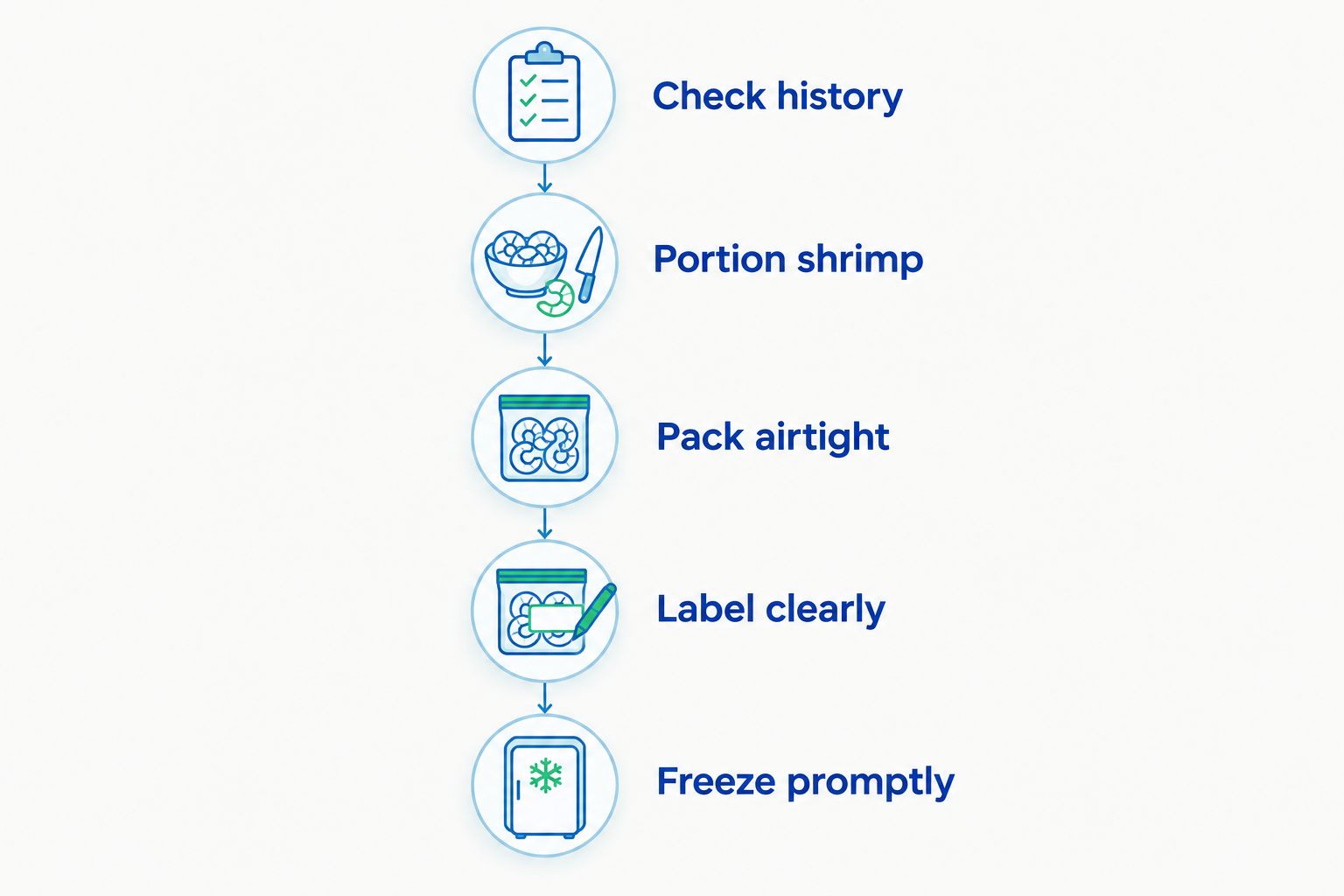
For your 2026 freezer setup, keep a marker and freezer bags near your storage area. An easy labeling routine is more useful than an elaborate system you skip when dinner gets busy.
How to handle a thawed seafood delivery
A thawed delivery is not automatically unsafe. USDA mail-order food guidance says perishable food should arrive frozen, partly frozen with ice crystals, or refrigerator-cold at 40°F or below. Inspect the food promptly and measure its temperature when you need to assess its condition.
If an item sold and shipped frozen arrives partly thawed, use its measured condition and handling history—not the shipping box’s appearance—to decide what comes next. Food that still contains ice crystals or remains at 40°F or below can be refrozen under USDA guidance. If it arrives above refrigerator temperature, follow USDA’s advice not to consume it and contact the seller.
Onatru seafood orders belong in your refrigerator or freezer promptly after inspection. Cold packing is not a substitute for checking the food, and a delivery notification is a reason to bring the box inside rather than leave it until evening.
Make delivery checks part of your 2026 ordering routine: clear storage space before arrival and have an appliance or food thermometer ready. Do not taste questionable shrimp to test it.
Can you refreeze shrimp that thawed on the counter?
Two hours at room temperature is the general discard limit for perishable food; that limit drops to 1 hour above 90°F. FDA and USDA guidance use these limits for food left without safe temperature control. Do not deliberately thaw shrimp on the counter, even if you expect it to thaw quickly.
If the shrimp exceeded the applicable limit, discard it. If you do not know how long it sat warm, discard it rather than guessing from its smell, color, or how cold the center feels.
These limits are not recommended thawing times. A frozen center does not establish that the surface stayed safely cold, and putting the shrimp back into the freezer does not correct the exposure.
Will refrozen shrimp taste the same?
Safe refreezing can still reduce quality. USDA guidance identifies moisture loss during thawing as a reason refrozen food can have poorer quality. Shrimp can become less firm or drier after additional freezing and thawing.
That trade-off is separate from safety. Airtight packaging helps protect against drying, but it cannot restore moisture already lost or make mishandled shrimp safe.
Use safely refrozen raw shrimp in a meal where you can watch it closely as it cooks. Avoid adding extra cooking time merely because it has been frozen again; follow the recipe and check doneness. FDA guidance describes cooked shrimp flesh as pearly and opaque.
FAQ
Can you refreeze shrimp after thawing in the fridge?
Yes, you can refreeze refrigerator-thawed shrimp if it stayed at 40°F or below and remains within its safe storage window. Raw shrimp should be cooked or refrozen within 1–2 days after refrigerator thawing; refreeze promptly rather than waiting.
Can you refreeze shrimp after thawing in cold water?
Cook cold-water-thawed shrimp immediately before freezing it again. After cooking, divide it into shallow containers and refrigerate promptly, then freeze the chilled portions.
Can I refreeze shrimp that still has ice crystals?
Yes, shrimp that still contains ice crystals can generally be refrozen if it has been safely handled. Known temperature abuse is still a reason to discard it; remaining ice does not erase an unsafe handling history.
Can I refreeze cooked shrimp after thawing it?
Yes, safely refrigerator-thawed cooked shrimp can be refrozen. Keep it at 40°F or below, account for its refrigerated storage history, and expect some loss of texture.
How long can thawed raw shrimp stay in the refrigerator?
Raw shrimp thawed in the refrigerator should be cooked or refrozen within 1–2 days while held at 40°F or below. This does not apply to cold-water or microwave thawing, which require immediate cooking.
Does freezing kill the bacteria on shrimp?
Freezing does not reliably kill all harmful microorganisms or make temperature-abused shrimp safe. Safe thawing, cold storage, and proper cooking remain necessary.
Can I tell whether thawed shrimp is safe by smelling it?
No, smell cannot establish that thawed shrimp is safe. An objectionable odor is a reason to reject shrimp, but the absence of an odor does not prove safe handling.
Should I refreeze shrimp that arrived warm in a delivery box?
No, do not refreeze warm delivered shrimp as a way to make it safe. USDA mail-order guidance calls for perishable food to arrive frozen, partly frozen with ice crystals, or at 40°F or below; contact the seller if it arrives above refrigerator temperature.
One last thing
Prevent the second thaw before you need to manage it. If shrimp are individually frozen and separate easily, remove only the portion you need and return the rest to the freezer immediately. If they are frozen into a solid block, do not soften the block on the counter just to pry some loose.
For your next Onatru seafood order, match the package format to your cooking routine and available freezer space. A manageable portion is easier to thaw safely, cook well, and enjoy without turning tomorrow’s dinner into another storage decision.


