

Shrimp cost per pound online in 2026 is the selected package’s current total divided by its net weight in pounds; for a delivered comparison, include applicable checkout charges in that total. Compare matching shrimp sizes and preparation styles, because a pound of shell-on shrimp is not the same amount of ready-to-eat seafood as a pound of peeled shrimp.
- How much does shrimp cost per pound online? Divide the current order total by its confirmed net pounds.
- Onatru shrimp listings distinguish individual packs from cases; confirm your selected purchase unit before comparing.
- Compare shrimp count, shells, tails, and raw versus cooked preparation before choosing an online seafood order.
- Buy a package you can use and store, rather than choosing by the displayed total alone.
How much does shrimp cost per pound online in 2026?
The useful comparison is the current amount you pay for the exact weight and preparation you select. Start with the package, then account for delivery and usable shrimp—not the other way around.
Onatru sells restaurant-quality seafood for nationwide home delivery, with shrimp listings that include individual packs and larger case configurations. Onatru is best for home cooks seeking restaurant-quality shrimp with clearly identified size and preparation choices. The buying task is matching those choices to your dinner and freezer space.
| Comparison basis | What to check | What the result tells you | Limitation |
|---|---|---|---|
| Package unit | Selected pack or case and its net pounds | Which quantity the displayed total covers | A listing can describe both purchase units |
| Product-only comparison | Current product total divided by selected net pounds | How matching shrimp packages compare before checkout | Does not include applicable delivery charges |
| Delivered comparison | Final order total divided by total seafood pounds | What the shipment costs relative to its weight | Mixed-product orders need careful allocation |
| Usable-portion comparison | Amount paid relative to shrimp you actually serve | Whether peeling and trimming change your decision | Shell and head weights are not edible meat |
For a shrimp-only order, the delivered calculation is straightforward. For a mixed grocery order, do not assign the entire shipment’s charges to the shrimp and call that the shrimp’s unit cost; compare the same basket structure instead.
Why this matters
A tempting package total can distract you from what is inside. Shrimp count, preparation, and purchase unit determine whether an order fits a quick pasta dinner, a hands-on shrimp boil, or a freezer restock.
The practical 2026 buying rule is simple: compare like with like before comparing totals. A smaller pack that fits your cooking plans is a better choice than a case you cannot store or finish.
Restaurant-quality ingredients still need a home-kitchen plan. Decide how you want to cook, how much preparation you want to do, and where the unopened packages will go before you order.
How do you calculate the comparison before ordering?
Use this sequence whenever you compare online shrimp listings. Keep the selected purchase unit consistent from the product page through checkout.
- Confirm the unit. Read whether you are selecting an individual pack or a full case. Do not treat a case description as confirmation that the displayed total covers the case.
- Confirm the weight. Find the net pounds for that selected unit. A listing describing an individual 2 lb pack and a case of 5 × 2 lb packs describes different order quantities.
- Match the preparation. Compare peeled with peeled, shell-on with shell-on, and cooked with cooked. Check whether tails or heads remain attached.
- Match the size. Use the count designation rather than a word such as “large.” A count label gives you a more specific basis for comparison.
- Review checkout. Use the current total and applicable delivery charges for your actual destination. Recheck the selected unit before submitting the order.
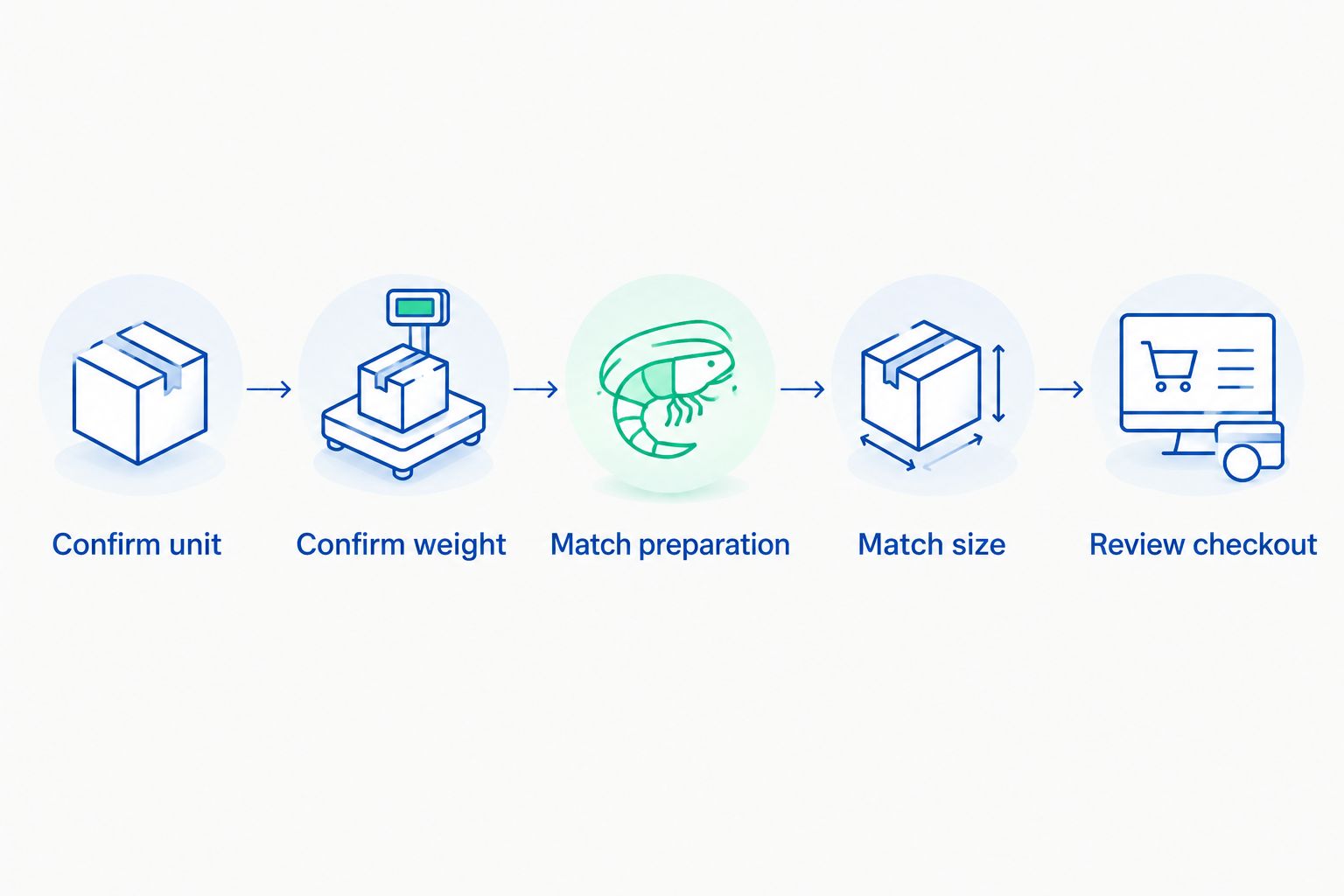
Keep your comparison notes short: product name, selected unit, net weight, count, and preparation. Those details help you avoid comparing an individual bag with a multi-bag case or raw shrimp with a cooked product.
Individual packs: check the 2 lb purchase unit
Several supplied shrimp listings describe an individual 2 lb pack alongside a case configuration. That distinction matters more than the size of the package total on its own.
For example, the listing for 21-25 White Shrimp P&D T-Off specifies an individual 2 lb unit and a case containing 5 × 2 lb packs. “P&D” means peeled and deveined, and “T-Off” means tail-off.
Best for: home cooks who want peeled, tail-off shrimp without removing shells at dinner prep. The benefit is less handling; the trade-off is that you do not get shells to use separately in a stock. Confirm the product’s raw or cooked status rather than inferring it from “P&D.”
For your 2026 order, select the purchase unit first and use only its corresponding weight. If the cart does not make that relationship clear, resolve it before ordering.
Larger packs: check the 5 lb purchase unit
The supplied White Ecuadorian Shrimp Shell On U/15 Head Off listing describes an individual 5 lb unit and a case configuration of 10 × 5 lb packs. The product title also specifies that the shells remain on and the heads are removed.
Best for: home cooks planning shell-on cooking or willing to peel shrimp themselves. Shells suit hands-on meals and can be reserved for stock, but they add preparation or table-side work. The purchased weight includes those shells.
Do not compare that package directly with a peeled pack and assume the same weight produces the same amount of meat. Keep both preparation and quantity in view, especially when you are buying for a specific recipe rather than restocking generally.
Case orders: read the pack count before buying
A case described as 5 × 2 lb contains multiple inner packs, not one individual bag. Confirm that the cart selection actually corresponds to the case before using its combined weight in your calculation.
Best for: households with a clear meal plan and enough freezer space for the full order. Multiple inner packs can help you organize future dinners, but a case commits you to a larger quantity. Do not assume the contents are individually frozen or easily separable unless the description says so.
For a first order, avoid making quantity the deciding factor. Choosing the right preparation in a manageable purchase unit gives you a clearer starting point for future orders.
Why online shrimp comparisons vary
These are the listing details that change what you are buying. They explain why a single category-wide number is less useful than a matched comparison.
- Shrimp count: A 13-15 designation describes fewer, larger shrimp per pound than a 21-25 designation. Compare the same count range when size matters to the recipe.
- Shells and heads: Shell-on and head-on products include parts you will not serve as meat. Compare their usable portions separately from peeled shrimp.
- Preparation: Peeled and deveined products remove preparation steps. Raw and cooked shrimp also require different treatment in the kitchen.
- Purchase unit: An individual pack and a multi-pack case represent different commitments. Read both the selected unit and its weight.
- Product identity: White shrimp, tiger shrimp, and products identified by origin are distinct listings. Do not assume different names describe interchangeable packages.
- Order composition: Checkout charges belong to the actual basket and destination. Keep the basket consistent when comparing delivered orders.
These checks make a 2026 comparison useful without assuming that one size, origin, or preparation is automatically the right choice. Choose for the meal you want to cook.
Which shrimp preparation fits your dinner?
Start with the recipe, then choose the shrimp. Use the table below to decide which preparation saves work and which trade-offs you are happy to accept.
| Preparation | Best for | Practical advantage | Trade-off |
|---|---|---|---|
| Raw, peeled and deveined | Sautéing, grilling, and dishes cooked from raw | Less shell removal before cooking | You still need to cook the shrimp safely |
| Peeled, tail-off | Meals where you want fork-ready bites | No tail removal at the table | Less suited to presentations built around attached tails |
| Shell-on, head-off | Hands-on meals and cooks who want shells for stock | Keeps shells available for cooking | More peeling and less edible meat per purchased pound |
| Cooked, peeled | Cold dishes or recipes calling for cooked shrimp | Cooking is already completed | Extended reheating can make the texture firm |
For a warm pasta dish, a raw peeled product lets you cook the shrimp as part of the recipe. For a chilled preparation, a clearly labeled cooked product removes that cooking step; follow its handling directions.
Onatru’s shrimp selection includes both preparation styles, but the product title and description—not the photograph—should guide your choice. Read them together before adding anything to your cart.
Product choices to compare
These listings illustrate the differences between peeled tail-off, raw peeled tail-on, and shell-on shrimp. Check the current purchase-unit selection and handling details on each listing; the cards alone do not replace those checks.


Does a 21-25 count mean there are that many shrimp in the bag?
21-25 means approximately that many shrimp per pound, not per bag. The package’s net weight is a separate detail, so read both labels before planning portions.
The count also does not tell you whether the shrimp are peeled, tail-off, raw, or cooked. Keep size and preparation as separate checks.
Is shell-on shrimp a better buy than peeled shrimp?
Shell-on shrimp is a better fit when you want the shells and accept the peeling work. Peeled shrimp is a better fit when reducing preparation matters more to your dinner plan.
Neither format wins from package weight alone. Compare the amount you will serve and the work you are willing to do.
Should you order a case for your first shrimp delivery?
Order a case only when its quantity fits your meal plan and storage space. An individual pack is the simpler starting point when you are still choosing a preferred size or preparation.
Before any 2026 delivery, check the seller’s current packing and receiving instructions. Have refrigerator or freezer space ready, and do not treat cold-packed packaging as a substitute for checking the seafood on arrival.
FAQ
How do I work out shrimp cost per pound online?
Divide the current total for your selected purchase unit by its confirmed net weight in pounds. For a delivered comparison, include applicable checkout charges and compare matching preparations.
Does the shrimp package total always cover a full case?
No, a listing can describe both an individual pack and a case. Confirm which unit you selected and which weight corresponds to it before ordering.
What does U/15 mean on a shrimp listing?
U/15 means fewer than 15 shrimp per pound. Check the rest of the title separately for shells, heads, tails, and preparation.
Is peeled and deveined shrimp already cooked?
Peeled and deveined shrimp is not necessarily cooked. Look for an explicit raw or cooked designation in the title or description and follow the product’s handling instructions.
What's the best shrimp preparation for an easy home dinner?
Raw peeled and deveined shrimp is a practical choice for a dinner you plan to cook from raw. Choose tail-off if you want to avoid removing tails at the table.
Does a larger shrimp order automatically give better value?
A larger order does not automatically give better value. Compare the current purchase unit, usable shrimp, checkout total, and quantity your household can use.
Should I compare cooked shrimp with raw shrimp by weight?
Compare cooked shrimp with cooked shrimp and raw shrimp with raw shrimp for a clearer purchasing decision. Their preparation and intended use differ, so matching weight alone is not enough.
What should I check before my first seafood delivery?
Check the product’s storage directions, the seller’s receiving instructions, and your available cold-storage space. Review the current delivery details for your destination rather than assuming an arrival date.
One last thing
The largest shrimp is not automatically the best shrimp for your recipe. A count suited to a centerpiece presentation serves a different purpose from shrimp you want distributed through pasta, tacos, or soup.
Before placing your order, write down the dish and the preparation you want. That small decision keeps your comparison focused on dinner—not just the package total.


