

Instead of juggling a lobster delivery, a separate bread order, and last-minute oven decisions, plan your lobster and bread pairing for dinner party service around one menu: mild bread beside lobster tails, or soft rolls filled with cooked lobster. This 2026 workflow takes you from choosing ingredients to bringing warm bread and properly handled seafood to the table.
- Onatru suits home cooks ordering restaurant-quality lobster and bread for the same dinner-party menu.
- For lobster and bread pairing for dinner party service, choose mild bread that leaves the seafood center stage.
- Pair lobster tails with French dinner rolls; choose brioche rolls for cooked lobster filling.
- Check cooking status, package quantity, storage instructions, and delivery details before placing your seafood order.
Why this matters
Bread has different jobs depending on the lobster dish. Beside a tail, it catches butter and sauce; in a lobster roll, it becomes part of every bite. Choose the serving style first, then buy bread that supports it.
Onatru is best for home cooks who want restaurant-quality lobster and bread in one online order. Onatru serves home cooks nationwide, but you still need to check each item's quantity, preparation requirements, and current shipping details before committing to a party menu.
The practical trade-off is storage and preparation. A frozen seafood order needs freezer space and a thawing plan; bread dough needs a different schedule from fully baked rolls. Ordering both ingredients together does not make their preparation identical.
Before you start
- Have your menu and guest needs ready. Decide whether lobster is the main course or a smaller course, and ask about shellfish, wheat, milk, and egg allergies. Check individual ingredient labels rather than assuming a bread is suitable.
- Prepare cold storage and basic equipment. Make room for the actual packages, and have a refrigerator thermometer, food thermometer, covered tray, clean cutting board, and bread knife ready.
- Catch the non-obvious mismatch. Frozen does not mean raw, and bread does not always mean ready to serve. Confirm whether the lobster is raw or cooked and whether the bread needs thawing, baking, or splitting before planning oven time.
Your 2026 order and menu plan
Menu and bread selection
- Choose the lobster format. For individually plated dinners, select tails. For a roll-centered meal, select lobster meat with an explicitly stated cooking status; cooked claw and knuckle meat avoids a separate raw-lobster cooking step.
- Give the bread one job. Choose a side roll for butter and sauce, or a soft roll that can hold filling. Avoid choosing several strongly flavored breads just to make the basket look generous.
- Compare preparation demands. Read the bread's handling instructions alongside the lobster's instructions. Keep the combination that fits your kitchen, not just the one that looks attractive in a photograph.
- Write down the complete product names. Similar-looking seafood listings can describe different cuts and cooking states. Keep the exact names with your menu notes so the cook and the person unpacking the order follow the same plan.
Expected result: Your menu names a lobster format, a bread format, and a preparation method for each. Nothing depends on guessing what arrives.
The following choices suit two adjacent workflows: plated tails with bread on the side, or cooked lobster tucked into soft rolls. The pairing judgments are cooking recommendations, not claims that every product has the same handling requirements.
| Product | Best for | Main advantage | Limitation or extra task |
|---|---|---|---|
| Frozen Lobster Tails 5-6 OZ | An individually plated lobster dinner | A defined tail-size range helps you compare portions | Requires thawing and cooking; shell-on weight is not edible-meat weight |
| Frozen Lobster Cooked Claw & Knuckle Meat | Lobster-filled rolls | The description identifies steam-cooked meat stored frozen | Requires thawing and careful handling; prolonged reheating can toughen it |
| 6 Lobster Brioche Rolls | A soft lobster-roll centerpiece | The description identifies buttery, savory rolls baked together six across | The rolls are un-split, so you must separate and cut them |
| French Dinner Rolls Indiviually Wrapped | Bread served beside lobster tails | The description identifies a crusty exterior and soft, chewy interior | Individual wrapping adds an unpacking task; crusty bread is less suited to a soft filled roll |
Choose Frozen Lobster Cooked Claw & Knuckle Meat with 6 Lobster Brioche Rolls for a filling-focused menu. Choose Frozen Lobster Tails 5-6 OZ with French Dinner Rolls Indiviually Wrapped when you want lobster plated separately. Neither route needs an elaborate bread assortment.


Quantity and package checks
- Count guests by course. Note who is eating lobster and whether another main dish shares the plate. Keep allergy-safe meals separate from the lobster preparation area.
- Separate package weight from serving weight. A 5–6 oz lobster tail includes shell. Do not treat that number as 5–6 oz of ready-to-eat lobster meat, or use it interchangeably with a package of picked meat.
- Check the selling unit. Read whether the listing describes an individual item, inner pack, or case. The phrase six across describes the brioche's baked arrangement; it does not establish the total quantity in your order.
- Size the filling to the bread. Before assembling every roll, fill one to check the balance. Add enough lobster to make it the focus without forcing the bread open or making it difficult to pick up.
- Record the actual quantities. Save your 2026 menu with the guest count, purchased units, storage needs, and intended portions. Resolve unclear package details before placing the order.
Expected result: You know what the ordered unit contains and how it becomes dinner. Your portion plan does not rely on shell weight or a product title alone.
For a side-bread menu, put a modest amount on the table and replenish as needed. For filled rolls, match the number of usable rolls to the number you intend to serve; do not assume every guest wants the same amount.
2026 delivery and storage checks
Receiving and cold storage
- Read the delivery instructions before ordering. Confirm the shipping information for your address and arrange for someone to receive the package. Do not make the dinner schedule depend on an unverified delivery-date assumption.
- Inspect the seafood immediately. Check packaging integrity, the product's condition, and temperature where practical. Cold packing supports transport, but the presence of cold packs alone does not establish that seafood remained safely chilled.
- Move each item to the correct storage location. Keep frozen items frozen until the planned thaw, and refrigerate chilled seafood promptly. Store seafood separately from bread and ready-to-eat foods to prevent drips and cross-contamination.
- Thaw according to the package instructions. Use refrigerator thawing rather than leaving lobster on the counter. Follow any specific directions for opening or removing vacuum packaging before thawing.
Expected result: Your seafood is stored promptly, the bread follows its own instructions, and the thawing method matches the package.
USDA food-safety guidance sets refrigerator temperature at 40°F or below. Its mail-order food guidance says perishable deliveries should arrive frozen, partly frozen with ice crystals, or refrigerator-cold; do not taste questionable seafood to decide whether it is safe.
Use the detailed guide to inspect and store a delivered lobster order before your box arrives. If the package condition or temperature raises a safety concern, keep the seafood out of the meal and contact the seller for instructions.
Cooking and table service
- Finish the bread preparation first. Separate and split rolls, set out the basket, and prepare any bread-warming equipment before handling raw seafood. Follow the bread's directions rather than applying one baking temperature to every product.
- Prepare the lobster according to cooking status. Cook raw tails using a food thermometer and the product instructions. For cooked meat, follow the package's serving or reheating directions instead of treating it like raw lobster.
- Keep bread warming separate from lobster cooking. Use different trays and utensils. Never place ready-to-eat bread where raw seafood or its juices have been.
- Bring the components together at serving. Warm or toast the bread as appropriate, then plate the tails or fill the rolls. Keep butter and additional seasoning separate so guests can adjust their own plates.
Expected result: The lobster reaches the table without waiting through the bread's entire preparation, and the bread stays separate from raw-seafood handling.
FDA seafood guidance specifies 145°F for most seafood; check raw lobster meat in its thickest part without touching the shell. Do not use a fixed cooking time as a substitute for temperature, because tail size, starting temperature, and cooking method differ.
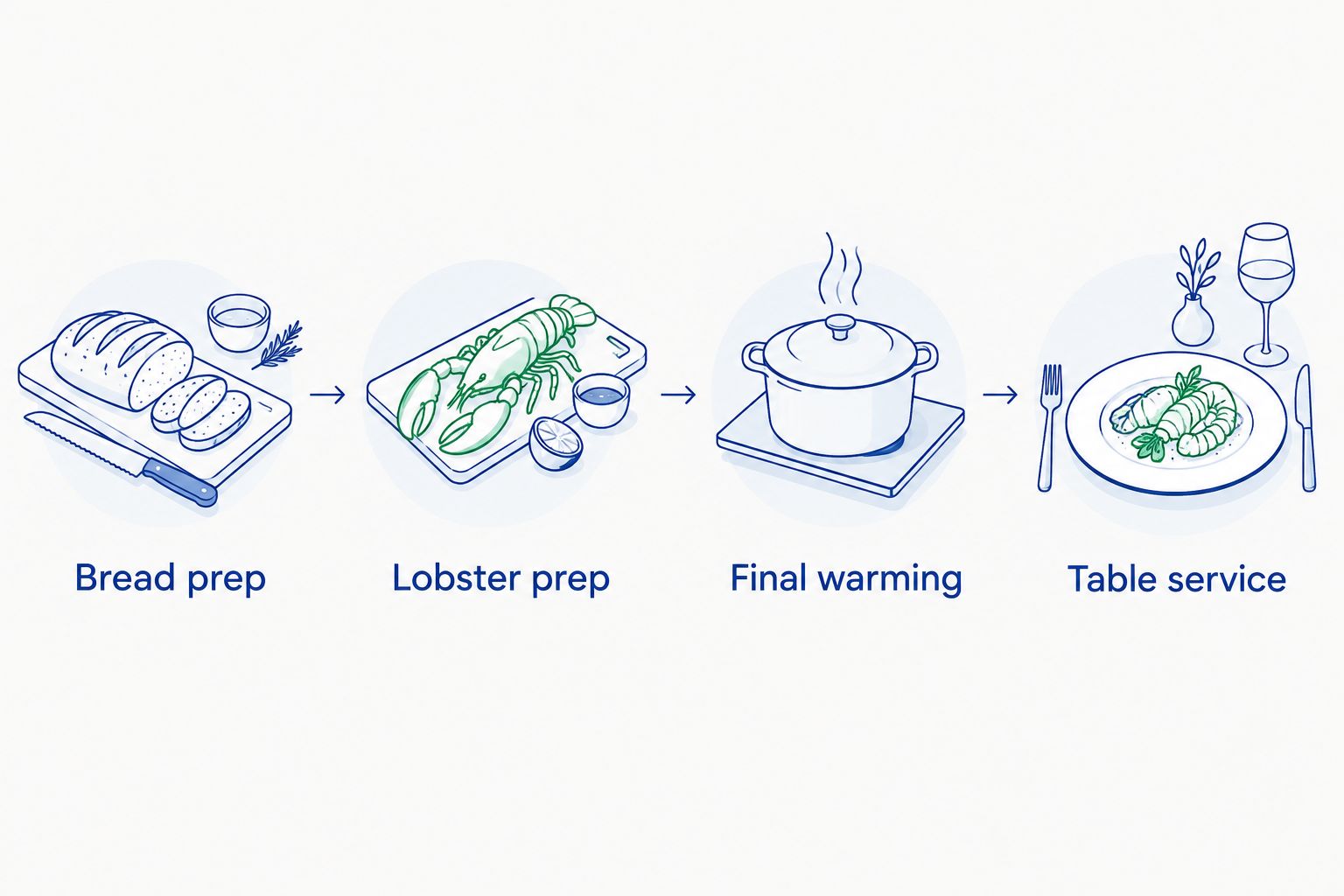
Keep the serving sequence simple: Bread prep, Lobster prep, Final warming, Table service. This gives each ingredient its own preparation step without turning dinner into several competing kitchen projects.
Second workflow: serve lobster-filled rolls instead of plated tails
Best for a casual, seated dinner: Use cooked lobster meat and soft rolls when you want guests to enjoy lobster without working through shells at the table. The advantage is easier assembly; the trade-off is that filled bread loses its texture if it sits too long.
- Thaw the cooked lobster according to its package directions and keep it refrigerated until needed.
- Separate the un-split brioche rolls and cut a pocket that leaves a connected base.
- Prepare the filling according to your recipe, adding dressing gradually rather than soaking the meat.
- Toast or warm the bread if desired, then fill it close to serving. Keep additional filling refrigerated rather than placing the whole batch on the table.
A cold lobster filling and warm toasted bread can work together; the bread does not need to heat the filling. If you choose a warm filling instead, follow the cooked meat's reheating directions and avoid repeatedly warming the same batch.
For your 2026 party plan, choose this variant before ordering rather than switching after thawing. That decision changes the bread shape, lobster format, serving dishes, and final preparation sequence.
Troubleshooting
The bread becomes soggy
Fix: Fill rolls just before serving and add dressing gradually. Keep side bread away from pooled butter and seafood juices; pass sauce separately instead of pouring it across the basket.
The lobster feels tough
Fix: Check whether cooked meat was reheated as though it were raw. For the next batch, follow the product's cooking status and temperature instructions; adding more butter does not reverse overcooking.
The bread is ready before the lobster
Fix: Finish slicing and setup early, but move final warming closer to service. Keep the bread and seafood on separate trays so you can adjust one without continuing to cook the other.
The order is larger than the dinner needs
Fix: Check which portions can remain frozen before starting the thaw. Follow the package's storage instructions and avoid thawing a whole case merely because it arrived together.
Guests linger over the table
Fix: Serve smaller batches and keep the rest under safe temperature control. USDA guidance limits perishable food at room temperature to 2 hours, or 1 hour above 90°F; clearing and replenishing is safer than leaving the full seafood platter out.
Customize your workflow
Keep the lobster-and-bread foundation and change the service style, not every ingredient. A plated tail dinner benefits from an uncluttered bread basket; a lobster-roll dinner benefits from having the rolls cut and the serving plates ready before filling begins.
Onatru's seafood and bakery selection supports both approaches, but product-specific handling still controls the schedule. Add a green salad or another simple side only after you have settled the lobster preparation and bread timing.
For larger gatherings, assign one person to bread and table setup while another handles seafood. Give both the same written serving sequence, and keep raw-seafood tools away from the bread station.
FAQ
What's the best lobster and bread pairing for dinner party service?
Pair lobster tails with mild French dinner rolls, or cooked lobster meat with soft brioche rolls. Choose the format first: side bread needs to catch sauce, while a filled roll needs to hold lobster without falling apart.
Which Onatru lobster product works for homemade lobster rolls?
Frozen Lobster Cooked Claw & Knuckle Meat suits homemade lobster rolls because its description identifies steam-cooked meat stored frozen. Follow the package's thawing and serving directions, and fill the bread close to serving.
Do the 6 Lobster Brioche Rolls arrive already split?
No, the product description says the rolls are un-split and baked together six across. Check the full package quantity separately, then separate and cut the rolls before assembling your meal.
Can I plan lobster portions using the tail's listed weight?
Use the listed weight to compare tail sizes, not as a measure of edible meat. A shell-on tail includes shell, so it is not equivalent to the same weight of picked lobster meat.
Can I thaw lobster on the kitchen counter?
No, thaw lobster in the refrigerator according to the package instructions. Follow any directions about removing vacuum packaging, and keep the seafood separate from bread and other ready-to-eat foods.
Should I serve warm bread with cold lobster filling?
Yes, warm or toasted bread works with cold cooked-lobster filling. Keep the filling refrigerated until assembly and fill the rolls close to serving so the bread retains its texture.
What should I check before ordering lobster and bread in 2026?
Check the lobster's cooking status, the bread's preparation instructions, package quantities, storage needs, and current delivery details. Confirm unclear information before ordering rather than building your dinner schedule around an assumption.
One last thing
A lobster roll begins with the cut in the bread, not the filling. Leave a connected base when you split an un-split roll, then test the pocket before assembling the batch. That small preparation step keeps the lobster on the plate—and makes dinner easier to eat.


