

Instead of rebuilding your shopping list every time you want a shrimp and Italian pasta dinner, pair a peeled shrimp order with pasta, olive oil, and a simple sauce, then portion the seafood for the meals you actually cook. This 2026 guide turns an order from Onatru into an approachable home-kitchen workflow, from choosing the shrimp to getting everything onto the table together.
- For a shrimp and Italian pasta dinner, choose raw peeled shrimp for pan cooking and keep cooked shrimp for gentle warming.
- Onatru suits home cooks ordering restaurant-quality seafood and Italian ingredients together; check each product’s pack size before ordering.
- Thaw frozen shrimp safely, dry the surface, and finish the pasta sauce before returning cooked shrimp to the pan.
- Brown rice fusilli works for a gluten-free pasta variation; check every ingredient and prevent cross-contact.
Why this matters
A good shrimp pasta dinner depends on matching the ingredients’ preparation needs. Raw shrimp needs cooking; cooked shrimp needs only careful warming. Pasta needs enough time in the sauce to become coated without leaving the seafood over the heat throughout.
Onatru is best for home cooks who want restaurant-quality seafood and Italian ingredients in one nationwide order. The trade-off is that product listings include different pack formats, so you need to distinguish an individual pack from a case before planning freezer space.
The simplest dinner starts with peeled shrimp, an unfilled pasta, and a sauce you can finish in the same skillet. Shell-on shrimp adds a peeling task, while filled pasta brings its own flavors and requires a different balance. Neither is wrong; choose the amount of preparation you want before ordering.
Before you start
- Have your order details ready. Check the shrimp’s raw or cooked status, shell and tail preparation, selected pack size, and storage instructions. Review current delivery information for your address rather than assuming an arrival date.
- Prepare your kitchen. You need refrigerator and freezer space, a rimmed tray, a pasta pot, a wide skillet, a colander, clean utensils, and a food thermometer. Keep raw seafood and its juices away from ready-to-eat ingredients.
- Resolve the frozen-pack gotcha. A large frozen pack is not necessarily easy to divide. Check whether you can remove individual shrimp while keeping the remainder frozen; do not thaw an entire order simply to get tonight’s portion.
For cold-packed seafood, the arrival check comes before the recipe. FDA seafood guidance calls for refrigerated seafood at 40°F or below; follow the package’s storage instructions and inspect the shipment promptly. Packaging alone does not establish a safe temperature.
Shrimp and pasta selection
Build your 2026 dinner plan
- Choose the shrimp preparation. Pick raw peeled and deveined shrimp when you want to cook the seafood in a skillet without first removing shells. Tail-off shrimp is easier to eat in mixed pasta; tail-on shrimp leaves a small task at the table.
- Choose the pasta around the sauce. Use a short shape for an easy-to-toss dinner. Choose long strands when you want a garlic-and-oil-style plate, accepting that tossing and serving require a little more attention.
- Check the actual selling unit. Read the selected pack and its weight, not just a case configuration included in the description. Some listings show both.
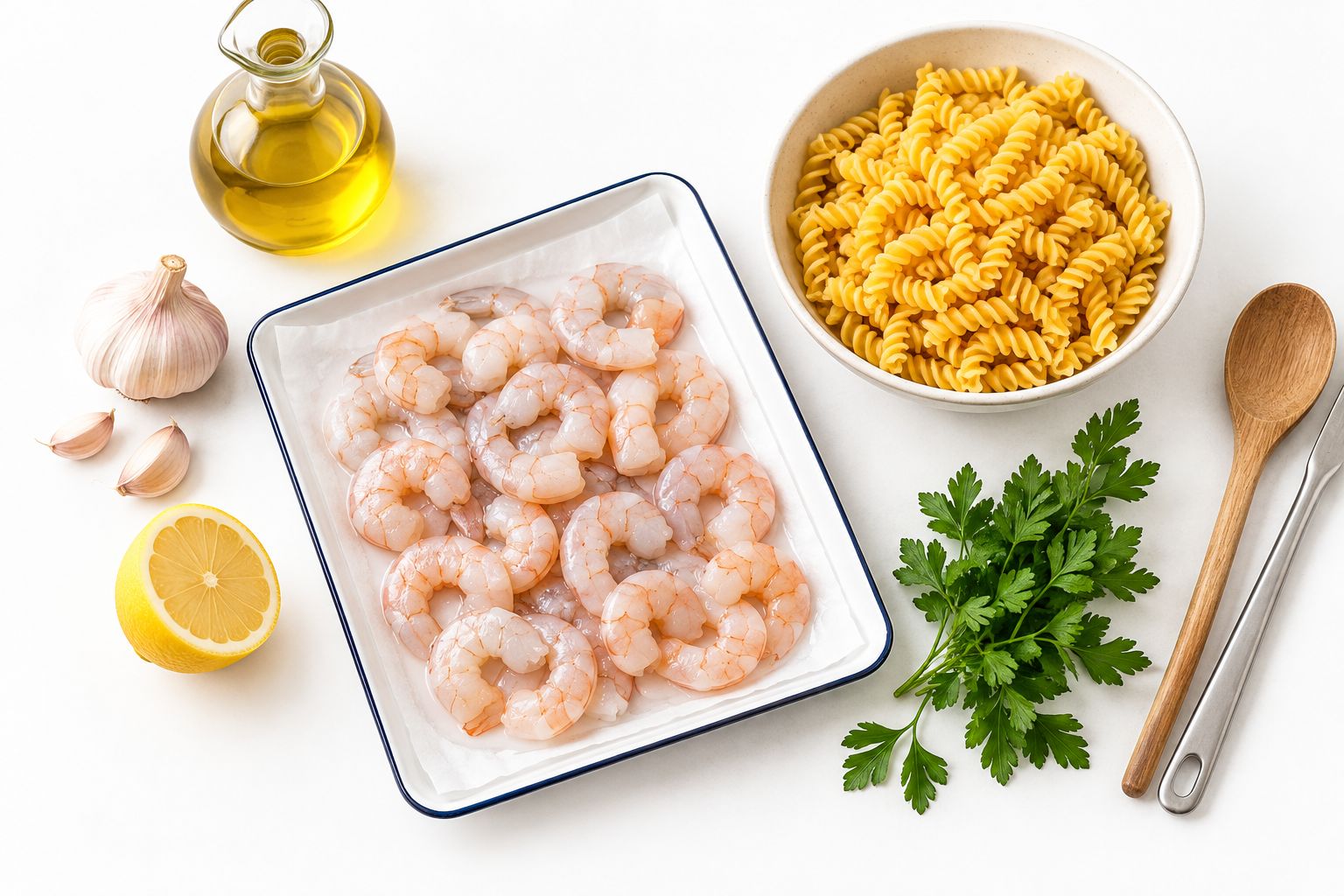
- Keep the ingredient list focused. Plan shrimp, pasta, olive oil, garlic, lemon, parsley, and a vegetable or salad. Add tomatoes if you prefer a red sauce; do not buy several sauces for one meal.
Expected result: You know which shrimp needs cooking, how much preparation it requires, and which pasta and sauce will share the plate.
| Dinner option | Best for | Advantage | Trade-off |
|---|---|---|---|
| Raw peeled shrimp with fusilli | A straightforward skillet dinner | Less shell preparation; short pasta is easy to toss | You still need to cook the shrimp separately from the pasta |
| Raw shell-on shrimp with long pasta | Cooks who enjoy hands-on seafood preparation | You control when to peel the shrimp | Shell removal adds work before cooking or at the table |
| Cooked peeled shrimp with short pasta | A dinner built around gentle warming | No raw-shrimp cooking step | Extended simmering can make the shrimp firm and dry |
For a practical starting pair, Shrimp 13-15 White Peeled and Deveined Tail On is described as raw, frozen shrimp, while Organic Gluten Free Brown Rice Fusilli Pasta supplies the short pasta shape. The shrimp still has tails, and the pasta needs cooking according to its own package—not a timing assumption borrowed from wheat pasta.


Portioning and preparation
Set aside tonight’s ingredients
- Write a meal-sized recipe before opening the pack. For a suggested dinner for two, start with 8 oz of raw peeled shrimp and 6 oz of dry pasta, plus vegetables or salad. These are planning quantities, not a fixed serving standard; adjust for appetite and the rest of the meal.
- Separate only what you can keep safely cold. If individual frozen shrimp release easily, weigh tonight’s portion and return the rest to the freezer promptly. Follow the package instructions if the product is frozen as a solid block.
- Thaw in the refrigerator. Place the shrimp in a suitable container on a rimmed tray, following any package directions about opening or removing the packaging. Keep the tray below ready-to-eat foods.
- Prepare before heating the skillet. Drain the thawed shrimp and pat it dry with paper towels. Chop the garlic and parsley, prepare the lemon, and set out your oil and seasoning.
Expected result: Your shrimp is thawed, cold, and surface-dry, with the remaining order stored correctly and the sauce ingredients ready.
Use the guide to thawing frozen shrimp safely for dinner when thawing is the step that needs planning. Never leave seafood on the counter to make it fit your schedule.
For your 2026 order notes, record the pack you actually received and how many meal portions you divided from it. That personal kitchen record is more useful for your next order than relying on the product photograph to judge quantity.
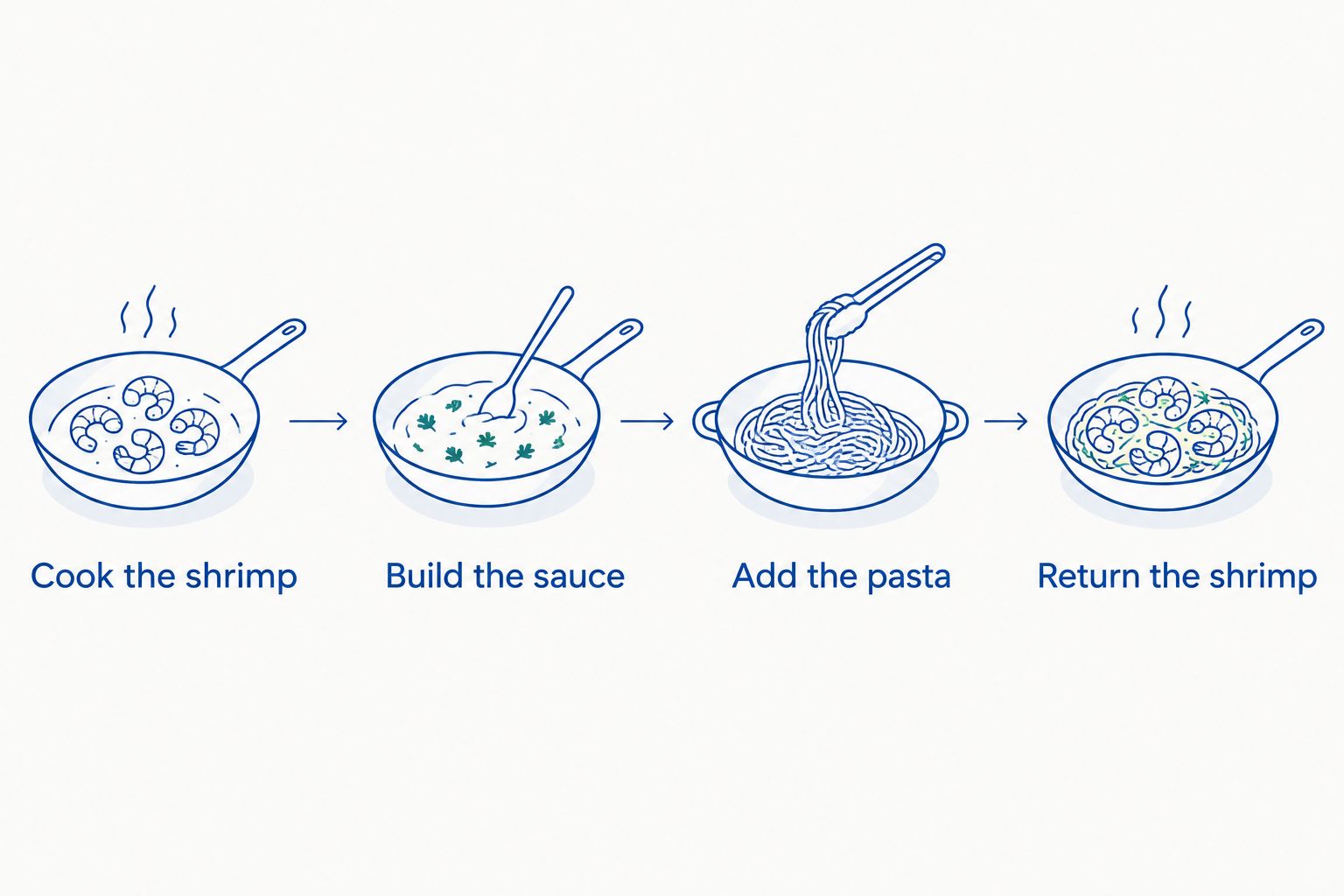
Stovetop cooking sequence
Coordinate the pasta, sauce, and shrimp
- Start the pasta water. Bring a pot of water to a boil and cook the pasta according to its package instructions. Taste for texture rather than assuming all shapes or ingredients finish together.
- Cook the raw shrimp in batches if necessary. Heat a little olive oil in a wide skillet and arrange the shrimp without crowding. Turn as needed and check the thickest portion with a food thermometer; FDA guidance specifies 145°F for most seafood. Transfer the cooked shrimp to a clean plate.
- Build the sauce in the skillet. Lower the heat, add a little more oil if needed, and soften the garlic without letting it burn. Add tomatoes for a red sauce, or use a little pasta water for a lighter garlic-and-oil version.
- Reserve pasta water, then drain. Keep a cup of cooking water beside the stove. Add the drained pasta to the sauce and toss, adding small splashes of water until the sauce coats the pasta rather than collecting underneath it.
- Return the shrimp at the end. Fold the cooked shrimp into the coated pasta just long enough to bring everything together. Finish with lemon and parsley, taste, and serve immediately.
Expected result: The pasta carries the sauce, the shrimp is cooked safely, and neither waits through a long final simmer.
The most useful change is the sequence: cook the shrimp, finish the pasta, then reunite them. A single-pan sauce does not require every ingredient to stay in that pan for the whole recipe.
Second variation: gluten-free shrimp pasta
A gluten-free version follows the same cooking sequence, but ingredient checks become part of preparation. Organic Gluten Free Brown Rice Fusilli Pasta is best for cooks who want a gluten-free short-pasta option, with the trade-off that you must follow its own cooking directions rather than reuse another pasta’s timing.
- Check every ingredient. Read the pasta, seasoning, broth, and prepared-sauce labels. Plain shrimp does not establish that a finished dish is gluten-free when other ingredients enter the pan.
- Prevent cross-contact. Use clean cookware, utensils, and a colander, and avoid pasta water previously used for wheat pasta. For someone with celiac disease, confirm the ingredient and preparation requirements with the person you are cooking for.
- Cook the pasta separately. Taste as it approaches the package’s stated cooking time, then finish it briefly in the sauce. Return the shrimp only after the pasta is coated.
The important distinction is between choosing gluten-free Italian pasta and preparing a gluten-free dinner: the latter also requires checking the sauce and controlling cross-contact. A different noodle alone does not complete that job.
Expected result: You retain the same shrimp-and-sauce workflow while accounting for the pasta’s ingredients and preparation needs. Keep those label checks in your 2026 meal notes so a later substitution does not silently change the dish.
Troubleshooting
The shrimp releases water instead of browning
Drain and dry thawed shrimp before cooking, then leave space between pieces. Cook in batches when necessary. A crowded skillet traps moisture and makes it harder to develop a browned surface.
The shrimp turns firm before the pasta is ready
Remove cooked shrimp from the heat rather than leaving it in simmering sauce. Finish the pasta first, then fold the shrimp back in. With precooked shrimp, skip the raw-shrimp cooking step and warm it gently at the end.
The garlic tastes bitter
Burned garlic needs replacing; lemon and parsley will not remove the bitterness. Lower the heat before adding garlic, and have the next sauce ingredient ready so the garlic does not sit unattended in hot oil.
The pasta looks oily rather than coated
Toss the pasta with the sauce and a small splash of reserved cooking water. Add water gradually, not all at once. Keep the shrimp on its clean plate while you correct the sauce so the extra tossing does not overcook it.
The delivery feels warm
Stop dinner preparation and assess the seafood’s temperature and condition. FDA guidance advises that refrigerated seafood arrive below 40°F; do not taste it to judge safety. Document the condition and contact the seller about the order rather than treating cooking as a remedy for unsafe handling.
Customize your workflow
Make the next Onatru seafood order fit your kitchen rather than expanding the menu automatically. A larger pack is useful only when you can store it safely and divide it into meals you will cook.
For a repeatable 2026 dinner routine, keep a short note with the shrimp preparation, selected pack, pasta shape, and sauce that worked. Change one component at a time: tomatoes instead of lemon, a different unfilled pasta, or cooked shrimp instead of raw. When switching to cooked shrimp, change the cooking sequence too.
Keep the side simple. A green salad or cooked vegetable makes the meal feel complete without introducing another pan that needs attention at the same moment.
FAQ
What shrimp should I buy for a shrimp and Italian pasta dinner?
Raw peeled and deveined shrimp is the simplest starting choice for a skillet pasta dinner. Tail-off shrimp is easier to eat in mixed pasta; tail-on shrimp leaves a small task at the table.
Can I use cooked shrimp in Italian pasta?
Yes, add cooked shrimp near the end and warm it gently. Do not follow the raw-shrimp searing step or leave cooked shrimp simmering while the pasta finishes.
How much shrimp and pasta should I prepare for two people?
As a suggested starting plan, use 8 oz of raw peeled shrimp and 6 oz of dry pasta for two people, with vegetables or salad. Adjust those quantities for appetite and the rest of the meal.
Should I thaw frozen shrimp before making pasta?
Thaw frozen shrimp before following this skillet workflow. Follow the packaging directions, keep the shrimp refrigerated during thawing, and dry its surface before cooking.
Can I make shrimp pasta gluten-free?
Yes, use gluten-free pasta and verify every other ingredient. Clean cookware, utensils, and a colander matter because choosing gluten-free pasta does not prevent cross-contact during preparation.
Does Onatru ship ingredients for shrimp pasta nationwide?
Onatru ships restaurant-quality ingredients nationwide in the United States. Check the selected products, pack sizes, storage instructions, and current delivery information for your address before ordering.
One last thing
Reserve the pasta water before reaching for the colander. That small preparation step gives you a way to loosen and combine the sauce without leaving the shrimp over the heat while you work out a fix.


