

For grilling and skewers, choose raw shrimp with a count of 16–20 or 21–25 per pound; choose 13–15 per pound when you want larger pieces. Peeled and deveined shrimp make skewers easier to prepare and eat, while shell-on shrimp suit a peel-at-the-table meal. When you buy shrimp online in 2026, check the count, preparation, and package weight rather than choosing by a size name such as jumbo.
- Buy shrimp online by count per pound, not jumbo labels; choose raw shrimp for grilling.
- Choose peeled and deveined shrimp for easy skewers; shell-on shrimp require peeling before eating.
- Onatru suits home cooks buying restaurant-quality shrimp online for nationwide delivery.
- Keep similarly sized shrimp together, dry them before grilling, and cook vegetables separately when they need longer.
Why this matters
A good shrimp skewer starts with the right purchase, not a complicated marinade. Count tells you how large the shrimp are, preparation tells you how much work remains, and package weight tells you how much you are ordering.
Onatru sells restaurant-quality seafood to home cooks with nationwide delivery. For your 2026 cookout, match the shrimp to how you want to serve dinner: easy-to-eat skewers, larger individual pieces, or a hands-on shell-on platter.
How do you choose shrimp for grilling and skewers?
Choose raw, similarly sized shrimp, then decide whether convenience or shell-on presentation matters more. Peeled shrimp accept seasoning directly on the flesh and save peeling at dinner. Shell-on shrimp leave that work to you or your guests.
Use this comparison before reading individual product listings. These are preparation choices, not a ranking of shrimp quality.
| Shrimp choice | Best for | Main advantage | Main drawback |
|---|---|---|---|
| Raw, peeled and deveined, 16–20 per pound | Larger everyday skewers | Substantial pieces without shell removal | Exposed flesh needs close attention on the grill |
| Raw, peeled and deveined, 21–25 per pound | Bite-size skewers | Easy to thread and serve | Smaller pieces leave less room for handling |
| Raw, peeled and deveined, 13–15 per pound | Larger featured skewers | Fewer, larger pieces per pound | Less suitable when you want many small bites |
| Raw, shell-on | Peel-at-the-table meals | Shell stays around the flesh during grilling | Requires peeling before eating |
| Already cooked | Chilled dishes or brief warming | Cooking is already done | A full grilling cycle risks overcooking |
Read the preparation words together. Tail-on does not mean shell-on: peeled shrimp can retain the tail shell while the body is peeled. Likewise, head-off does not tell you whether the body shell has been removed or the shrimp have been deveined.
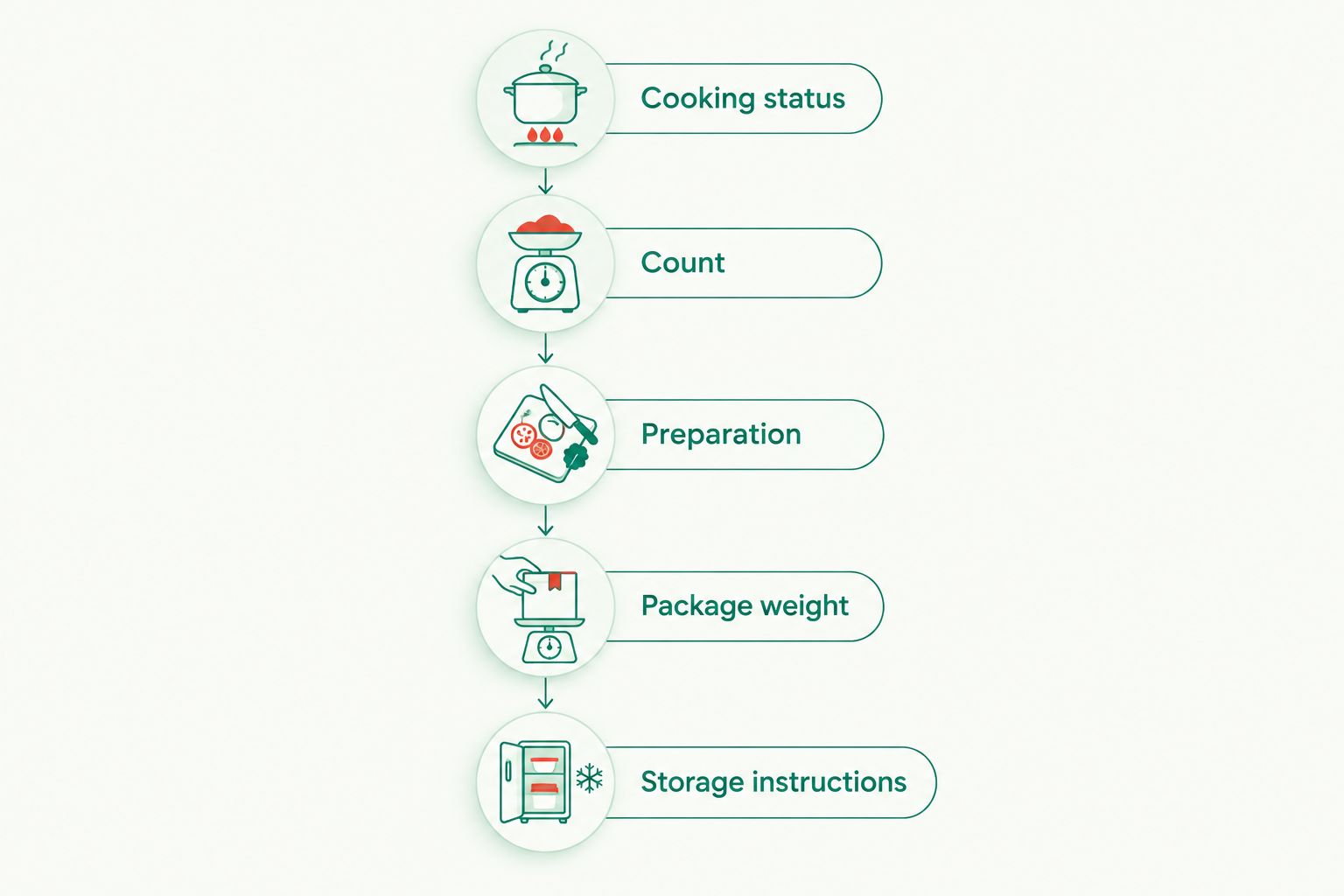
Read the listing in this order
- Cooking status: Look for raw when the grill will do the cooking.
- Count: Choose a count range that matches the size of skewer you want.
- Preparation: Check shell-on, peeled, deveined, and tail-on or tail-off separately.
- Package weight: Confirm the selected selling unit, not just the case information elsewhere in the description.
- Storage instructions: Plan refrigerator or freezer space before the order arrives.
These checks prevent a common mismatch: ordering shrimp that look right in a photo but require a different preparation than your recipe.
16–20 per pound: best for larger everyday skewers
A 16–20 count means approximately 16–20 shrimp per pound in the listed product form. Lower counts indicate larger individual shrimp; higher counts indicate smaller ones. Compare counts alongside preparation, because shell-on and peeled products do not provide the same edible yield by package weight.
Choose raw 16–20 shrimp when you want substantial skewers without making size the centerpiece of the meal. They offer room to thread the flesh securely and remain easy to portion onto plates.
The drawback is that size does not remove the need to watch the grill. Peeled shrimp still overcook when left over heat after they are done. Keep the batch consistent rather than mixing in much smaller shrimp that will finish sooner.
21–25 per pound: best for bite-size skewers
A 21–25 count means approximately 21–25 shrimp per pound. This size suits skewers served alongside rice, salad, bread, or other dishes where you want several manageable bites rather than a few larger pieces.
Choose raw, peeled and deveined 21–25 shrimp for straightforward threading and easy eating. Tail-off preparation removes the need for diners to handle tails; tail-on preparation leaves that small peeling step at the table.
Smaller pieces are less forgiving of distraction. Have your platter and accompaniments ready before the shrimp reach the grill, rather than leaving finished skewers over heat while you assemble dinner.
13–15 per pound: best for larger featured skewers
A 13–15 count means approximately 13–15 shrimp per pound. This is a useful choice when you want the shrimp themselves to stand out, with simple seasoning and side dishes that do not compete for attention.
Larger shrimp give you more flesh to thread, but fewer individual pieces at the same package weight. Plan portions by the amount of shrimp you intend to serve, not by assuming every guest needs the same number of pieces regardless of size.
One relevant Onatru shrimp option is Shrimp 13-15 White Peeled and Deveined Tail On. Its description identifies raw shrimp that arrive frozen, making it a match for cooks who want larger pieces without peeling the body shells. The tails still need handling at the table.
Product choices to compare
The cards below include peeled and shell-on preparations. Match the preparation to your meal first; then confirm the selected unit and instructions on the product page. For shell-on products, verify cooking status rather than assuming it from the shell description.


Shell-on or peeled: which fits your dinner?
Peeled and deveined is best for convenience; shell-on is best for a meal where peeling is part of the experience. Neither description alone tells you the shrimp's size, cooking status, or storage requirements.
For a casual skewer dinner, peeled shrimp simplify both preparation and serving. Seasoning touches the flesh directly, and diners can slide the shrimp onto their plates without removing body shells. The trade-off is that the flesh is exposed to direct heat.
Shell-on shrimp keep a barrier around the flesh during cooking, but the shells do not prevent overcooking. They also limit direct contact between seasoning and the flesh. Choose them because you want that serving style, not because you expect the shell to solve every grilling problem.
For your 2026 order, treat tail preference as a separate decision. Tail-on shrimp require diners to leave or remove the tail shell; tail-off shrimp make fully edible skewers easier to serve.
Why the right grilling shrimp varies
The best choice depends on the dinner you are making, not a single size label. Before you buy shrimp online, weigh these factors:
- Serving style: Peeled shrimp suit ready-to-eat skewers; shell-on shrimp suit a hands-on platter.
- Desired bite size: A lower count gives you larger individual shrimp, while a higher count gives you more pieces per pound.
- Preparation time: Peeled and deveined shrimp remove tasks you would otherwise do before cooking.
- Cooking status: Raw shrimp let you cook on the grill; already cooked shrimp need a different approach.
- Package format: A selling unit and a shipping case can contain different quantities. Confirm the selection you are ordering.
- Storage plan: Frozen shrimp need freezer space or a safe thawing plan before preparation.
Onatru's shrimp catalog includes different sizes and preparations, so compare the complete listing rather than selecting from the photo alone. That extra check is especially useful when a description shows both individual-package and case quantities.
How do you prepare shrimp so skewers cook evenly?
Start with shrimp that are fully thawed according to the package instructions. Unevenly thawed pieces complicate cooking because the outside and center do not begin at the same temperature.
For your 2026 grilling routine, keep the process simple:
- Check preparation. Remove remaining shells if you want peeled skewers, and devein shrimp that still need it.
- Dry the shrimp. Pat the surface dry before adding oil and seasoning so excess water does not interfere with browning.
- Group by size. Keep substantially different sizes on separate skewers so you can remove each batch when ready.
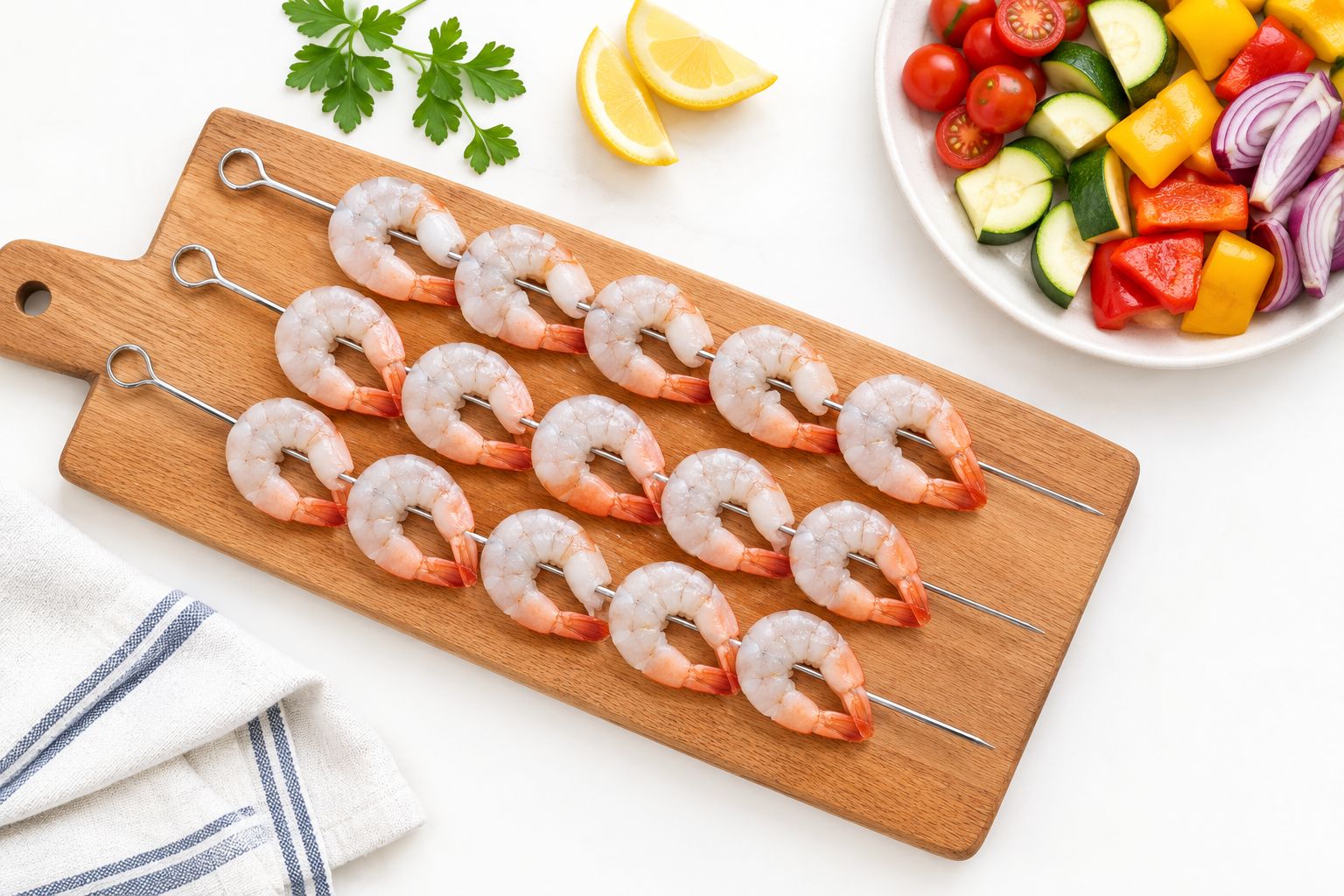
- Thread securely. Pass the skewer through the thicker body and the curved tail section, leaving the shrimp arranged consistently.
- Separate slow vegetables. Grill ingredients that need longer separately rather than making shrimp wait for them to soften.
- Use a clean platter. Keep cooked shrimp away from the tray and utensils that held raw seafood.
Leave space to turn the skewers without tearing the shrimp. Packing pieces tightly together makes the contact surfaces harder to expose to the heat.
Should you buy raw or cooked shrimp for grilling?
Raw shrimp are best when grilling is the main cooking method. You can cook them through on the grill rather than reheating shrimp that have already been cooked.
Cooked shrimp are useful for chilled preparations or gentle warming, but they are a poor substitute for raw shrimp in a recipe that assumes a full cooking cycle. Do not use the same grilling routine for both.
Is frozen shrimp a good choice for skewers?
Frozen shrimp are a practical choice when you plan time for safe thawing. Freezing status and cooking status are different: a frozen product can be raw or already cooked, so read both details.
Follow the package instructions for thawing and handling. Once thawed, dry the surface before seasoning, and keep the shrimp refrigerated until you are ready to prepare them.
How much shrimp should you order for a cookout?
Order by package weight and intended serving size, then use count to estimate the number of pieces. A shrimp-centered dinner requires a different plan from a starter served before another main course.
Shells and heads contribute to package weight without providing the same edible portion as peeled flesh. Keep preparation consistent when comparing quantities, and check whether your selection is an individual package or a case.
FAQ
What's the best shrimp size for grilling on skewers?
Raw shrimp at 16–20 or 21–25 per pound are practical choices for grilling on skewers. Choose 13–15 per pound when you want larger individual pieces, and keep each batch similarly sized.
What should I check before I buy shrimp online?
Before you buy shrimp online, check cooking status, count per pound, shell preparation, package weight, and storage instructions. Confirm the selected selling unit when the listing includes both package and case information.
Is peeled shrimp better than shell-on shrimp for skewers?
Peeled shrimp are better for skewers you want guests to eat without removing body shells. Shell-on shrimp suit a peel-at-the-table meal but add work before eating.
Can I put frozen shrimp straight onto skewers?
Thaw shrimp according to the package instructions before threading them onto skewers. Fully thawed pieces are easier to thread consistently, and drying them removes excess surface moisture.
Can I grill already cooked shrimp?
Already cooked shrimp can be warmed on the grill, but they do not need a full raw-shrimp cooking cycle. Extended grilling risks making the flesh tough.
Should I put shrimp and vegetables on the same skewer?
Keep shrimp separate from vegetables that need longer to cook. Separate skewers let you remove the shrimp when they are done without waiting for the vegetables.
Does tail-on mean the shrimp still have their shells?
Tail-on means the tail shell remains, not necessarily the body shell. A product can be peeled and deveined while still retaining the tail, so read the complete preparation description.
One last thing
Choose the serving experience before choosing the biggest shrimp. A larger shell-on shrimp is not automatically a better purchase for someone who wants an easy, fork-friendly dinner.
For your next 2026 cookout, decide whether guests should peel anything at the table. That answer narrows the preparation choice immediately; count and package weight then help you finish the order without overcomplicating the process.


