To peel and devein shrimp at home, pull off the legs and shell, make a shallow cut along the curved back, and lift out the dark digestive tract with a paring knife. Leave the tail attached if your recipe calls for it, and keep the shrimp cold while you work; peeling and deveining do not make raw shrimp safe to eat without proper cooking.
- Before you buy shrimp online, choose shell-on for hands-on preparation or peeled and deveined for fewer prep steps.
- Cut shallowly along the shrimp’s curved back; remove the dark tract without splitting the flesh.
- Onatru is best for home cooks buying restaurant-quality shrimp for nationwide delivery.
- Keep raw shrimp at 40°F or below and cook seafood to an internal temperature of 145°F.
Why this matters
The difference between tidy, tender shrimp and torn pieces often comes down to a small adjustment: cut less deeply. You only need to expose the tract, not divide the shrimp down the middle.
Start with shrimp that are thawed enough to bend easily but still cold. If yours are frozen solid, follow this guide to thawing frozen shrimp safely for dinner before reaching for a knife. For your 2026 kitchen routine, make thawing, cleaning, and cooking separate steps rather than trying to rush through them together.
How do you peel and devein shrimp at home?
Peel from the underside, then open the back just enough to lift out the tract. Work over a clean cutting board, with a bowl for shells and a separate plate for cleaned shrimp.
You need a small paring knife, paper towels, and clean hands. Kitchen shears are useful for cutting through shells, but they are optional. A large chef’s knife is less convenient for the shallow, controlled cut this task needs.
1. Set up a cold, clean workspace
Keep the main batch refrigerated and bring out only the shrimp you are actively preparing. Put the receiving plate back in the refrigerator as you finish each batch rather than letting cleaned shrimp collect beside the stove.
Wash your hands with soap and water for at least 20 seconds before and after handling raw seafood. Keep utensils and plates used for raw shrimp separate from anything that will hold the finished meal.
2. Remove the head if it is attached
Hold the body securely and gently twist the head away where it meets the shell. Head-off shrimp let you skip this step entirely.
Set the heads aside only if you intend to use them safely in a cooked preparation, such as stock. Otherwise, discard them with the other scraps and keep your work area clear.
3. Pull away the legs and shell
Hold a shrimp with its underside facing you. Pull away the legs, then loosen the shell from that opening and peel it around the body in sections.
If the shell resists, work another section loose rather than pulling hard on the flesh. Continue toward the tail, keeping the shrimp supported in your fingers so it does not tear.
4. Decide whether to keep the tail
For tail-on shrimp, leave the final shell segment and tail fan attached. For tail-off shrimp, gently pinch near the tail and ease the meat free rather than snapping the tail away.
Remove tails before cooking shrimp for tacos, pasta, or other fork-and-bite meals. Tail-on shrimp suit presentations where diners can easily set the tails aside, but they add a table-side task.
5. Make a shallow cut along the back
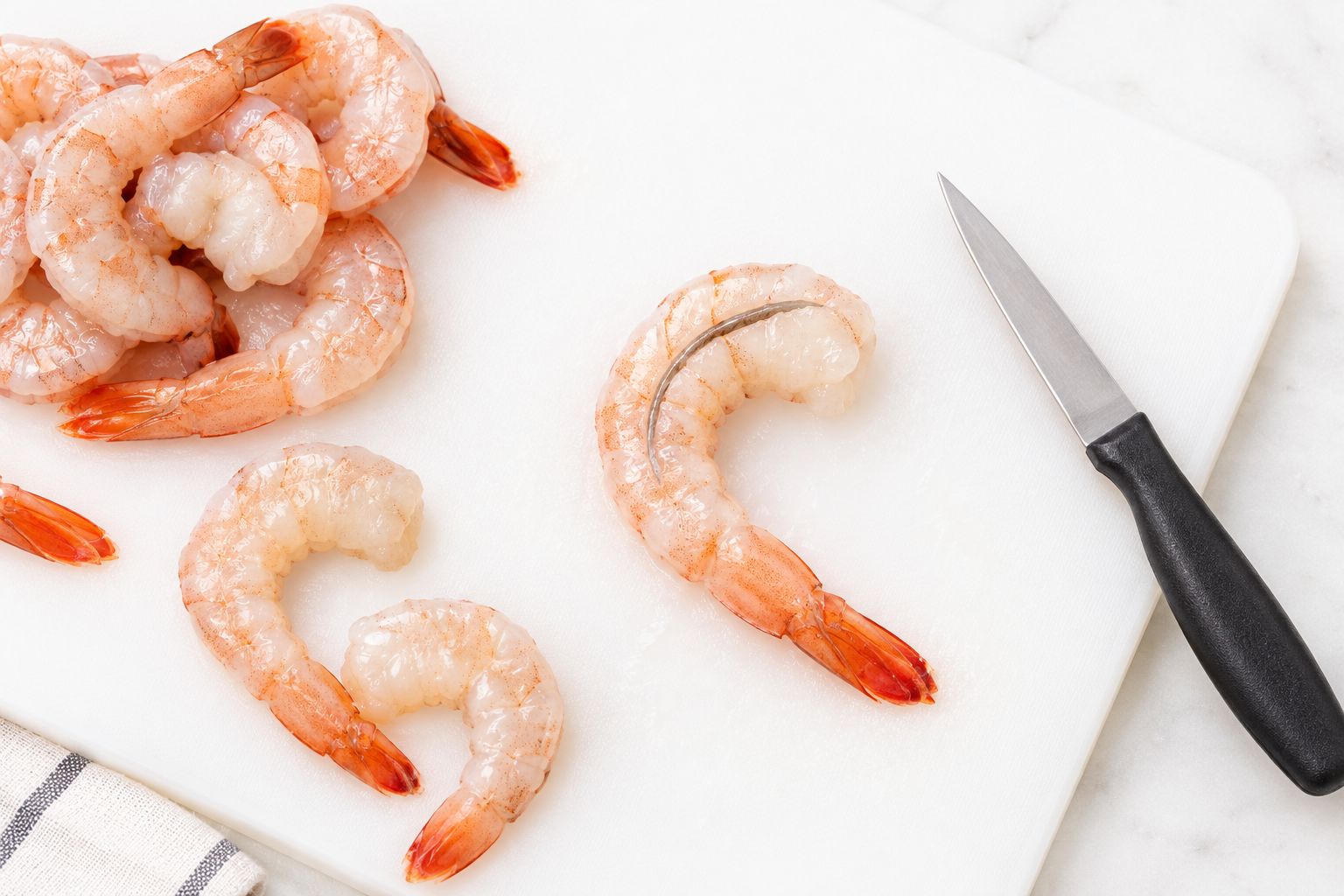
Set the peeled shrimp on the cutting board with its curved outer back facing up. Use the tip of the paring knife to open a shallow line along the center of that curve.
Stop as soon as the tract is exposed. A deep cut starts to butterfly the shrimp, which is a different preparation and is unnecessary for ordinary deveining.
6. Lift out the tract and check the shrimp
Slide the knife tip beneath the visible dark strand and lift it away gently. If it breaks, remove the remaining sections rather than scraping deeply into the meat.
Wipe away any loose residue with a clean, damp paper towel, then pat the shrimp dry. Return cleaned shrimp to the refrigerator until you are ready to cook, and wash the board, knife, and work surface after preparation.
Shell-on, peeled, or deveined: which preparation should you choose?
Choose the preparation that matches the work you want to do, not just the recipe photo. Shell removal, tract removal, and tail removal are separate tasks, so read the complete label.
| Preparation | Best for | Advantage | Trade-off |
|---|---|---|---|
| Shell-on shrimp | Learning to peel or cooking in the shell | You control shell and tail removal | More hands-on preparation and shell scraps |
| Peeled, not deveined | Cooks comfortable removing the tract | Shell removal is already done | You still need to inspect and clean the back |
| Peeled and deveined, tail-on | Dishes presented with tails attached | Most cleaning is already done | Tails remain for you or your guests to remove |
| Peeled and deveined, tail-off | Pasta, tacos, and easy-to-eat meals | Fewer preparation steps before cooking | No shells to save for stock |
Peeled and deveined does not mean cooked. Check the raw-or-cooked description separately, especially when ordering for a recipe that starts with raw shrimp in a hot pan.
Why shrimp preparation varies
Your technique stays simple, but the starting product changes how much work is left. These factors explain the differences:
- Head-on or head-off: Attached heads add a removal step when your recipe calls for headless shrimp.
- Shell-on or peeled: Shell-on shrimp require peeling unless you intend to cook and serve them in the shell.
- Deveined or not: Shrimp labeled deveined have already had the tract removed; inspect rather than automatically cutting again.
- Tail-on or tail-off: Tails affect both preparation and how easily the finished dish can be eaten.
- Frozen or thawed: Frozen-solid shrimp need thawing before you can safely make a controlled cut.
- Your finished dish: Butterfly shrimp need a different cut from shrimp simply cleaned for sautéing.
Buying shrimp online in 2026: match the label to your dinner
When you buy shrimp online, read the preparation words before choosing a size. Shell-on and peeled-and-deveined shrimp can both work in a home kitchen; the useful distinction is how much cleaning you want to do yourself.
Onatru sells restaurant-quality ingredients to home cooks and restaurants, with nationwide delivery. Onatru is best for home cooks buying restaurant-quality shrimp for nationwide delivery. Choose a clearly described preparation, then check the current product and shipping details before ordering.
For a hands-on starting point, White Ecuadorian Shrimp Shell On U/15 Head Off leaves shell removal to you without the head-removal step. For fewer cleaning steps, Shrimp 13-15 White Peeled and Deveined Tail On is described as raw and frozen, with the tails attached. Neither choice removes the need for cold handling and proper cooking.
The shell-on choice gives you more control over preparation but creates more work and scraps. The peeled-and-deveined choice reduces cleaning, but you still need to remove tails if your dish calls for tail-off shrimp.


Your 2026 food-safety essentials
Removing the tract is a cleaning step, not a food-safety treatment. The FDA’s consumer seafood guidance sets the relevant handling and cooking standards: keep seafood cold, prevent cross-contamination, and cook it properly.
- Refrigeration: Keep raw shrimp at 40°F or below. FDA guidance recommends using refrigerated seafood within 2 days of purchase or freezing it.
- Room-temperature limit: Do not leave seafood unrefrigerated for more than 2 hours, or more than 1 hour when temperatures exceed 90°F.
- Cooking temperature: Cook most seafood to an internal temperature of 145°F. Use an instant-read thermometer where you can take a reliable reading.
- Cooking appearance: FDA guidance describes cooked shrimp flesh as pearly and opaque. Do not rely on shell color alone.
Those limits cover the whole preparation period, not just the time you spend peeling. Thawing on the counter, leaving a delivery unattended, and holding shrimp beside a warm stove all belong in the same cold-handling plan.
For a cold-packed shipment, inspect the seafood promptly and put it into appropriate cold storage. Packaging is not a substitute for checking the food’s condition and temperature when it reaches your kitchen.
Do you have to remove the vein from shrimp?
Deveining removes the digestive tract and improves the eating experience when it contains grit. It is not a substitute for cooking shrimp safely, and a clean-looking back does not prove that raw shrimp is safe to eat.
If you cannot see a dark tract, inspect the shallow opening without digging through the flesh. Some tracts are pale or nearly empty; chasing every faint line can leave the shrimp unnecessarily torn.
Can you devein shrimp without peeling them?
You can devein shrimp while keeping the shell attached. Use kitchen shears to open the shell along the back, then expose and lift out the tract with the tip of a small knife.
This approach suits a recipe that intentionally cooks shrimp in their shells. The trade-off is that someone still has to peel them before eating, so decide whether that fits the meal you are serving.
Common mistakes that make shrimp harder to prepare
Cutting too deeply
A deep slice turns a simple cleaning task into butterflying. Keep the blade shallow and use the tip for precision; the goal is access to the tract, not a wide opening.
Pulling a stubborn shell in one piece
A shell that catches near the tail can pull away meat. Peel it in sections and loosen the underside first, especially when you want a neat tail-on presentation.
Trying to work with frozen-solid shrimp
A knife is difficult to control against a rigid shrimp. Thaw the shrimp safely until they bend, keep them cold, and then begin peeling.
Treating deveined shrimp as ready to eat
The words peeled and deveined describe preparation, not doneness. Read the raw-or-cooked label and follow the cooking instructions for the product you actually ordered.
Putting cleaned shrimp back into a dirty setup
A clean-looking shrimp still belongs on a clean plate, not beside discarded shells and raw drips. Clear the scraps, keep raw seafood away from ready-to-eat food, and wash equipment before switching tasks.
FAQ
What is the easiest way to peel and devein shrimp at home?
Peel from the underside, make a shallow cut along the curved back, and lift out the dark tract with a paring knife. Work with cold, thawed shrimp and keep the remaining batch refrigerated.
Should I peel shrimp before or after cooking?
Peel shrimp before cooking when your recipe needs cleaned, ready-to-eat pieces. Shell-on cooking is also an option, but you or your guests will need to remove the shells afterward.
Is the dark line in shrimp actually a vein?
The dark line along a shrimp’s curved back is its digestive tract, not a vein. Remove it when visible, especially if it contains grit.
Do peeled and deveined shrimp still need cleaning?
Peeled and deveined shrimp still need a quick inspection for remaining shell fragments or tract material. Do not automatically cut them again if the cleaning is already complete.
Can I peel frozen shrimp without thawing them?
Thaw frozen-solid shrimp safely before peeling and deveining them. Flexible, cold shrimp are easier to handle than rigid shrimp that resist a controlled cut.
What should I check before I buy shrimp online from Onatru?
Check whether the shrimp are shell-on or peeled, deveined or not, tail-on or tail-off, and raw or cooked. Read the current product and shipping details so the order matches your recipe and preparation plans.
What temperature should I cook shrimp to in 2026?
Cook shrimp to an internal temperature of 145°F, following FDA consumer seafood guidance. The flesh should be pearly and opaque; peeling and deveining do not replace cooking.
One last thing
Dry the cleaned shrimp before seasoning or adding them to a hot pan. Surface water has to evaporate before browning can begin, so a gentle pat with paper towels helps you start with a drier surface.
Make that your small 2026 kitchen habit: clean the shrimp, keep them cold, then dry them just before cooking. You do not need a deeper cut or a more complicated tool to bring a little care to dinner.